Allopurinol Online UK
Incl. online consultation, medicine and discreet delivery
View Options
The medical information on this site is provided for educational purposes. It does not replace a face-to-face consultation with your GP or specialist. Always follow the advice of your prescribing doctor and read the patient information leaflet supplied with your medication.
Choose Your Medicine
Select dosage and quantity
Online Consultation
Reviewed by a qualified physician
Fast, Discreet Delivery
Delivered to your door
Medical Information
About This Medicine
Allopurinol is a xanthine oxidase inhibitor prescribed as first-line long-term treatment for gout and hyperuricaemia.
It is also used to prevent uric acid nephropathy and the formation of uric acid kidney stones.
In oncology, allopurinol is prescribed to prevent tumour lysis syndrome during chemotherapy for haematological malignancies.
Allopurinol and its active metabolite, oxypurinol, work by inhibiting xanthine oxidase, the enzyme responsible for converting hypoxanthine and xanthine into uric acid.
By blocking this pathway, allopurinol reduces the production of uric acid in the body, gradually lowering serum urate levels.
Over months of treatment, this allows existing monosodium urate crystal deposits in joints and soft tissues to dissolve, reducing the frequency and severity of gout attacks.
Allopurinol is one of the oldest and most extensively studied urate-lowering therapies. It remains the recommended first-line treatment in virtually all international gout guidelines.
Treatment is lifelong, and adherence is essential for sustained benefit. The dose is titrated to achieve a target serum uric acid level, typically below 360 micromol/L.
Usage & Dosage
Take allopurinol once daily after food to reduce the risk of gastrointestinal upset. Swallow the tablet whole with a glass of water.
Maintain adequate fluid intake (at least two litres daily) to prevent urate deposition in the urinary tract.
Treatment should be continued long-term, even when symptom-free, as stopping will cause uric acid levels to rise again.
Do not start allopurinol during an acute gout attack; wait until the flare has settled completely.
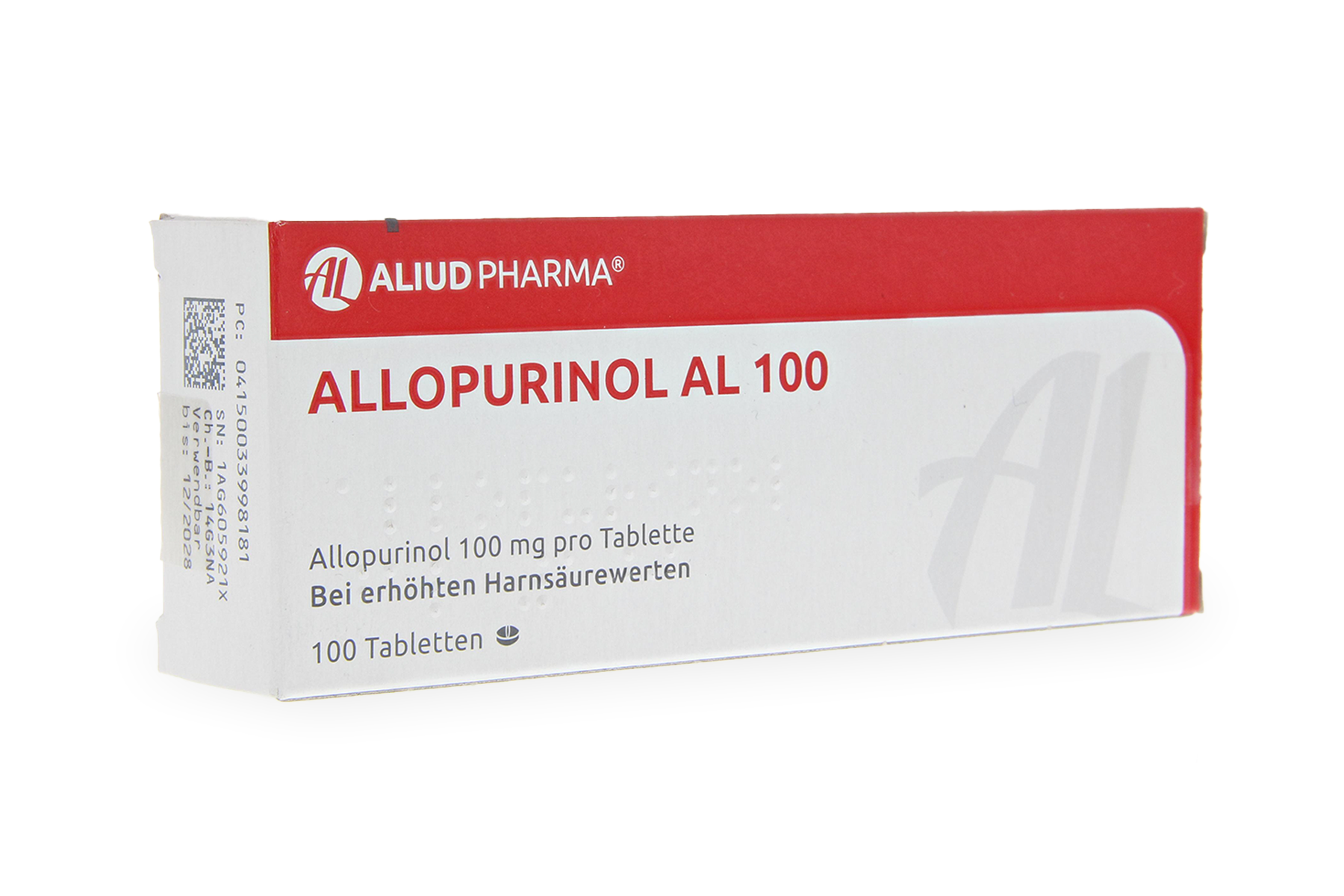
The usual starting dose is 100 mg once daily, increased by 100 mg every two to four weeks until the target serum uric acid level is achieved.
The typical maintenance dose is 200 to 300 mg daily, though doses up to 900 mg may be needed in severe cases.
In patients with renal impairment, start at 100 mg daily and titrate cautiously with careful monitoring. Doses above 300 mg daily should be given in divided doses.
Side Effects
Common (1 in 10 to 1 in 100): skin rash (requires prompt discontinuation and medical review), elevated liver enzymes.
Uncommon (1 in 100 to 1 in 1,000): nausea, vomiting, diarrhoea, headache, drowsiness, taste disturbance, gout flares during initiation.
Rare (1 in 1,000 to 1 in 10,000): severe hypersensitivity syndrome (DRESS, Stevens-Johnson syndrome, toxic epidermal necrolysis), hepatitis, vasculitis, bone marrow suppression, renal failure.
Any rash developing during allopurinol therapy should be treated as potentially serious until assessed by a clinician.
Warnings & Precautions
Discontinue allopurinol immediately at the first appearance of any skin rash, as it may indicate a life-threatening hypersensitivity reaction.
The risk of severe cutaneous adverse reactions is increased in patients carrying the HLA-B*5801 allele, which is more prevalent in certain ethnic groups.
Screening for HLA-B*5801 is recommended before starting treatment in patients of Han Chinese, Thai, or Korean descent. Use with caution in patients with renal or hepatic impairment.
Allopurinol interacts with azathioprine and mercaptopurine; the dose of these agents must be reduced.
Contraindications
Allopurinol is contraindicated in patients with a known hypersensitivity to allopurinol. It should not be used during an acute gout attack.
Concurrent use with azathioprine or mercaptopurine at standard doses is contraindicated unless doses of these agents are appropriately reduced.
Particular caution is required in patients with known HLA-B*5801-positive status.