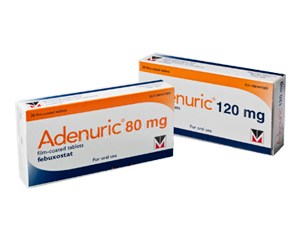
Adenuric
Incl. online consultation, medicine and discreet delivery
View Options
The medical information on this site is provided for educational purposes. It does not replace a face-to-face consultation with your GP or specialist. Always follow the advice of your prescribing doctor and read the patient information leaflet supplied with your medication.
Choose Your Medicine
Select dosage and quantity
Online Consultation
Reviewed by a qualified physician
Fast, Discreet Delivery
Delivered to your door
Medical Information
About This Medicine
Adenuric contains febuxostat, a non-purine selective inhibitor of xanthine oxidase prescribed for the long-term management of hyperuricaemia in patients with gout.
Hyperuricaemia occurs when uric acid levels in the blood are elevated, leading to the deposition of urate crystals in joints and surrounding tissues, causing the painful inflammatory episodes characteristic of gout.
Febuxostat works by inhibiting xanthine oxidase, the enzyme responsible for converting hypoxanthine to xanthine and xanthine to uric acid.
By blocking this final step in purine metabolism, febuxostat reduces the production of uric acid, gradually lowering serum urate levels below the saturation point at which crystal formation occurs.
Over time, this promotes the dissolution of existing urate deposits.
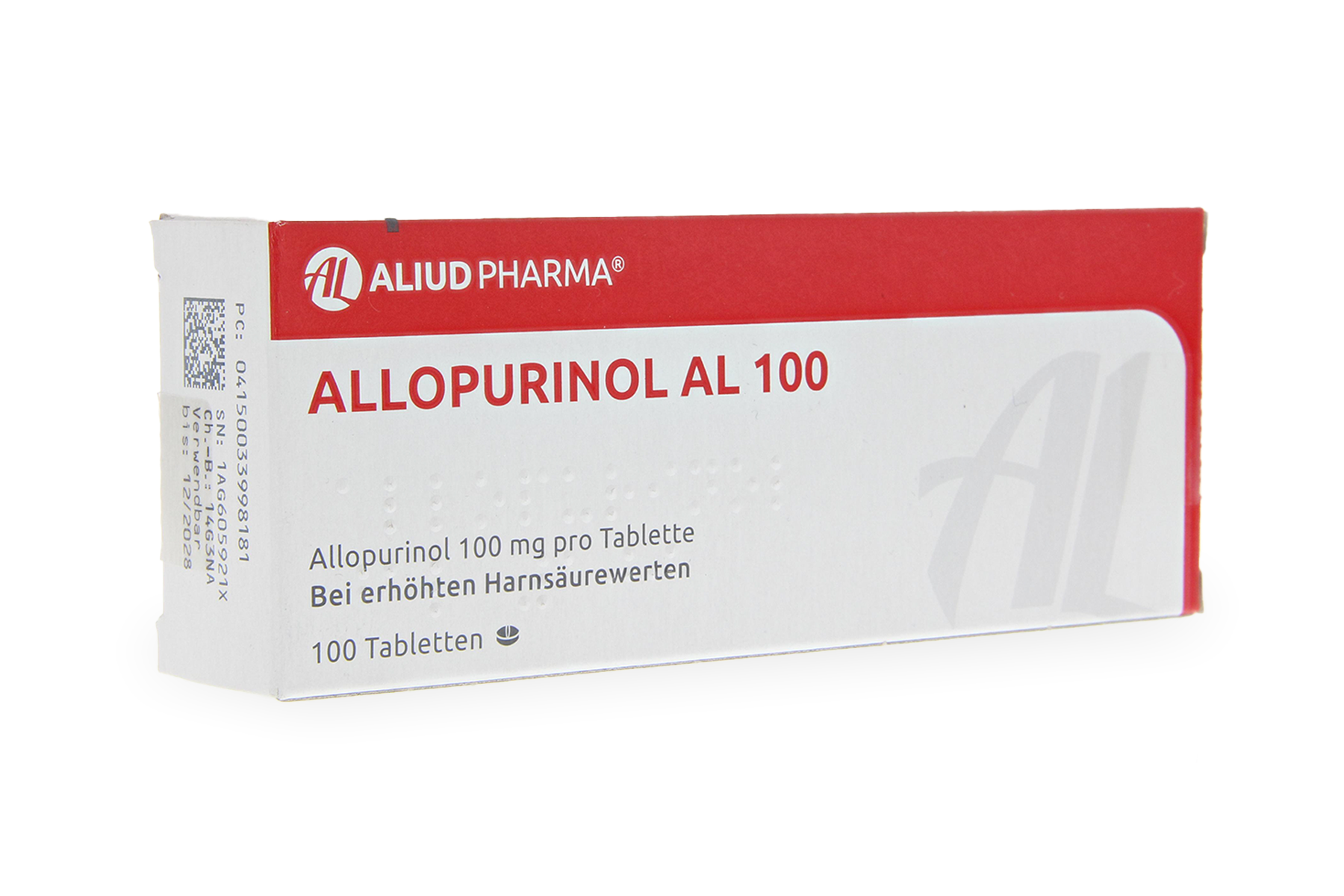
Adenuric is generally prescribed when allopurinol is contraindicated, poorly tolerated, or has failed to reduce uric acid levels to target.
It offers the advantage of not requiring dose adjustment in patients with mild to moderate renal impairment, unlike allopurinol, which may need careful titration in this population.
Usage & Dosage
Take one Adenuric tablet once daily, with or without food, swallowed whole with a glass of water.
Treatment is usually started at the lower dose and increased if the target serum uric acid level is not achieved after two to four weeks.
Continue taking Adenuric even when you feel well; it is a long-term preventative treatment and stopping it may cause uric acid levels to rise and gout flares to recur.
Your prescriber may also prescribe prophylactic anti-inflammatory medication during the first months of therapy to reduce the risk of gout flares.
The recommended starting dose is 80 mg once daily. If the serum uric acid level remains above 6 mg/dL (357 micromol/L) after two to four weeks, the dose may be increased to 120 mg once daily.
No dose adjustment is required in patients with mild to moderate renal impairment. Adenuric has not been studied in patients with severe renal impairment and is not recommended in this group.
Side Effects
Common (1 in 10 to 1 in 100): gout flares (especially during initiation), headache, diarrhoea, nausea, abnormal liver function tests, skin rash.
Uncommon (1 in 100 to 1 in 1,000): arthralgia, dizziness, paraesthesia, fatigue, abdominal pain, dyspepsia, decreased appetite, weight gain, elevated creatine phosphokinase, haematuria.
Rare (1 in 1,000 to 1 in 10,000): hepatitis, severe cutaneous adverse reactions (Stevens-Johnson syndrome, toxic epidermal necrolysis), anaphylactic reactions, pancytopenia, rhabdomyolysis.
Gout flares during early treatment are common and do not indicate treatment failure.
Warnings & Precautions
Do not initiate Adenuric during an acute gout attack; wait until the acute episode has resolved. Monitor liver function before and periodically during treatment.
Discontinue immediately if signs of serious skin reactions or hypersensitivity develop.
Use with caution in patients with ischaemic heart disease or congestive heart failure; a cardiovascular safety study (CARES) raised concerns about cardiovascular mortality compared with allopurinol in patients with prior cardiovascular events.
Discuss individual risk with your prescriber.
Contraindications
Adenuric is contraindicated in patients with hypersensitivity to febuxostat or any excipient. It should not be used concurrently with mercaptopurine or azathioprine.
It is not recommended for use in patients with severe hepatic impairment or severe renal impairment. Caution is advised in patients with a history of major cardiovascular events.