Pentasa
Incl. online consultation, medicine and discreet delivery
View Options
The medical information on this site is provided for educational purposes. It does not replace a face-to-face consultation with your GP or specialist. Always follow the advice of your prescribing doctor and read the patient information leaflet supplied with your medication.
Choose Your Medicine
Select dosage and quantity
Online Consultation
Reviewed by a qualified physician
Fast, Discreet Delivery
Delivered to your door
Medical Information
About This Medicine
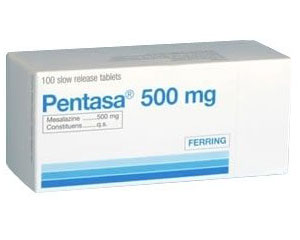
Pentasa is the brand name for mesalazine (also known as 5-aminosalicylic acid or 5-ASA), a medication used for the treatment and maintenance of remission of mild to moderate ulcerative colitis and Crohn's disease affecting the ileum and colon.
It belongs to the aminosalicylate class of anti-inflammatory drugs.
Mesalazine acts topically on the intestinal mucosa to suppress the inflammatory response that characterises inflammatory bowel disease.
Its mechanism involves the inhibition of prostaglandin and leukotriene synthesis, scavenging of free radicals, and modulation of local immune cell activity.
Pentasa uses a microsphere-based delivery system that provides sustained release of mesalazine throughout the gastrointestinal tract, from the duodenum to the rectum.
Pentasa is available as prolonged-release tablets, granules, suppositories, and rectal foam. The choice of formulation depends on the extent and location of disease.
Oral formulations are used for widespread colonic or small bowel disease, while rectal preparations are preferred for distal colitis or proctitis.
Usage & Dosage
Take Pentasa tablets or granules by mouth as directed by your doctor. Tablets should be swallowed whole or, if necessary, broken in half but not crushed or chewed.
Granules may be placed on the tongue and washed down with water or juice without chewing.
For suppositories, insert one into the rectum as instructed, preferably at bedtime, and retain for as long as possible.
Continue treatment as prescribed, including during periods of remission, to help prevent flare-ups.
For active ulcerative colitis: up to 4 g daily in divided doses. For maintenance of remission: 2 g daily is the usual dose, though some patients require up to 4 g daily.
For Crohn's disease: up to 4 g daily in divided doses. Suppositories (1 g) are typically used once daily at bedtime for distal disease. Children's doses are calculated by body weight.
Renal function should be monitored, particularly when higher doses are used.
Side Effects
Common (1 in 10 to 1 in 100): headache, nausea, diarrhoea, abdominal pain, flatulence, rash.
Uncommon (1 in 100 to 1 in 1,000): dizziness, vomiting, pruritus, urticaria, elevated liver enzymes, myalgia.
Rare (1 in 1,000 to 1 in 10,000): nephrotoxicity (interstitial nephritis), pancreatitis, myocarditis, pericarditis, blood dyscrasias including leucopenia and thrombocytopenia.
Very rare (less than 1 in 10,000): peripheral neuropathy, hepatitis, alopecia, allergic alveolitis. Kidney function must be monitored regularly.
Warnings & Precautions
Renal function should be assessed before starting treatment, after 3 months, and at least annually thereafter, as mesalazine can cause nephrotoxicity.
Blood counts should be performed if a patient develops unexplained bleeding, bruising, fever, or sore throat.
Mesalazine should be used with caution in patients with existing renal impairment, hepatic impairment, or a history of peptic ulcer disease.
Patients with a known allergy to salicylates should use mesalazine with caution, as cross-reactivity may occur.
Acute intolerance syndrome, mimicking an exacerbation of colitis, may occur rarely and requires immediate treatment cessation.
Contraindications
Pentasa is contraindicated in patients with known hypersensitivity to mesalazine, other salicylates, or any of the excipients.
It should not be used in patients with severe renal impairment or severe hepatic impairment. Caution is advised in patients with a known salicylate allergy.