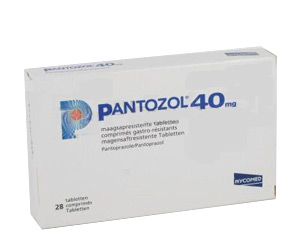
Pantoprazol
Incl. online consultation, medicine and discreet delivery
View Options
The medical information on this site is provided for educational purposes. It does not replace a face-to-face consultation with your GP or specialist. Always follow the advice of your prescribing doctor and read the patient information leaflet supplied with your medication.
Choose Your Medicine
Select dosage and quantity
Online Consultation
Reviewed by a qualified physician
Fast, Discreet Delivery
Delivered to your door
Medical Information
About This Medicine
Pantoprazole is a proton pump inhibitor (PPI) that irreversibly inhibits the gastric H+/K+-ATPase proton pump, suppressing both basal and stimulated gastric acid secretion.
It is licensed for the treatment of gastro-oesophageal reflux disease (GORD), peptic ulcer disease, and Zollinger-Ellison syndrome, as well as for the prophylaxis of NSAID-associated gastroduodenal ulcers in patients requiring continued NSAID therapy.
Pantoprazole is distinguished from omeprazole by a lower propensity for CYP2C19 inhibition, making it a preferred choice when co-prescribed with clopidogrel - a clinically relevant advantage acknowledged by the MHRA and European Medicines Agency.
The pharmacokinetics of pantoprazole are predictable and less variable than those of omeprazole, with minimal influence from CYP2C19 polymorphism status.
Bioavailability is approximately 77% after a 40 mg oral dose.
The clinical efficacy for acid-related disorders is well established across multiple randomised controlled trials, showing equivalence to other PPIs for ulcer healing and GORD symptom resolution.
Usage & Dosage
Swallow the gastro-resistant tablet whole with water, before a meal (preferably before breakfast).
Do not crush, break, or chew the tablet, as the enteric coating protects the active compound from degradation in gastric acid.
If prescribed twice daily for Zollinger-Ellison syndrome, take the second dose before the evening meal. For H. pylori eradication, combine with the prescribed antibiotics exactly as directed.
Do not stop treatment early even if symptoms improve, particularly for ulcer healing. Long-term use should be reviewed regularly.
GORD (erosive oesophagitis): 40 mg once daily for 4-8 weeks; maintenance 20 mg daily.
Mild GORD (symptom relief): 20 mg once daily for 2-4 weeks.
Duodenal ulcer: 40 mg once daily for 2-4 weeks.
Gastric ulcer: 40 mg once daily for 4-8 weeks.
NSAID prophylaxis: 20 mg once daily.
H. pylori eradication: 40 mg twice daily for 7 days with appropriate antibiotic combination.
Zollinger-Ellison syndrome: Starting dose 80 mg daily; dose adjusted per acid output.
In severe hepatic impairment, do not exceed 20 mg daily. No dose adjustment for renal impairment or elderly patients.
Side Effects
Side effects per SmPC frequency categories.
Common (≥1/100 to <1/10): Headache, diarrhoea, nausea, abdominal pain, flatulence, constipation, dizziness.
Uncommon (≥1/1,000 to <1/100): Sleep disturbance, dry mouth, rash, pruritus, elevated liver transaminases, fatigue, malaise, visual disturbance, arthralgia.
Rare (≥1/10,000 to <1/1,000): Hepatocellular damage (including rare cases of hepatic failure), interstitial nephritis, photosensitivity, myalgia, gynaecomastia, depression, taste disturbance, agranulocytosis, thrombocytopenia, severe cutaneous reactions (Stevens-Johnson syndrome, erythema multiforme).
Long-term use risks: As with all PPIs, prolonged therapy is associated with hypomagnesaemia (MHRA warning - check magnesium levels in patients on long-term treatment, especially with concurrent diuretics or digoxin), increased fracture risk, C.
difficile infection, and vitamin B12 malabsorption.
Warnings & Precautions
Pantoprazole should be used at the lowest effective dose for the shortest duration necessary. The MHRA advises that long-term PPI use should be regularly reviewed.
Exclude gastric malignancy before treatment, as acid suppression may mask symptoms.
Pantoprazole has a lower CYP2C19 inhibitory potential than omeprazole, but caution is still advised with drugs metabolised via this pathway.
Monitor magnesium levels during prolonged treatment, particularly in patients also receiving digoxin or diuretics, as hypomagnesaemia may cause arrhythmias and potentiate digoxin toxicity.
The combination of pantoprazole with high-dose methotrexate may require temporary PPI discontinuation due to delayed renal methotrexate elimination.
Contraindications
Pantoprazole is contraindicated in patients with hypersensitivity to pantoprazole, substituted benzimidazoles, or any excipient.
Concomitant use with atazanavir is not recommended due to substantially reduced atazanavir absorption. Concomitant use with nelfinavir is contraindicated.