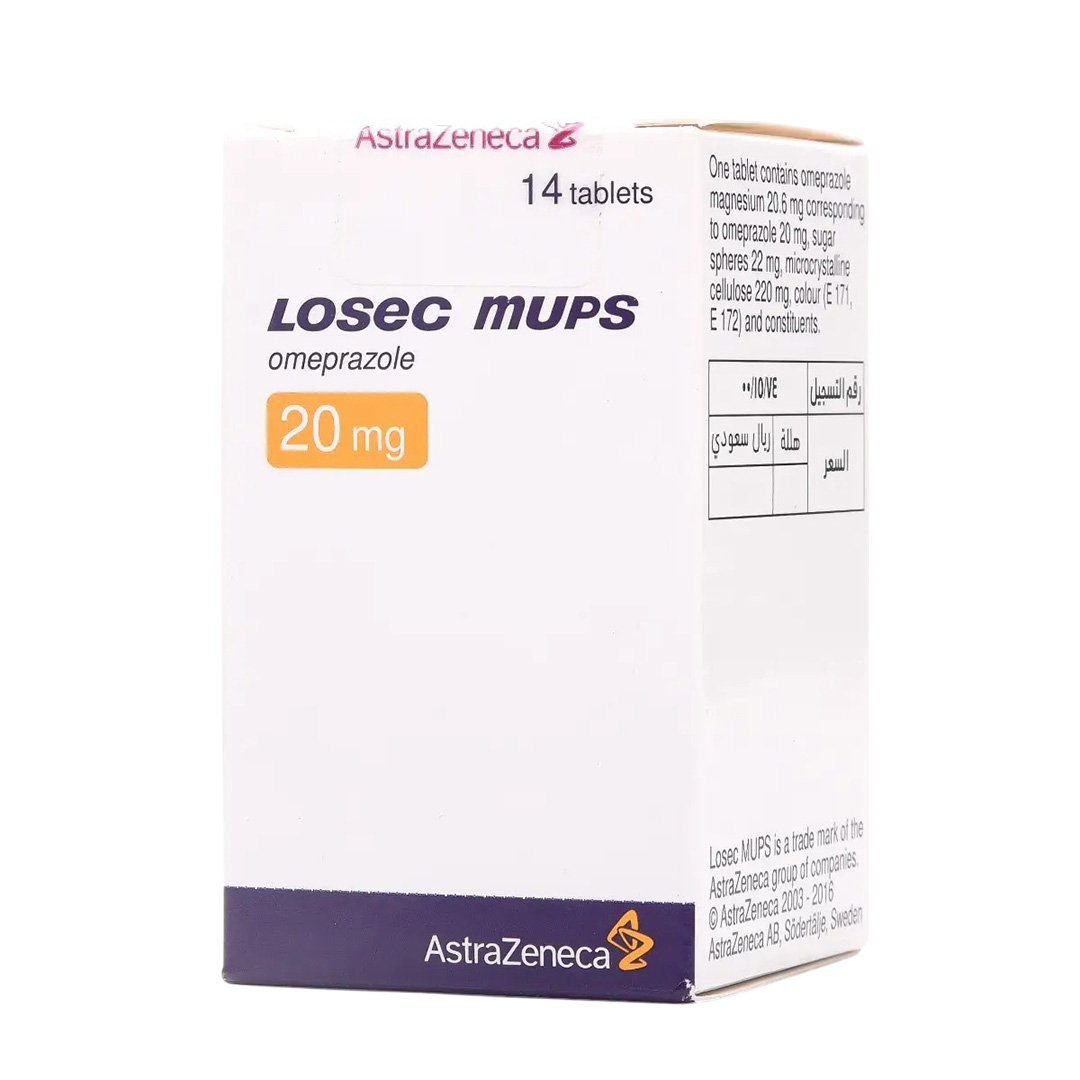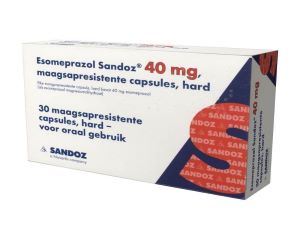
Esomeprazole
Incl. online consultation, medicine and discreet delivery
View Options
The medical information on this site is provided for educational purposes. It does not replace a face-to-face consultation with your GP or specialist. Always follow the advice of your prescribing doctor and read the patient information leaflet supplied with your medication.
Choose Your Medicine
Select dosage and quantity
Online Consultation
Reviewed by a qualified physician
Fast, Discreet Delivery
Delivered to your door
Medical Information
About This Medicine
Esomeprazole is a proton pump inhibitor (PPI) used to reduce gastric acid secretion.
It is the S-enantiomer of omeprazole and is prescribed for gastro-oesophageal reflux disease (GORD), the healing and maintenance of erosive oesophagitis, peptic ulcer disease, Zollinger-Ellison syndrome, and in combination with antibiotics for Helicobacter pylori eradication.
Esomeprazole irreversibly inhibits the hydrogen-potassium ATPase enzyme (proton pump) on the parietal cells of the stomach.
This blocks the final common pathway of acid secretion, producing a more profound and longer-lasting reduction in gastric acidity than H2-receptor antagonists.
Clinical Use
Esomeprazole is widely regarded as one of the most effective PPIs, achieving consistently high rates of symptom relief and mucosal healing in GORD and erosive oesophagitis.
It is also used prophylactically to prevent NSAID-associated gastric and duodenal ulceration in patients requiring long-term anti-inflammatory treatment.
Short-term use is well established as safe and effective.
The risk-benefit ratio of long-term use should be assessed regularly, as prolonged acid suppression is associated with certain potential complications.
Usage & Dosage
How to Take Esomeprazole
Swallow the tablet whole with water, at least one hour before a meal, preferably in the morning.
Do not chew or crush the tablet, as this destroys the enteric coating that protects the drug from stomach acid.
If You Cannot Swallow Tablets
The tablet can be dispersed in half a glass of still water (not milk or carbonated drinks), stirred gently, and the suspension drunk within 30 minutes.
Rinse the glass with water and drink the rinse to ensure the full dose is taken.
Duration
For reflux symptoms: usually 4-8 weeks. For maintenance: the lowest effective dose. For H. pylori eradication: 7-14 days alongside antibiotics.
GORD (Symptomatic Treatment)
- 20 mg once daily for 4 weeks (extend to 8 weeks if not healed)
Erosive Oesophagitis (Healing)
- 40 mg once daily for 4-8 weeks
Erosive Oesophagitis (Maintenance)
- 20 mg once daily
H. pylori Eradication
- 20 mg twice daily for 7 days (with two antibiotics as per local guidelines)
NSAID-Associated Ulcer Prophylaxis
- 20 mg once daily
Zollinger-Ellison Syndrome
- Starting dose 40 mg twice daily; titrate to response
Renal Impairment
- No dose adjustment
Hepatic Impairment
- Severe: do not exceed 20 mg daily
Side Effects
Common (up to 1 in 10 patients)
- Headache
- Abdominal pain, diarrhoea, flatulence, nausea, or constipation
Uncommon (up to 1 in 100 patients)
- Dizziness
- Dry mouth
- Skin rash or dermatitis
- Peripheral oedema
Rare (up to 1 in 1,000 patients)
- Leucopenia, thrombocytopenia
- Hepatitis (with or without jaundice)
- Arthralgia and myalgia
- Blurred vision
Very Rare (fewer than 1 in 10,000 patients)
- Interstitial nephritis
- Stevens-Johnson syndrome or toxic epidermal necrolysis
- Hypomagnesaemia (with prolonged use)
- Pancytopenia or agranulocytosis
Long-Term Use Concerns
- Increased risk of Clostridioides difficile infection
- Possible small increase in hip, wrist, and spine fracture risk
- Reduced vitamin B12 and magnesium absorption
Warnings & Precautions
Long-Term Use
Prolonged PPI use (beyond 8 weeks) should be reviewed regularly. Long-term acid suppression is associated with a modest increase in the risk of C.
difficile infection, bone fractures, hypomagnesaemia, and vitamin B12 deficiency. Use the lowest effective dose for the shortest duration.
Exclude Malignancy
Esomeprazole can mask the symptoms of gastric carcinoma.
When alarm features are present (unintended weight loss, dysphagia, vomiting, anaemia), endoscopy should be performed before starting PPI therapy.
Magnesium Monitoring
For patients on long-term treatment, consider periodic serum magnesium checks, especially if also taking diuretics or digoxin.
Drug Interactions
Esomeprazole reduces absorption of drugs requiring an acidic gastric environment (e.g., ketoconazole, erlotinib, iron salts).
It inhibits CYP2C19 and may increase levels of diazepam, citalopram, and phenytoin.
Contraindications
Do not take esomeprazole if you have:
- A known hypersensitivity to esomeprazole, any other PPI (omeprazole, lansoprazole, pantoprazole, rabeprazole), or any excipient
- Concurrent use with nelfinavir (HIV protease inhibitor - plasma levels are significantly reduced)
Use with caution in severe hepatic impairment (dose reduction required).