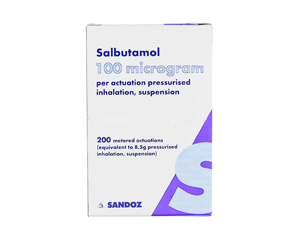
Salbutamol
Incl. online consultation, medicine and discreet delivery
View Options
The medical information on this site is provided for educational purposes. It does not replace a face-to-face consultation with your GP or specialist. Always follow the advice of your prescribing doctor and read the patient information leaflet supplied with your medication.
Choose Your Medicine
Select dosage and quantity
Online Consultation
Reviewed by a qualified physician
Fast, Discreet Delivery
Delivered to your door
Medical Information
About This Medicine
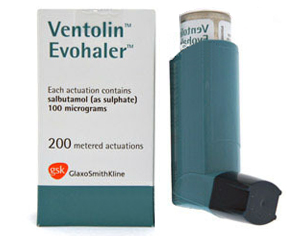
Salbutamol is a short-acting beta-2 adrenergic receptor agonist (SABA). This is a medicine that quickly opens up the airways.
It is the most widely used reliever inhaler for asthma and chronic obstructive pulmonary disease (COPD) worldwide. Salbutamol works by stimulating beta-2 receptors on the muscle around your airways.
This relaxes the muscle and opens the airways within 3-5 minutes. The effect is strongest at 15-30 minutes and lasts 4-6 hours.
Salbutamol gives fast relief from sudden tight airways, exercise-related breathing problems, and wheezing.
The BNF, NICE, and BTS/SIGN guidelines recommend salbutamol as the first reliever for everyone with asthma. You use it as needed to ease symptoms. It does not treat the swelling inside the airways.
For this reason, it should not be your only asthma treatment, unless your symptoms are very rare. Using too much salbutamol is a warning sign.
Needing it more than 3 times per week, or going through 3 or more canisters per year, suggests your asthma is not well controlled.
This should prompt a clinical review and a look at regular preventer therapy.
The MHRA and the National Review of Asthma Deaths (NRAD) have shown that leaning on a SABA without enough preventer therapy can lead to avoidable asthma deaths.
Usage & Dosage
Shake the inhaler well before each use. Take off the mouthpiece cover. Breathe out fully. Place the mouthpiece between your lips and make a tight seal.
As you start to breathe in slowly and deeply, press the canister to release one puff. Keep breathing in slowly for 3-5 seconds.
Take the inhaler away from your mouth and hold your breath for up to 10 seconds. Then breathe out gently. If you need a second puff, wait at least 30 seconds before you repeat.
A spacer device helps more of the medicine reach your lungs. It is recommended for children and for anyone who finds the technique hard. Clean the inhaler mouthpiece weekly with a dry cloth.
Always carry your reliever inhaler with you.
Acute bronchospasm relief (sudden tight airways): Take 1-2 puffs (100-200 mcg) as needed. You may take up to 4 puffs for moderate symptoms.
For a severe asthma flare-up: take 10 puffs through a spacer. Give 1 puff at a time, and follow each puff with 5 breaths through the spacer.
You can repeat this every 20 minutes if there is no improvement, while you wait for emergency medical help.
Preventing exercise-related breathing problems: Take 2 puffs 15-30 minutes before exercise.
Maximum recommended dose: 8 puffs per day on a regular basis. If you regularly need more than 8 puffs a day, you need an urgent medical review. Nebulised salbutamol (2.
5-5 mg) is used in hospital for acute severe asthma. You do not need a dose change for kidney or liver problems.
Side Effects
These side effects follow the SmPC frequency categories.
Common (≥1/100 to <1/10): Fine tremor (mainly in the hands), headache, fast heartbeat, palpitations, and muscle cramps.
Uncommon (≥1/1,000 to <1/100): Nervousness, agitation, restlessness, and hyperactivity (mainly in children). Also dizziness, throat irritation, a cough when you inhale, and a dry mouth and throat.
Rare (≥1/10,000 to <1/1,000): Low blood potassium (hypokalaemia), which can happen with high or repeated doses.
This matters in acute asthma, especially alongside corticosteroids, diuretics, or xanthines.
Also paradoxical bronchospasm, where the airways tighten instead of opening (stop the inhaler and use a different bronchodilator).
Other rare effects are heart rhythm problems (including atrial fibrillation and supraventricular tachycardia) and widening of blood vessels in the limbs.
Very rare (<1/10,000): Angioedema (swelling under the skin), urticaria (hives), allergic reactions, and lactic acidosis (a build-up of acid in the blood) with high-dose intravenous use.
Tremor and a fast heartbeat depend on the dose. They are usually mild at standard inhaled doses. Low potassium matters most during severe asthma flare-ups that need high-dose or nebulised salbutamol.
Warnings & Precautions
The MHRA and NRAD stress that overusing a SABA is a risk factor for asthma death.
Prescribers should review patients who use 3 or more salbutamol inhalers per year, and make sure the right preventer therapy is in place. Salbutamol does not treat swelling in the airways.
Patients with ongoing symptoms need regular inhaled corticosteroids. In acute severe asthma, check the potassium level in the blood.
Salbutamol can cause a marked drop in potassium (hypokalaemia), especially when nebulised or given by vein. Low oxygen, systemic corticosteroids, and theophylline can make this worse.
Use salbutamol with care in people with an overactive thyroid (thyrotoxicosis), existing heart disease (ischaemic heart disease, heart rhythm problems, hypertrophic cardiomyopathy), phaeochromocytoma, and diabetes (it may raise blood sugar).
Beta-blockers, including eye drops, can reduce how well salbutamol works and should be avoided in asthma.
Contraindications
You should not use salbutamol if you are allergic to salbutamol or to any other ingredient. There are no absolute reasons to avoid salbutamol in a life-threatening asthma emergency.
For routine use, some conditions count as relative cautions: an untreated overactive thyroid (thyrotoxicosis), phaeochromocytoma, and a severe fast heart rhythm.
The inhaler is not a replacement for preventer therapy.