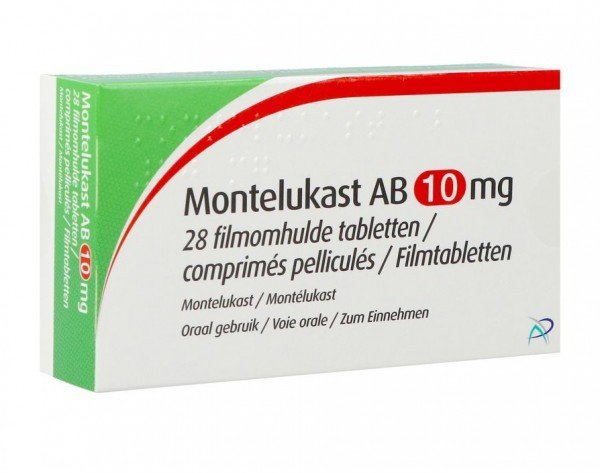
Montelukast
Incl. online consultation, medicine and discreet delivery
View Options
The medical information on this site is provided for educational purposes. It does not replace a face-to-face consultation with your GP or specialist. Always follow the advice of your prescribing doctor and read the patient information leaflet supplied with your medication.
Choose Your Medicine
Select dosage and quantity
Online Consultation
Reviewed by a qualified physician
Fast, Discreet Delivery
Delivered to your door
Medical Information
About This Medicine
Montelukast is a leukotriene receptor antagonist (LTRA) used in the management of asthma and allergic rhinitis.
It is taken as a once-daily tablet and works by blocking the CysLT1 receptor, preventing the action of leukotrienes - inflammatory mediators that contribute to bronchoconstriction, mucus production, and airway oedema.
Leukotrienes are released by mast cells, eosinophils, and other inflammatory cells in the airways. They are a key driver of the late-phase allergic response and exercise-induced bronchoconstriction.
By blocking their receptor, montelukast provides anti-inflammatory and bronchodilatory effects that complement inhaled corticosteroids.
Role in Asthma Management
Montelukast is used as add-on therapy to inhaled corticosteroids in patients whose asthma is not adequately controlled, or as an alternative to low-dose ICS in patients who cannot or will not use inhalers.
It is also licensed for the prevention of exercise-induced bronchoconstriction.
Allergic Rhinitis
Montelukast is effective for both seasonal and perennial allergic rhinitis and can be particularly useful in patients who have both asthma and nasal allergy, as a single tablet addresses both conditions.
Usage & Dosage
How to Take Montelukast
Take one tablet in the evening, with or without food. The evening timing is based on the original clinical trial design and leukotriene release patterns. Swallow the adult tablet whole.
Chewable tablets for children should be chewed before swallowing.
Regularity
Take montelukast every day, even when symptom-free. It is a preventer, not a reliever. Continue your reliever inhaler for acute symptoms.
Asthma Action Plan
Do not stop montelukast during an asthma exacerbation. It should be continued alongside other treatments. Do not use it to replace an inhaled corticosteroid without medical advice.
Adults and Adolescents (15 years and over)
- 10 mg film-coated tablet once daily in the evening
Children 6-14 Years
- 5 mg chewable tablet once daily in the evening
Children 2-5 Years
- 4 mg chewable tablet or granules once daily in the evening
Children 6 Months to 2 Years
- 4 mg granules once daily in the evening
Renal and Hepatic Impairment
- No dose adjustment for mild to moderate hepatic impairment
- No dose adjustment for renal impairment
- Limited data in severe hepatic impairment
Side Effects
Common (up to 1 in 10 patients)
- Headache
- Abdominal pain
- Upper respiratory tract infection (in paediatric trials)
Uncommon (up to 1 in 100 patients)
- Diarrhoea, nausea, vomiting
- Rash, eczema
- Dizziness
- Fatigue
Rare (up to 1 in 1,000 patients)
- Sleep disturbance (insomnia, abnormal dreams, sleepwalking)
- Agitation, irritability, or restlessness
- Depression, anxiety
- Elevated liver transaminases
- Bruising, bleeding tendency
Very Rare (fewer than 1 in 10,000 patients)
- Suicidal thoughts and behaviour (see warnings)
- Eosinophilic granulomatosis with polyangiitis (Churg-Strauss syndrome)
- Hepatitis, including cholestatic and hepatocellular injury
- Erythema nodosum
Neuropsychiatric effects require particular vigilance. Report mood or behavioural changes promptly.
Warnings & Precautions
Neuropsychiatric Effects
Post-marketing reports include agitation, aggression, depression, suicidal thoughts, hallucinations, and sleep disturbance. These are uncommon but clinically important.
Patients and carers - especially parents of children taking montelukast - should be alert to mood or behavioural changes and report them immediately.
Not a Rescue Medication
Montelukast does not relieve acute bronchospasm. Always carry a short-acting bronchodilator.
Churg-Strauss Syndrome
Rarely, eosinophilic granulomatosis with polyangiitis has been reported in patients on montelukast, often during corticosteroid tapering.
It is unclear whether montelukast is a cause or whether the reduction in steroids unmasks a pre-existing condition.
Phenylketonuria
Chewable tablets contain aspartame, a source of phenylalanine. Patients with phenylketonuria should be informed.
Contraindications
Do not take montelukast if you have a known hypersensitivity to montelukast sodium or any excipient in the formulation.
Chewable tablets contain aspartame and should be used with caution in patients with phenylketonuria.
There are no other absolute contraindications, but the neuropsychiatric risk profile should be considered when initiating therapy, particularly in patients with a history of mental health disorders.