Colchicine
Incl. online consultation, medicine and discreet delivery
View Options
The medical information on this site is provided for educational purposes. It does not replace a face-to-face consultation with your GP or specialist. Always follow the advice of your prescribing doctor and read the patient information leaflet supplied with your medication.
Choose Your Medicine
Select dosage and quantity
Online Consultation
Reviewed by a qualified physician
Fast, Discreet Delivery
Delivered to your door
Medical Information
About This Medicine
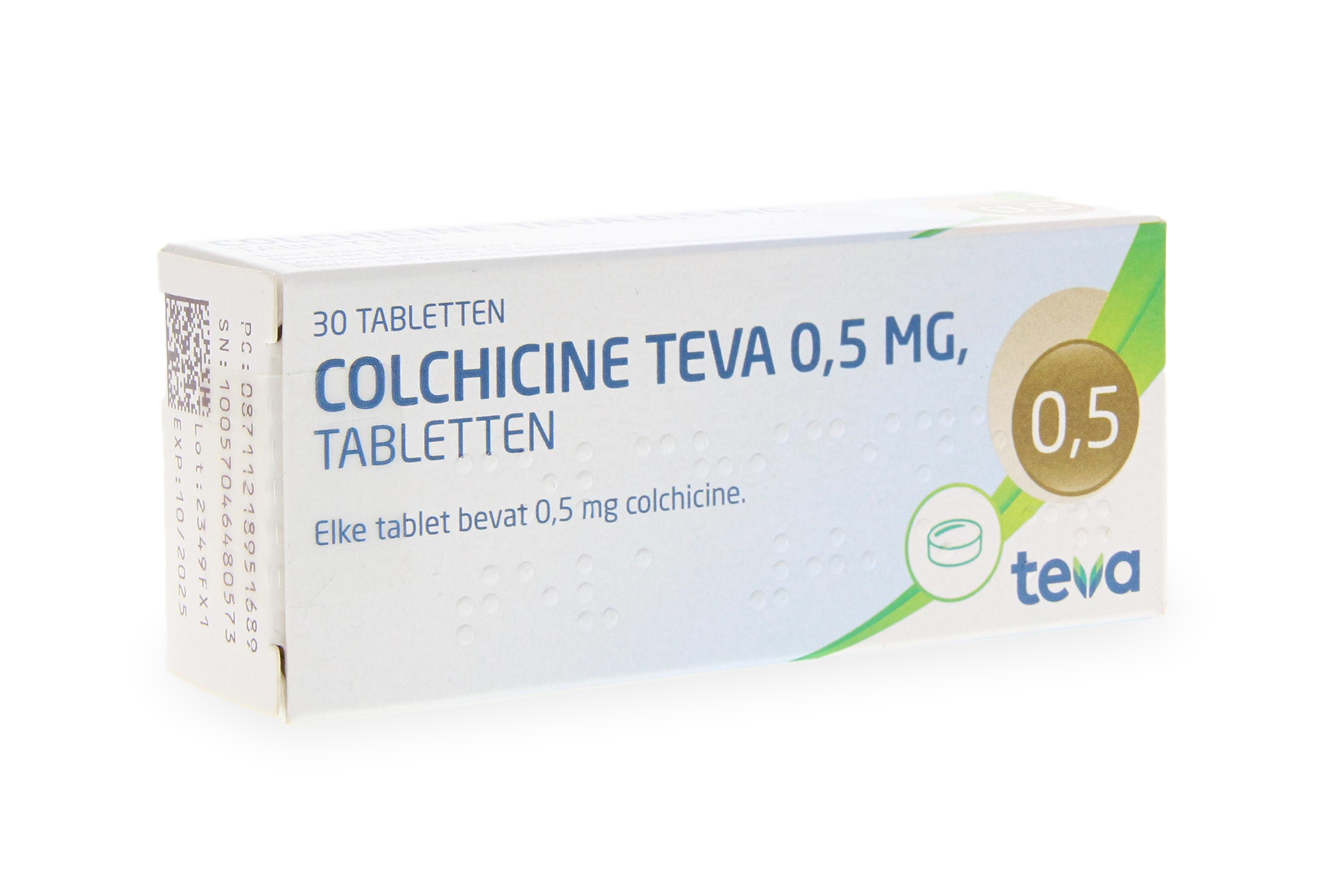
Colchicine is an anti-inflammatory agent derived from the autumn crocus plant (Colchicum autumnale), used primarily for the treatment and prophylaxis of acute gout attacks.
It is one of the oldest remedies still in clinical use and remains a first-line option for gout flares, particularly when non-steroidal anti-inflammatory drugs are contraindicated.
The drug works by inhibiting microtubule polymerisation in neutrophils, which disrupts their ability to migrate to the site of urate crystal deposition in joints.
It also reduces neutrophil activation and the release of inflammatory mediators, thereby dampening the intense inflammatory response responsible for the swelling, redness, and pain of an acute gout attack.
Colchicine is most effective when started within the first 12 to 36 hours of an acute flare.
At the low doses now recommended, it provides meaningful symptom relief with a considerably better safety profile than the higher doses used historically.
Beyond gout, colchicine is occasionally used in the management of familial Mediterranean fever, recurrent pericarditis, and Behcet's disease, although these indications are less common in general practice.
Usage & Dosage
For an acute gout attack, take 500 micrograms two to four times daily until the pain subsides or until a maximum of 6 mg has been taken over a course. Do not repeat the course within three days.
Start treatment as soon as possible after the onset of symptoms for the best response.
For gout prophylaxis during initiation of urate-lowering therapy, the usual dose is 500 micrograms once or twice daily. Your prescriber will determine the appropriate duration.
Swallow the tablets whole with water. Colchicine may be taken with or without food, though taking it with food may reduce gastrointestinal discomfort.
Acute gout: 500 micrograms two to four times daily. The BNF recommends a maximum total dose of 6 mg per course, with at least three days between courses.
Some guidelines suggest an initial dose of 1 mg followed by 500 micrograms one hour later, with no further colchicine for 12 hours.
Prophylaxis: 500 micrograms once or twice daily, continued for the duration of urate-lowering therapy initiation (typically three to six months).
Dose reduction is necessary in patients with renal or hepatic impairment.
Side Effects
Diarrhoea, nausea, abdominal cramping, and vomiting are the most common side effects and often signal that the maximum tolerable dose has been reached.
These gastrointestinal symptoms are dose-related and are the main reason for the move towards lower-dose regimens.
Less commonly, colchicine may cause bone marrow suppression, presenting as anaemia, leucopenia, or thrombocytopenia.
Peripheral neuropathy and myopathy have been reported with prolonged use or in patients with renal impairment.
Rarely, excessive doses can lead to multi-organ toxicity, disseminated intravascular coagulation, and death. Colchicine poisoning is a medical emergency and there is no specific antidote.
Rash, alopecia, and abnormal liver function tests have been reported infrequently.
Warnings & Precautions
Colchicine has a narrow therapeutic index. The toxic dose is close to the effective dose, and patients must adhere strictly to the prescribed amount.
Never exceed the recommended course and do not repeat courses too soon.
Renal impairment significantly increases the risk of toxicity. Dose reduction or avoidance is necessary in patients with moderate to severe kidney disease. The same applies in hepatic impairment.
Colchicine interacts with several drugs, including macrolide antibiotics (clarithromycin, erythromycin), azole antifungals, ciclosporin, and statins, increasing the risk of myopathy and rhabdomyolysis.
Avoid grapefruit juice during treatment.
Contraindications
Colchicine is contraindicated in patients with severe renal failure, severe hepatic impairment, or blood dyscrasias.
It must not be used concomitantly with strong CYP3A4 inhibitors or P-glycoprotein inhibitors in patients who already have renal or hepatic compromise.
It is not recommended during pregnancy or breastfeeding. Men and women of reproductive potential should use effective contraception during treatment and for at least three months after the last dose.