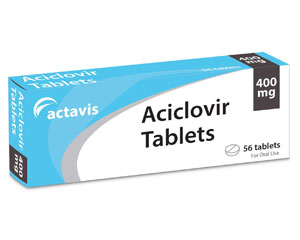
Aciclovir
Incl. online consultation, medicine and discreet delivery
View Options
The medical information on this site is provided for educational purposes. It does not replace a face-to-face consultation with your GP or specialist. Always follow the advice of your prescribing doctor and read the patient information leaflet supplied with your medication.
Choose Your Medicine
Select dosage and quantity
Online Consultation
Reviewed by a qualified physician
Fast, Discreet Delivery
Delivered to your door
Medical Information
About This Medicine
Aciclovir is an antiviral medication active against herpes simplex virus types 1 and 2 (HSV-1, HSV-2) and varicella-zoster virus (VZV).
It is prescribed for the treatment of genital herpes, cold sores, chickenpox, and shingles, and for suppressive therapy in patients with frequent herpes recurrences.
Aciclovir is a nucleoside analogue that is selectively activated by viral thymidine kinase.
Once phosphorylated by the virus, it is incorporated into the growing viral DNA chain and causes chain termination, halting viral replication.
Because activation depends on a viral enzyme, aciclovir has minimal effect on uninfected cells, giving it a favourable safety profile.
Oral, Topical, and Intravenous Formulations
Oral aciclovir is the standard treatment for genital herpes and shingles. Topical aciclovir cream is used for cold sores (herpes labialis) and works best when applied at the earliest tingling stage.
Intravenous aciclovir is reserved for severe or life-threatening infections such as herpes encephalitis and varicella in immunocompromised patients.
Aciclovir does not cure herpes infections - the virus remains latent in nerve ganglia - but it reduces the severity and duration of outbreaks and decreases viral shedding.
Usage & Dosage
Oral Tablets
Swallow with a full glass of water. Maintain adequate hydration throughout treatment to reduce the risk of renal crystal deposition. Space doses evenly through the day.
Topical Cream (Cold Sores)
Apply to the affected area five times daily, approximately every four hours during waking hours, for five days. Start at the first sign of tingling or itching for best results.
Wash hands before and after application.
Suppressive Therapy (Genital Herpes)
Take aciclovir 400 mg twice daily continuously. The need for ongoing suppression should be reviewed at least annually.
Genital Herpes - First Episode
- 200 mg five times daily for 5 days (or 400 mg three times daily)
Genital Herpes - Recurrence
- 200 mg five times daily for 5 days, started as early as possible
Genital Herpes - Suppression
- 400 mg twice daily, reviewed annually
Herpes Zoster (Shingles)
- 800 mg five times daily for 7 days; start within 72 hours of rash onset
Chickenpox
- Adults: 800 mg five times daily for 7 days
- Children: weight-based dosing as directed
Renal Impairment
- Dose reduction required based on creatinine clearance; consult prescribing information
Side Effects
Common (up to 1 in 10 patients)
- Nausea
- Headache
- Diarrhoea or abdominal pain
Uncommon (up to 1 in 100 patients)
- Dizziness
- Fatigue
- Rash, urticaria, or pruritus
- Photosensitivity
Rare (up to 1 in 1,000 patients)
- Elevated liver enzymes or bilirubin
- Reversible rises in blood urea and creatinine
- Anaemia, leucopenia, thrombocytopenia
Very Rare (fewer than 1 in 10,000 patients)
- Acute renal failure (usually from crystalluria in dehydrated patients or rapid IV infusion)
- Neurological effects: tremor, confusion, hallucinations, seizures (mainly with IV use or in renal impairment)
- Anaphylaxis
Most oral side effects are mild. Adequate hydration greatly reduces the risk of renal complications.
Warnings & Precautions
Hydration
Drink at least two litres of fluid daily during treatment, especially at the higher shingles dose. Dehydration increases the risk of aciclovir crystallising in the renal tubules.
Renal Impairment
Dose reduction is essential in patients with reduced kidney function. Failure to adjust the dose can lead to accumulation and neurological toxicity.
Early Treatment
Aciclovir is most effective when started early. For shingles, treatment should begin within 72 hours of the rash appearing. For cold sores, apply cream at the first tingling sensation.
Pregnancy
Aciclovir is not formally licensed in pregnancy but has extensive safety data from registries. It is commonly used for genital herpes around the time of delivery to prevent neonatal transmission.
Discuss with your obstetrician.
Contraindications
Do not use aciclovir if you have a known hypersensitivity to aciclovir, valaciclovir, or any excipient in the formulation.
Use with caution and dose adjustment in patients with renal impairment. Ensure adequate hydration before and during treatment, particularly at high doses.
Aciclovir cream is for external use only and must not be applied to the eyes, inside the mouth, or to the genitals (oral tablets are used for genital herpes).