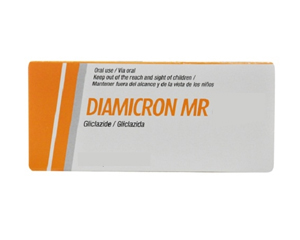
Diamicron MR
Incl. online consultation, medicine and discreet delivery
View Options
The medical information on this site is provided for educational purposes. It does not replace a face-to-face consultation with your GP or specialist. Always follow the advice of your prescribing doctor and read the patient information leaflet supplied with your medication.
Choose Your Medicine
Select dosage and quantity
Online Consultation
Reviewed by a qualified physician
Fast, Discreet Delivery
Delivered to your door
Medical Information
About This Medicine
Diamicron is the brand name for gliclazide, a sulphonylurea antidiabetic agent used in the management of type 2 diabetes mellitus.
It is prescribed when blood glucose levels are not adequately controlled through dietary modification, physical activity, and weight management alone.
Gliclazide works primarily by stimulating the beta cells of the pancreatic islets of Langerhans to secrete more insulin.
It binds to specific sulphonylurea receptors (SUR1) on the beta cell membrane, closing ATP-sensitive potassium channels and triggering insulin release.
Beyond its insulin-secreting properties, gliclazide has been shown to have beneficial haemovascular effects, including reducing platelet adhesion and aggregation and enhancing fibrinolytic activity, which may contribute to a reduced risk of microvascular complications.
Diamicron is available as standard tablets and as a modified-release (MR) formulation that allows once-daily dosing.
The ADVANCE trial demonstrated that intensive glucose control with gliclazide-based therapy significantly reduced the incidence of nephropathy and other microvascular events in patients with type 2 diabetes.
Usage & Dosage
Take Diamicron by mouth with breakfast. Swallow modified-release tablets whole; do not crush, chew, or split them. Standard tablets may be taken once or twice daily depending on the dose.
Monitor your blood glucose regularly as directed by your healthcare team. Keep glucose tablets or a sugary drink available in case of hypoglycaemia.
Continue with your prescribed diet and exercise regimen.
For Diamicron MR (modified release): starting dose is 30 mg once daily with breakfast, which may be increased in increments of 30 mg at intervals of at least 4 weeks to a maximum of 120 mg once daily.
For standard Diamicron: starting dose is 40 mg to 80 mg daily, increasing if necessary to a maximum of 320 mg daily in divided doses. Dose adjustments are guided by blood glucose levels and HbA1c.
Side Effects
Common (1 in 10 to 1 in 100): hypoglycaemia (especially with missed meals, excessive exercise, or alcohol consumption), nausea, diarrhoea, constipation, abdominal pain.
Uncommon (1 in 100 to 1 in 1,000): skin rash, pruritus, urticaria. Rare (1 in 1,000 to 1 in 10,000): hepatitis, jaundice, elevated liver enzymes, thrombocytopenia, leucopenia, anaemia.
Very rare (less than 1 in 10,000): severe skin reactions, severe hypoglycaemia leading to coma, hyponatraemia, visual disturbances.
Hypoglycaemia is the most important risk and patients must learn to recognise its symptoms.
Warnings & Precautions
Hypoglycaemia is the principal risk of sulphonylurea therapy. Patients should be educated about the symptoms (sweating, tremor, hunger, confusion, palpitations) and how to manage episodes.
Risk factors include missed meals, excessive alcohol, strenuous exercise, renal or hepatic impairment, and advanced age.
Gliclazide should be used with caution in patients with glucose-6-phosphate dehydrogenase (G6PD) deficiency, as haemolytic anaemia may occur.
Regular monitoring of blood glucose and HbA1c is essential. Hepatic and renal function should be checked periodically.
Contraindications
Diamicron is contraindicated in type 1 diabetes, diabetic ketoacidosis, diabetic pre-coma and coma, severe renal or hepatic insufficiency, and during treatment with miconazole.
It should not be used during pregnancy or breastfeeding; insulin should be used instead. Known hypersensitivity to gliclazide, other sulphonylureas, or sulphonamides is also a contraindication.