Qlaira
Incl. online consultation, medicine and discreet delivery
View Options
The medical information on this site is provided for educational purposes. It does not replace a face-to-face consultation with your GP or specialist. Always follow the advice of your prescribing doctor and read the patient information leaflet supplied with your medication.
Choose Your Medicine
Select dosage and quantity
Online Consultation
Reviewed by a qualified physician
Fast, Discreet Delivery
Delivered to your door
Medical Information
About This Medicine
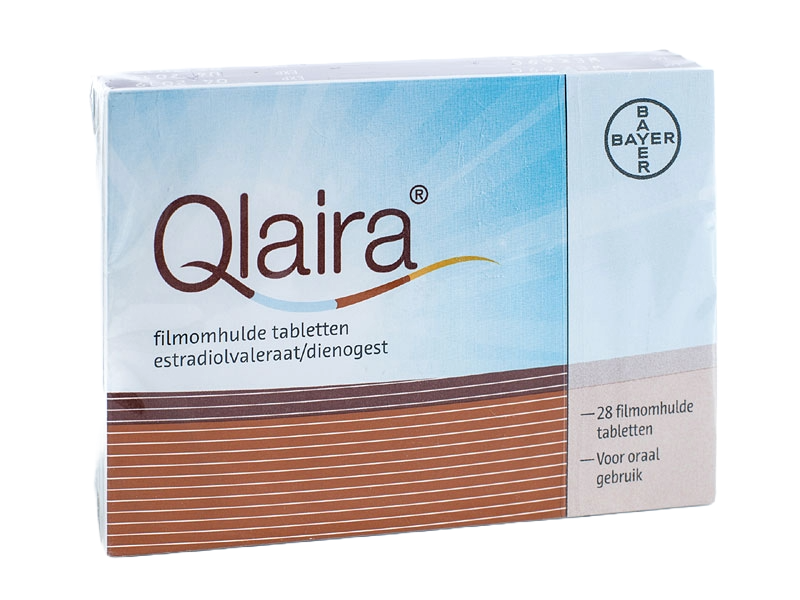
Qlaira is a combined oral contraceptive pill. It uses estradiol valerate, a form of natural oestrogen. Most other pills use synthetic ethinylestradiol instead.
Qlaira also contains dienogest, a progestogen (a hormone that helps prevent pregnancy). Dienogest has strong progestational effects and some anti-androgenic action, which can help with acne.
The pill uses a four-phasic regimen. This means the hormone doses change in four steps across the pack. This follows your natural cycle more closely than pills with one fixed dose.
Qlaira is also the first pill licensed to treat heavy menstrual bleeding (menorrhagia) in women who want a pill for contraception.
In clinical studies, it reduced menstrual blood loss by about 70-80%. It prevents pregnancy as well as other combined pills, with a Pearl Index of about 0.
73 per 100 woman-years (a measure of how often pregnancy occurs). Using estradiol valerate instead of ethinylestradiol may have advantages for how the liver makes proteins.
It may also give a more favourable effect on the body's metabolism. Long-term data on these benefits are still being collected.
Qlaira is listed in the BNF and is a NICE-recognised option for heavy menstrual bleeding.
Usage & Dosage
Take one tablet daily for 28 days in a row. Always follow the order shown on the blister pack. This matters because the four phases contain different hormone doses.
Take your tablet at about the same time each day. Swallow it whole with water. There is no break between packs. Start the next pack straight after you finish the current one.
The last 2 white tablets in each pack are placebos (they contain no hormones). A withdrawal bleed usually happens during these days.
If you miss a tablet by less than 12 hours, take it as soon as you remember. Then carry on as normal. If you are more than 12 hours late, follow the missed-pill rules in the patient leaflet.
These rules differ from standard 21/7 pills because of the multi-phase design.
The 28-tablet blister follows a four-phasic sequence.
It contains: 2 dark yellow tablets (estradiol valerate 3 mg), 5 medium red tablets (estradiol valerate 2 mg + dienogest 2 mg), 17 light yellow tablets (estradiol valerate 2 mg + dienogest 3 mg), 2 dark red tablets (estradiol valerate 1 mg), and 2 white placebo tablets.
You do not need to change the dose for your body weight. Take the pack in strict order, tablet by tablet. Start Qlaira on day 1 of your menstrual cycle.
If you are switching from another combined pill, start on the day after the last active tablet of your previous pack.
Side Effects
Side effects are listed by how often they happened in the clinical studies (SmPC frequency categories).
Common (≥1/100 to <1/10): Headache, abdominal pain, nausea, acne, amenorrhoea (no withdrawal bleed, reported in about 15-20% of cycles after the first few months), breast discomfort, irregular or unpredictable bleeding, weight gain.
Uncommon (≥1/1,000 to <1/100): Migraine, fluid retention, mood changes (depression, irritability), dizziness, hot flushes, high blood pressure, indigestion, increased appetite, muscle and joint pain, ovarian cysts, vaginal dryness or discharge, tiredness.
Rare (≥1/10,000 to <1/1,000): Venous thromboembolism (a blood clot in a vein), arterial thromboembolism (a clot in an artery), cholecystitis (gallbladder inflammation), cholelithiasis (gallstones).
A missing withdrawal bleed is more common with Qlaira than with pills that contain ethinylestradiol. In most cases it does not mean the pill has failed or that you are pregnant.
Still, you should rule out pregnancy if you miss two withdrawal bleeds in a row.
Warnings & Precautions
Qlaira carries the same blood clot warnings as other combined hormonal contraceptives.
The risk of venous thromboembolism (VTE, a blood clot in a vein) is thought to be similar to pills that contain dienogest and ethinylestradiol.
However, specific data for the estradiol valerate combination are limited. The standard checks for combined contraceptives apply.
Your prescriber should assess your VTE risk factors and monitor your blood pressure. You should stop the pill before long periods of immobility or major surgery.
The missed-pill rules for Qlaira differ from standard 21/7 pills because of the four-phasic design. Prescribers and patients should read the specific guidance in the SmPC.
Drugs that induce liver enzymes reduce how well Qlaira works. Women with a history of chloasma (skin patches) should avoid sun exposure while taking it.
Contraindications
Do not use Qlaira if you have or have had a venous or arterial blood clot (VTE or arterial thromboembolism).
Do not use it if you have a known clotting disorder, migraine with aura, or diabetes with vascular complications.
It is also unsuitable if you have severe liver disease or liver tumours, or a known or suspected cancer that is sensitive to sex hormones.
Avoid it if you have undiagnosed vaginal bleeding, or pancreatitis linked to very high blood fats (severe hypertriglyceridaemia).
Do not use it if you are allergic to estradiol valerate, dienogest, or any other ingredient. Qlaira must not be used during pregnancy. Stop it at once if pregnancy is confirmed.