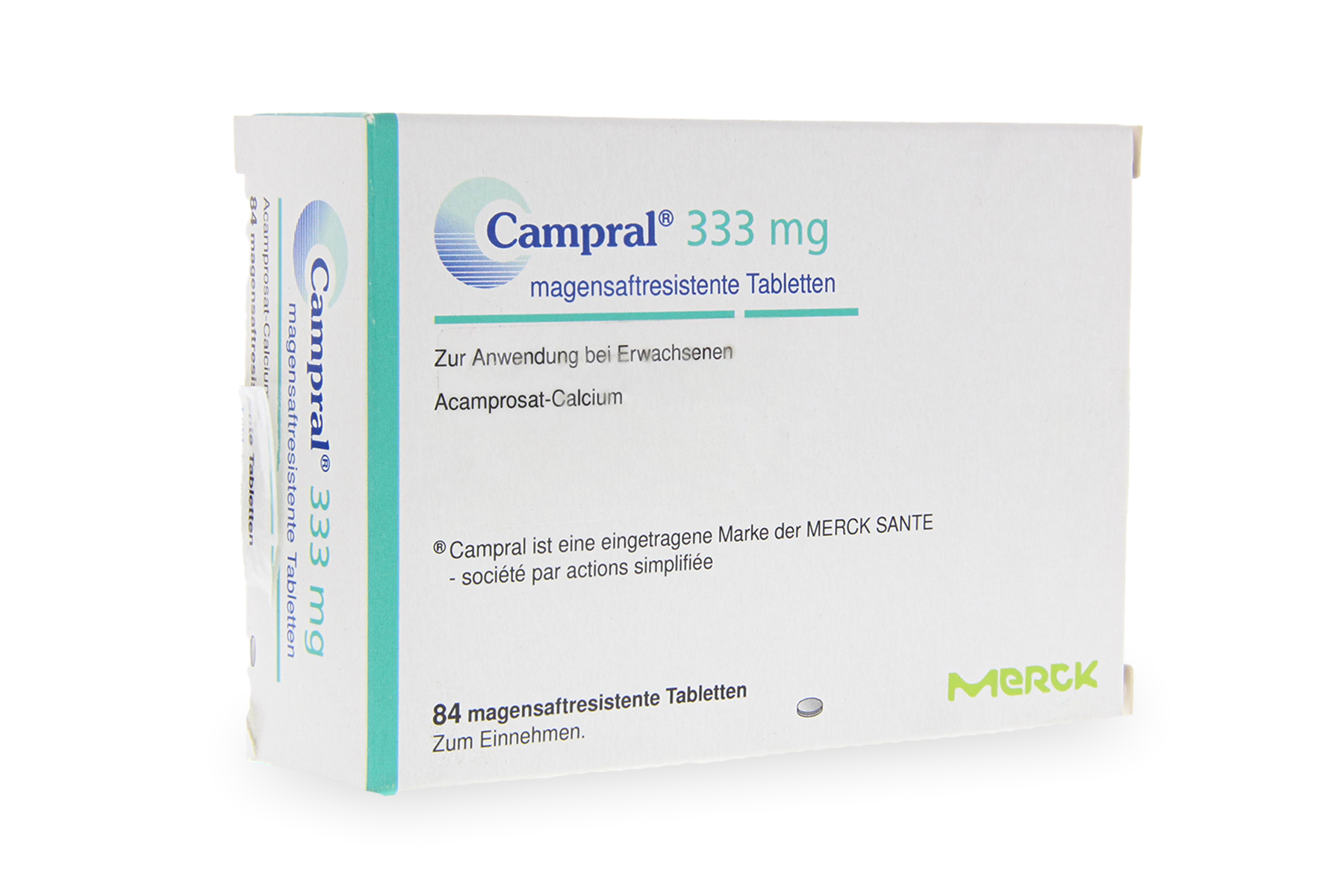
Campral
Incl. online consultation, medicine and discreet delivery
View Options
The medical information on this site is provided for educational purposes. It does not replace a face-to-face consultation with your GP or specialist. Always follow the advice of your prescribing doctor and read the patient information leaflet supplied with your medication.
Choose Your Medicine
Select dosage and quantity
Online Consultation
Reviewed by a qualified physician
Fast, Discreet Delivery
Delivered to your door
Medical Information
About This Medicine
Campral is the brand name for acamprosate calcium, a medication used to support the maintenance of abstinence in patients with alcohol dependence who have achieved sobriety.
It is prescribed as part of a comprehensive treatment programme that includes counselling and psychosocial support.
The exact mechanism of action of acamprosate is not fully elucidated, but it is believed to modulate the balance between excitatory glutamatergic and inhibitory GABAergic neurotransmission in the central nervous system.
Chronic alcohol consumption disrupts this balance, and during withdrawal and early abstinence, the brain enters a state of hyperexcitability.
Acamprosate helps to restore normal neuronal function, reducing the unpleasant symptoms and cravings associated with protracted withdrawal that often lead to relapse.
Campral does not prevent or treat the acute symptoms of alcohol withdrawal and should only be initiated once the patient has been fully detoxified.
It does not interact with alcohol and does not produce unpleasant effects if alcohol is consumed, unlike disulfiram. Treatment is typically continued for 12 months to support long-term abstinence.
Usage & Dosage
Take Campral by mouth three times daily with meals at breakfast, midday, and in the evening. Swallow the tablets whole with water.
Treatment should be started as soon as possible after the withdrawal period is complete.
Continue taking Campral even if a relapse occurs, as the medication may still reduce the severity and duration of the relapse.
Your doctor will advise on the recommended duration of treatment, which is usually 12 months.
For adults weighing 60 kg or more: 2 tablets (each 333 mg) three times daily, giving a total daily dose of 1,998 mg.
For adults weighing less than 60 kg: 2 tablets in the morning and 1 tablet at midday and in the evening (total 1,332 mg daily). Treatment duration is typically 12 months.
Dose adjustment is necessary in patients with renal impairment; Campral is contraindicated in severe renal failure.
Side Effects
Common (1 in 10 to 1 in 100): diarrhoea, nausea, abdominal pain, flatulence, pruritus, maculopapular rash. Uncommon (1 in 100 to 1 in 1,000): vomiting, decreased libido, increased libido.
Rare (1 in 1,000 to 1 in 10,000): hypersensitivity reactions including urticaria and angioedema, bullous skin reactions.
Diarrhoea is the most frequently reported side effect and usually diminishes within the first few weeks of treatment. Most adverse effects are mild and do not require discontinuation.
Warnings & Precautions
Campral does not treat the acute symptoms of alcohol withdrawal and should only be started after detoxification is complete.
It is not a substitute for comprehensive addiction treatment, which should include psychological support and counselling.
Renal function should be assessed before starting treatment, as acamprosate is eliminated entirely by the kidneys.
Patients should be monitored for depression and suicidal ideation, as these may occur during recovery from alcohol dependence.
Campral does not provide protection against the harmful effects of alcohol.
Contraindications
Do not take Campral if you have severe renal impairment (creatinine clearance below 30 ml/min), known hypersensitivity to acamprosate calcium or any of the excipients, or if you are currently breastfeeding.
Campral is not recommended during pregnancy owing to insufficient safety data.