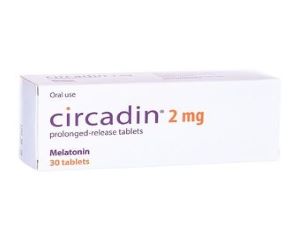

Melatonin
Incl. online consultation, medicine and discreet delivery
View Options
The medical information on this site is provided for educational purposes. It does not replace a face-to-face consultation with your GP or specialist. Always follow the advice of your prescribing doctor and read the patient information leaflet supplied with your medication.
Choose Your Medicine
Select dosage and quantity
Online Consultation
Reviewed by a qualified physician
Fast, Discreet Delivery
Delivered to your door
Medical Information
About This Medicine
Melatonin is a hormone produced naturally by the pineal gland in response to darkness, playing a central role in regulating the circadian sleep-wake cycle.
As a medication, it is prescribed for the short-term treatment of primary insomnia in adults aged 55 and over, for the management of sleep-onset insomnia in children and adolescents aged 2 to 18 years with autism spectrum disorder or Smith-Magenis syndrome, and for jet lag.
Exogenous melatonin supplements the body's own melatonin production, which naturally declines with age.
By signalling to the suprachiasmatic nucleus in the hypothalamus that it is night-time, melatonin helps to entrain the circadian clock, promote sleep onset, and improve sleep quality.
It has a fundamentally different mechanism from conventional hypnotics, acting as a chronobiotic rather than a sedative.
Melatonin is available in both prolonged-release and immediate-release formulations.
Prolonged-release preparations are designed to mimic the physiological pattern of endogenous melatonin secretion, while immediate-release forms may be more appropriate for adjusting circadian timing, such as in jet lag or shift-work-related sleep disorders.
Usage & Dosage
Take melatonin one to two hours before your intended bedtime.
The prolonged-release tablet should be swallowed whole after food; do not crush or chew it, as this destroys the modified-release mechanism.
Immediate-release formulations may be taken with or without food.
Maintain a consistent bedtime routine and minimise exposure to bright light and screens in the hour before sleep to support melatonin's circadian effects.
Treatment for primary insomnia is typically limited to a few weeks, though some patients may benefit from longer courses under medical supervision.
For primary insomnia in adults over 55 (prolonged-release): 2 mg once daily, one to two hours before bedtime, for up to 13 weeks.
For sleep disorders in children and adolescents with autism: starting dose 2 mg, increased to a maximum of 5 mg if necessary. For jet lag: 0.
5 mg to 5 mg at local bedtime for the first few days at the destination. Dose adjustments may be needed in hepatic impairment, as melatonin is primarily metabolised by the liver.
Side Effects
Uncommon (1 in 100 to 1 in 1,000): headache, somnolence during the day, dizziness, abdominal pain, nausea, dry mouth, pruritus, abnormal dreams, night sweats, weight gain, irritability, restlessness.
Rare (1 in 1,000 to 1 in 10,000): mood disturbance, blurred vision, mouth ulceration, arthralgia, glycosuria, proteinuria, chest pain, elevated liver enzymes.
Melatonin is generally very well tolerated, and adverse effects reported in clinical trials were similar in frequency to placebo.
Warnings & Precautions
Melatonin may cause drowsiness; avoid driving or operating machinery if affected.
Alcohol reduces the effectiveness of melatonin on sleep and should be avoided in the evening when using this medication.
Melatonin is metabolised by CYP1A2; smoking induces this enzyme and may reduce melatonin levels, while fluvoxamine and quinolone antibiotics inhibit it and may increase levels.
Use with caution in patients with autoimmune conditions, as melatonin may modulate immune function. Not recommended in severe hepatic impairment.
Contraindications
Melatonin (prolonged-release) is contraindicated in patients with hypersensitivity to melatonin or any excipient.
Products containing lactose are unsuitable for patients with galactose intolerance, Lapp lactase deficiency, or glucose-galactose malabsorption.
Not recommended in patients with severe hepatic impairment or autoimmune disease without specialist guidance.