
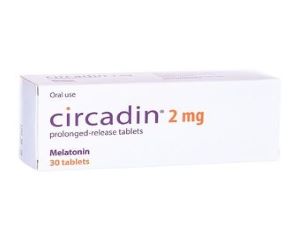
Circadin
Incl. online consultation, medicine and discreet delivery
View Options
The medical information on this site is provided for educational purposes. It does not replace a face-to-face consultation with your GP or specialist. Always follow the advice of your prescribing doctor and read the patient information leaflet supplied with your medication.
Choose Your Medicine
Select dosage and quantity
Online Consultation
Reviewed by a qualified physician
Fast, Discreet Delivery
Delivered to your door
Medical Information
About This Medicine
Circadin is a prolonged-release formulation of melatonin prescribed for the short-term treatment of primary insomnia in adults aged 55 years and over.
Melatonin is a naturally occurring hormone produced by the pineal gland in response to darkness, playing a central role in the regulation of the circadian sleep-wake cycle.
In older adults, endogenous melatonin production often declines, contributing to difficulties with sleep onset and maintenance.
Circadin supplements this natural hormone, helping to restore the circadian rhythm and improve sleep quality without the dependence, tolerance, or next-day sedation commonly associated with benzodiazepine and Z-drug hypnotics.
The prolonged-release formulation is designed to mimic the natural nocturnal profile of melatonin secretion, releasing the hormone gradually over several hours.
Clinical studies have demonstrated that Circadin improves sleep quality, reduces sleep onset latency, and enhances morning alertness, while maintaining a favourable safety profile with no evidence of withdrawal effects or rebound insomnia upon discontinuation.
Usage & Dosage
Take one Circadin tablet one to two hours before bedtime, after food.
Swallow the tablet whole; do not crush, chew, or break it, as this would destroy the prolonged-release mechanism and alter the absorption profile. Treatment duration is up to 13 weeks.
If symptoms persist, your prescriber may reassess the underlying cause of insomnia. Circadin should be used as part of a broader approach to improving sleep, including good sleep hygiene practices.
The recommended dose is 2 mg once daily, taken one to two hours before bedtime. Treatment may be continued for up to 13 weeks. No dose adjustment is required in patients with renal impairment.
Circadin has not been studied in patients with hepatic impairment and is not recommended in this group, as melatonin metabolism is primarily hepatic.
Circadin is not recommended for use in children and adolescents for the indication of primary insomnia.
Side Effects
Uncommon (1 in 100 to 1 in 1,000): irritability, nervousness, restlessness, migraine, dizziness, somnolence, abdominal pain, constipation, dry mouth, hyperbilirubinaemia, hyperhidrosis, weight increase, abnormal dreams.
Rare (1 in 1,000 to 1 in 10,000): mood changes, aggression, disorientation, early morning awakening, blurred vision, arthritis, nocturia, glycosuria, proteinuria, elevated liver enzymes.
Circadin is generally very well tolerated, and side effects in clinical trials were comparable to placebo in frequency.
Warnings & Precautions
Circadin may cause drowsiness; do not drive or operate machinery if affected. Avoid alcohol during treatment, as it can reduce the effectiveness of melatonin and impair sleep quality.
Inform your prescriber if you have an autoimmune disease, as melatonin may theoretically modulate immune function.
Melatonin is metabolised by CYP1A2; concurrent use of fluvoxamine, quinolone antibiotics, or oestrogens may increase melatonin levels. Smoking may reduce the efficacy of Circadin by inducing CYP1A2.
Contraindications
Circadin is contraindicated in patients with known hypersensitivity to melatonin or any of the excipients.
It contains lactose and is unsuitable for patients with galactose intolerance, total lactase deficiency, or glucose-galactose malabsorption.
It is not recommended for patients with hepatic impairment or autoimmune conditions without medical supervision.