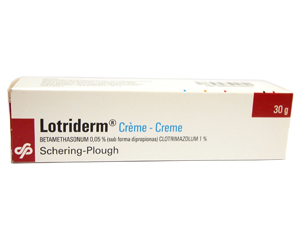
Lotriderm
Incl. online consultation, medicine and discreet delivery
View Options
The medical information on this site is provided for educational purposes. It does not replace a face-to-face consultation with your GP or specialist. Always follow the advice of your prescribing doctor and read the patient information leaflet supplied with your medication.
Choose Your Medicine
Select dosage and quantity
Online Consultation
Reviewed by a qualified physician
Fast, Discreet Delivery
Delivered to your door
Medical Information
About This Medicine
Lotriderm is a combination topical cream containing betamethasone dipropionate, a potent corticosteroid, and clotrimazole, a broad-spectrum antifungal.
It is prescribed for the treatment of inflammatory skin conditions where a fungal infection is confirmed or strongly suspected, such as fungal eczema, tinea (ringworm) with secondary inflammation, and candidal intertrigo.
The betamethasone component rapidly reduces the inflammation, redness, itching, and swelling associated with the skin condition, while the clotrimazole acts against the underlying fungal organisms responsible for or complicating the infection.
This dual action provides faster symptomatic relief than an antifungal agent alone and addresses both the cause and the inflammatory response simultaneously.
Lotriderm is intended for short-term use only, typically two to four weeks. Once the inflammatory component has settled, treatment may be stepped down to an antifungal cream alone.
Prolonged use of the potent steroid element should be avoided to prevent local skin side effects.
Usage & Dosage
Apply a thin layer of Lotriderm cream to the affected area twice daily, in the morning and evening. Gently rub it into the skin. Wash your hands after application unless treating the hands.
Do not cover the treated area with airtight dressings unless specifically instructed by your prescriber.
Treatment should be reviewed after two weeks. If there is significant improvement, your doctor may switch you to a plain antifungal cream to complete the course.
Do not use Lotriderm for longer than four weeks without medical review.
Apply sparingly to affected areas twice daily. The amount used should be the minimum necessary to cover the affected skin. Treatment should not normally exceed two to four weeks.
For fungal infections of the groin or body folds, courses are often limited to two weeks. If the condition has not improved after two weeks, the diagnosis should be reconsidered.
Side Effects
Common side effects include mild burning, stinging, or itching at the application site.
Prolonged use of the betamethasone component may cause skin thinning, stretch marks (striae), telangiectasia (visible fine blood vessels), and increased susceptibility to secondary infections.
Uncommon effects include contact dermatitis and folliculitis. Systemic absorption is generally low but may increase if applied under occlusion, to large areas, or on broken skin.
Report worsening symptoms or new skin changes to your prescriber.
Warnings & Precautions
Lotriderm contains a potent corticosteroid and must not be used on the face, groin, or axillae for prolonged periods due to the increased risk of skin thinning in these areas.
Do not apply to broken skin or open wounds. Avoid contact with the eyes. If a secondary bacterial infection develops, appropriate antimicrobial treatment should be added.
Children should only be treated under specialist supervision, as they are more vulnerable to systemic steroid effects. The diagnosis of fungal infection should be confirmed before starting treatment.
Contraindications
Lotriderm is contraindicated in patients with untreated bacterial or viral skin infections (including herpes simplex, varicella, and tuberculosis of the skin), acne vulgaris, rosacea, perioral dermatitis, and in individuals with hypersensitivity to betamethasone, clotrimazole, or any excipient.
It should not be used in children under twelve years unless under specialist guidance.