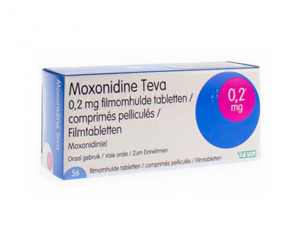
Moxonidine
Incl. online consultation, medicine and discreet delivery
View Options
The medical information on this site is provided for educational purposes. It does not replace a face-to-face consultation with your GP or specialist. Always follow the advice of your prescribing doctor and read the patient information leaflet supplied with your medication.
Choose Your Medicine
Select dosage and quantity
Online Consultation
Reviewed by a qualified physician
Fast, Discreet Delivery
Delivered to your door
Medical Information
About This Medicine
Moxonidine is a centrally acting antihypertensive agent that selectively agonises imidazoline I1 receptors in the rostral ventrolateral medulla, reducing sympathetic nervous system outflow and thereby lowering peripheral vascular resistance and blood pressure.
It represents a more targeted approach than older centrally acting agents such as clonidine, with fewer side effects related to alpha-2 adrenergic receptor activation.
Moxonidine is prescribed for the treatment of mild to moderate essential hypertension, either as monotherapy or in combination with other antihypertensive classes.
It also has favourable metabolic effects, including improvements in insulin sensitivity and a reduction in fasting insulin levels, which may be beneficial in hypertensive patients with metabolic syndrome or insulin resistance.
The drug is taken once or twice daily and has a gradual onset of action. It is generally well tolerated, with dry mouth being the most commonly reported adverse effect.
Unlike clonidine, rebound hypertension on abrupt withdrawal is uncommon at therapeutic doses, though gradual dose reduction is still recommended.
Usage & Dosage
Take one tablet once daily in the morning, or as directed by your prescriber. Swallow with water, with or without food. If prescribed twice daily, take the second dose in the evening.
Start at a low dose and increase gradually as directed. Do not stop moxonidine suddenly; reduce the dose gradually over two weeks under medical supervision to minimise the risk of rebound effects.
Report excessive drowsiness or dry mouth if these become troublesome.
Start at 0.2 mg once daily in the morning. If blood pressure is not adequately controlled after three weeks, the dose may be increased to 0.4 mg daily (given as 0.2 mg twice daily or 0.
4 mg once daily). Maximum dose: 0.6 mg daily, given as 0.2 mg in the morning and 0.4 mg in the evening. Dose adjustment may be needed in moderate renal impairment.
Avoid in severe renal impairment (GFR below 30 mL/min).
Side Effects
Common (1 in 10 to 1 in 100): dry mouth (the most frequent side effect, usually mild), headache, dizziness, drowsiness, fatigue, nausea.
Uncommon: insomnia, peripheral oedema, rash, pruritus, diarrhoea, back pain. Rare: angioedema, bradycardia. Dry mouth tends to diminish with continued use.
The overall side-effect burden is generally low, and most patients tolerate moxonidine well at recommended doses.
Warnings & Precautions
Avoid abrupt discontinuation, particularly in patients also taking a beta-blocker; withdraw moxonidine first, followed by the beta-blocker after several days, to avoid rebound sympathetic activation.
Use with caution in first-degree AV block, severe coronary artery disease, intermittent claudication, Raynaud's disease, epilepsy, and depression.
Moxonidine may potentiate the effects of other CNS depressants and alcohol. Contraindicated in heart failure (it worsened outcomes in the MOXCON trial). Monitor in renal impairment.
Contraindications
Contraindicated in sick sinus syndrome, sinoatrial or atrioventricular block (second or third degree), bradycardia (resting heart rate below 50 bpm), heart failure (NYHA class II to IV), severe renal impairment (GFR below 30 mL/min), severe hepatic impairment, and known hypersensitivity to moxonidine or any excipient.