Ozempic Online UK
Incl. online consultation, medicine and discreet delivery
View Options
The medical information on this site is provided for educational purposes. It does not replace a face-to-face consultation with your GP or specialist. Always follow the advice of your prescribing doctor and read the patient information leaflet supplied with your medication.
Choose Your Medicine
Select dosage and quantity
Online Consultation
Reviewed by a qualified physician
Fast, Discreet Delivery
Delivered to your door
Medical Information
About This Medicine
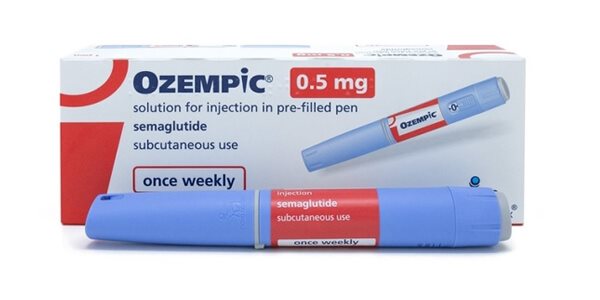
Ozempic is a once-weekly injection that contains semaglutide. It is a glucagon-like peptide-1 (GLP-1) receptor agonist, a medicine that helps control blood sugar.
Ozempic is licensed to treat type 2 diabetes alongside diet and exercise. You can take it on its own when metformin does not suit you, or with other blood-sugar medicines, including insulin.
Semaglutide copies a natural gut hormone called GLP-1. It helps the body release insulin when blood sugar is high.
It also lowers a hormone called glucagon, slows how fast the stomach empties, and helps you feel full.
In the SUSTAIN trials, semaglutide lowered HbA1c (a measure of long-term blood sugar) by up to 1.8 percentage points. People also lost 4-6 kg, more than with placebo or other treatments.
The SUSTAIN-6 heart trial showed a 26% drop in serious heart events (called MACE).
NICE recommends semaglutide for adults with type 2 diabetes when other treatments have not controlled blood sugar well enough. You inject Ozempic under the skin.
It is not for type 1 diabetes or for diabetic ketoacidosis.
Usage & Dosage
Inject Ozempic under the skin once a week. Use the same day each week, at any time of day, with or without food. Inject into your abdomen, thigh, or upper arm. Choose a different spot each week.
Fit a new disposable needle to the pre-filled pen before each injection. Before you use a pen for the first time, prime it as the patient information leaflet explains.
Do not inject into skin that is sore, bruised, red, or hard. Never inject Ozempic into a vein or a muscle. Keep unused pens in the fridge (2-8°C).
Once you have started a pen, you can keep it at room temperature (up to 30°C) or in the fridge for up to 6 weeks.
If you miss a dose and your next dose is more than 2 days away, inject as soon as you can. If your next dose is sooner than that, skip the missed dose.
Start with 0.25 mg once a week for 4 weeks. This starting dose helps your body adjust and is not meant to control your diabetes on its own. After 4 weeks, increase to 0.5 mg once a week.
If your blood sugar needs more control after at least 4 weeks on 0.5 mg, your dose can go up to 1 mg once a week. After at least 4 weeks on 1 mg, the dose may go up again to 2 mg once a week.
You do not need a different dose if you have mild, moderate, or severe kidney problems. There is little experience in end-stage kidney disease, so take care.
You do not need a different dose for liver problems. Increase the dose slowly to reduce stomach and gut side effects.
Side Effects
Side effects are listed by how often they happened in the SUSTAIN trials, using standard SmPC frequency groups.
Very common (≥1/10): Feeling sick (in up to 20% of patients, usually short-lived as the dose goes up), diarrhoea, being sick.
Common (≥1/100 to <1/10): Reduced appetite, dizziness, stomach pain, a bloated stomach, constipation, indigestion, burping, wind, acid reflux, gastritis (an inflamed stomach lining), low blood sugar (mainly with sulphonylureas or insulin), tiredness, injection-site reactions, and a raised lipase enzyme.
Uncommon (≥1/1,000 to <1/100): A fast heartbeat, acute pancreatitis (sudden inflammation of the pancreas), gallstones, and a raised amylase enzyme.
Rare (≥1/10,000 to <1/1,000): Severe allergic reactions (anaphylaxis), and swelling under the skin (angioedema).
Stomach and gut side effects are the most common. They usually ease as you keep taking the medicine. Know the signs of pancreatitis.
Get medical help straight away if you have severe stomach pain that does not go away.
Warnings & Precautions
Do not use Ozempic if you or a family member has had medullary thyroid carcinoma (MTC), a type of thyroid cancer, or multiple endocrine neoplasia syndrome type 2 (MEN 2), a rare hormone condition.
In rodent studies, semaglutide caused thyroid C-cell tumours. It is not clear if this applies to people, but care is needed. Tell your doctor if you notice signs of a thyroid tumour.
These include a lump in the neck, trouble swallowing, shortness of breath, or a hoarse voice that does not go away. There is a risk of acute pancreatitis (sudden inflammation of the pancreas).
Stop Ozempic if pancreatitis is confirmed. If you add Ozempic to a sulphonylurea or insulin, you may need a lower dose of that medicine to lower the risk of low blood sugar.
In the SUSTAIN-6 trial, eye problems linked to diabetes (diabetic retinopathy) happened more often in people who already had this condition. If this applies to you, have close eye checks.
Contraindications
Do not use Ozempic if you are allergic to semaglutide or any other ingredient in it. Do not use it for type 1 diabetes or to treat diabetic ketoacidosis.
It is not recommended in pregnancy or while breastfeeding. If you could become pregnant, use reliable contraception.
Stop semaglutide at least 2 months before you plan to conceive, because it stays in the body for a long time. Do not use Ozempic if you or a family member has had MTC or MEN 2.
Frequently Asked Questions
How much weight can I expect to lose on Ozempic?
Can Ozempic be used solely for weight loss?
Does Ozempic cause pancreatitis?
Can I drink alcohol while using Ozempic?
What happens if I miss a weekly dose?
Related articles: Ozempic
Ozempic Side Effects: Frequency Data, Clinical Risk, and How to Manage Them
Gastrointestinal symptoms affect up to 20% of patients starting Ozempic. Nausea and diarrhoea usually resolve within 4 to 8 weeks of dose titration. Pancreatitis and gallstones remain rare but require immediate medical attention if suspected.
DosageOzempic Dosage: Titration Steps, Pen Options, and Missed Dose Guidance
Ozempic starts at 0.25 mg weekly for 4 weeks, then increases to 0.5 mg. A further step to 1 mg is available after at least 4 weeks if additional glycaemic control is needed. Never skip titration steps. Inject subcutaneously in the abdomen, thigh, or upper arm.
OverviewOzempic and Weight Loss: Trial Data, Expected Results, and Clinical Considerations
In SUSTAIN trials, Ozempic 1 mg produced mean weight loss of 4.5 to 6.5 kg over 30 to 56 weeks in patients with type 2 diabetes. Individual results vary considerably. Ozempic is licensed for diabetes, not weight management. Wegovy (semaglutide 2.4 mg) is the licensed obesity formulation.
OverviewOzempic Face: Causes of Facial Volume Loss and How to Address It
Ozempic face refers to facial volume loss and skin laxity from rapid weight reduction on semaglutide. It results from loss of buccal and periorbital fat pads, not a direct drug effect. Slower weight loss, adequate protein intake, and dermatological treatments can mitigate the appearance.
OverviewHow Ozempic Works: GLP-1 Receptor Agonism, Blood Glucose Control, and Appetite Regulation
Ozempic copies a gut hormone called GLP-1. It tells the body to release insulin when blood glucose is high, lowers glucagon, slows the stomach, and curbs appetite through brain signals. It has a 7-day half-life, so you take it once a week. The SUSTAIN 6 trial proved it protects the heart.
InteractionsOzempic and Metformin Together: Clinical Evidence, NICE Guidance, and Practical Advice
Taking Ozempic with metformin is a standard second-line treatment. NICE NG 28 supports it. The two drugs work in different ways, and they do not interact in the body. Stomach side effects may overlap at first. The risk of low blood sugar stays low with this combination.
Side effectsOzempic and Eye Problems: Diabetic Retinopathy, Vision Changes, and Screening Guidance
When Ozempic lowers HbA1c quickly, it can briefly worsen existing diabetic retinopathy (diabetes-related eye damage). The risk is highest in people who already have advanced eye disease. The SUSTAIN 6 trial found more retinopathy problems in the semaglutide group. So a retinal eye check before treatment, and during the first year, is essential.
Drug informationOzempic Tablets: Oral Semaglutide (Rybelsus), Dosing, and How It Compares to Injections
Ozempic is an injection only. The same medicine in tablet form is sold under a different name: Rybelsus (3 mg, 7 mg, 14 mg tablets). Rybelsus uses SNAC, an absorption technology. You must take it fasting with only a little water. It lowers HbA1c slightly less than injectable semaglutide 1 mg.
OverviewOzempic in the UK: Supply Status, Prescribing Criteria, and Alternatives During Shortages
Ozempic supply in the UK has been on and off since 2022. Global demand has been higher than Novo Nordisk can make. To get Ozempic on the NHS, you need a type 2 diabetes diagnosis and you must meet NICE rules. Many people also use it off-label for weight loss, and this has made the shortage worse.
OverviewOzempic on the NHS: Eligibility Criteria, Costs, and the Prescribing Pathway
Ozempic is available on the NHS for type 2 diabetes under NICE NG 28 criteria. Standard NHS prescription charges apply (currently 9.90 GBP per item in England). Patients typically need prior metformin use. Annual clinical reviews and HbA1c monitoring determine continued prescribing.
OverviewSemaglutide tablets: everything you need to know about oral treatment
Semaglutide tablets (Rybelsus) are the first oral GLP-1 receptor agonist for type 2 diabetes. Take them on an empty stomach with no more than 120 mL of water, at least 30 minutes before food. They work slightly less well than injectable semaglutide, but they give suitable patients a needle-free option.
OverviewHow much does Ozempic cost in the UK?
Ozempic (semaglutide) is available on the NHS for type 2 diabetes only; in England you pay the standard prescription charge of around £9.90, and many people with diabetes qualify for free prescriptions. Privately, it typically costs £150-250 per month. The NHS does not fund Ozempic for weight loss, and the MHRA warns against cheap pens from unregistered sellers.