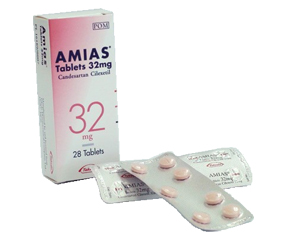
Amias
Incl. online consultation, medicine and discreet delivery
View Options
The medical information on this site is provided for educational purposes. It does not replace a face-to-face consultation with your GP or specialist. Always follow the advice of your prescribing doctor and read the patient information leaflet supplied with your medication.
Choose Your Medicine
Select dosage and quantity
Online Consultation
Reviewed by a qualified physician
Fast, Discreet Delivery
Delivered to your door
Medical Information
About This Medicine
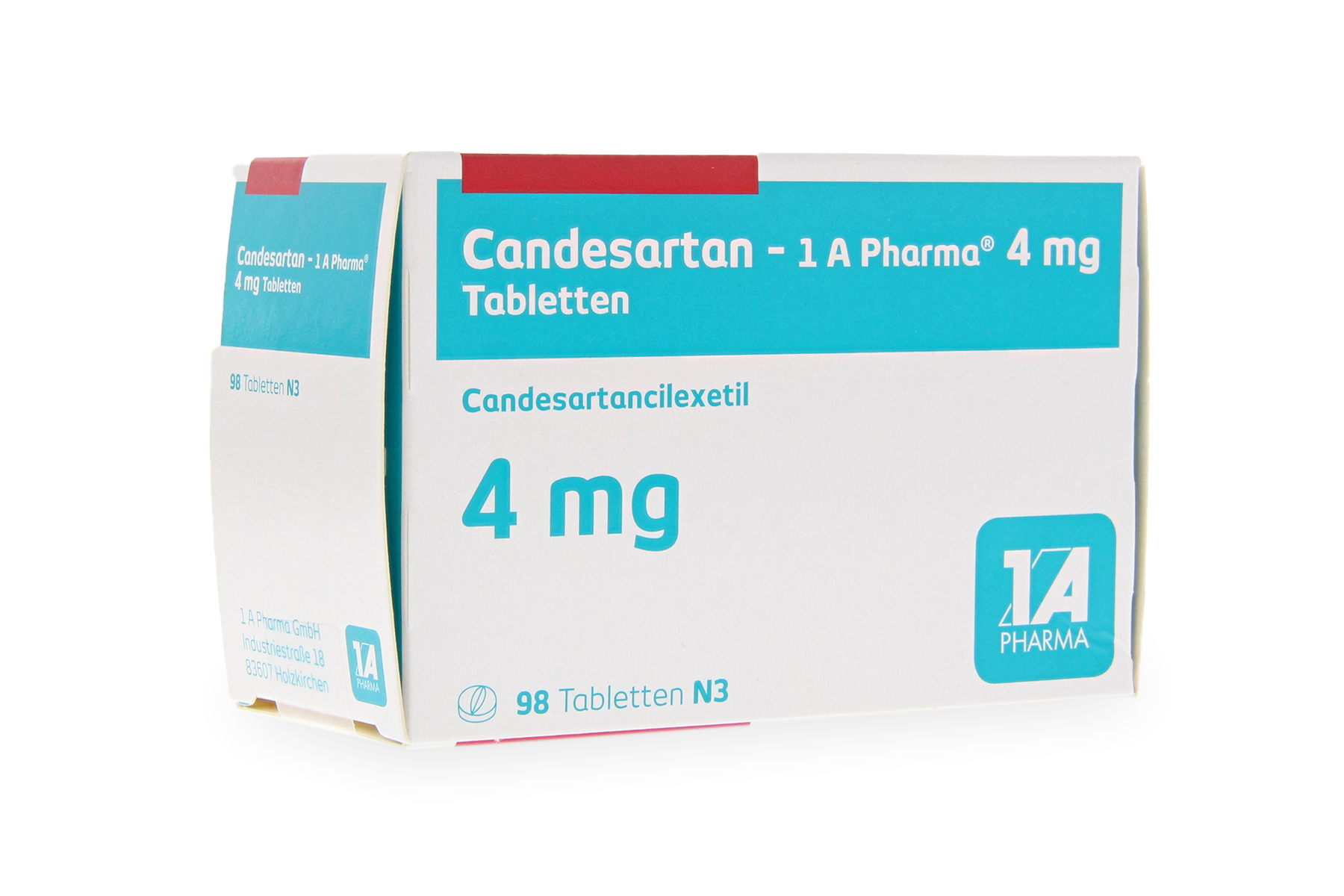
Amias contains candesartan cilexetil, an angiotensin II receptor blocker (ARB) prescribed for the treatment of essential hypertension and heart failure with reduced left ventricular systolic function (ejection fraction 40 per cent or below) when ACE inhibitors are not tolerated.
It may be used alone or in combination with other antihypertensive agents.
Candesartan works by selectively blocking the angiotensin II type 1 (AT1) receptor. Angiotensin II is a potent vasoconstrictor and a key mediator in the renin-angiotensin-aldosterone system (RAAS).
By blocking its receptor, candesartan causes vasodilatation, reduces aldosterone secretion, and lowers blood pressure.
In heart failure, it reduces the pathological cardiac remodelling driven by chronic RAAS activation.
Compared with ACE inhibitors, ARBs do not inhibit the breakdown of bradykinin, which means they are less likely to cause the persistent dry cough that leads some patients to discontinue ACE inhibitor therapy.
The CHARM trials demonstrated that candesartan reduces cardiovascular death and hospitalisation for heart failure.
Usage & Dosage
Take Amias once daily, at the same time each day, with or without food. Swallow the tablet whole with water.
Your doctor will start at a low dose and increase it gradually over several weeks, guided by your blood pressure readings and how you respond.
Do not stop taking Amias without consulting your prescriber, as abrupt discontinuation may lead to a rise in blood pressure.
Continue the medication even if you feel well, as hypertension is usually asymptomatic. Attend regular blood pressure checks as advised.
If you also have heart failure, your doctor will titrate the dose carefully while monitoring kidney function and potassium levels.
For hypertension: the usual starting dose is 8 mg once daily, increased to 16 mg once daily after four weeks if blood pressure control is insufficient. The maximum dose is 32 mg once daily.
For heart failure: start at 4 mg once daily, doubling the dose at intervals of at least two weeks as tolerated, to a target of 32 mg once daily. In renal impairment, start at a lower dose.
In moderate hepatic impairment, start at 2 mg daily. Candesartan is not recommended in severe hepatic impairment or biliary obstruction.
Side Effects
Common side effects (1 in 10 to 1 in 100 patients) include dizziness, headache, and hypotension (particularly in patients with heart failure or those who are volume-depleted).
Elevated potassium and creatinine levels may occur, especially in patients with renal impairment or those taking potassium-sparing drugs.
Uncommon effects include nausea, abnormal liver function tests, back pain, and upper respiratory tract infection.
Rare but serious adverse effects include angioedema (swelling of the face, lips, tongue, or throat), which requires immediate medical attention.
Acute kidney injury may occur, particularly if the patient is dehydrated or has pre-existing renal artery stenosis.
Hyperkalaemia (dangerously high potassium) may develop, especially when combined with potassium supplements, potassium-sparing diuretics, or ACE inhibitors.
Warnings & Precautions
Renal function and serum potassium should be monitored before starting treatment and periodically thereafter, particularly in patients with heart failure, renal impairment, or diabetes.
Do not combine candesartan with an ACE inhibitor and a mineralocorticoid receptor antagonist (triple RAAS blockade) due to the risk of renal impairment and hyperkalaemia.
Ensure adequate hydration before starting, especially in patients taking diuretics. Candesartan must not be used in pregnancy; discontinue immediately if pregnancy is detected.
Contraindications
Amias is contraindicated in patients with known hypersensitivity to candesartan cilexetil or any excipient, pregnancy (second and third trimesters; avoid throughout pregnancy), severe hepatic impairment or cholestasis, and concurrent use with aliskiren in patients with diabetes mellitus or renal impairment (eGFR below 60).
Breastfeeding is not recommended.