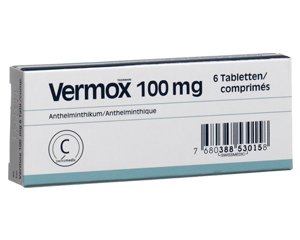
Vermox
Incl. online consultation, medicine and discreet delivery
View Options
The medical information on this site is provided for educational purposes. It does not replace a face-to-face consultation with your GP or specialist. Always follow the advice of your prescribing doctor and read the patient information leaflet supplied with your medication.
Choose Your Medicine
Select dosage and quantity
Online Consultation
Reviewed by a qualified physician
Fast, Discreet Delivery
Delivered to your door
Medical Information
About This Medicine
Vermox contains mebendazole, a broad-spectrum anthelmintic (anti-worm) medication used to treat intestinal worm infections including threadworms (pinworms), roundworms, whipworms, and hookworms.
Threadworm infection (enterobiasis) is particularly common in the United Kingdom, especially among school-aged children and their families.
Mebendazole works by binding to tubulin in the intestinal cells of susceptible worms, disrupting their ability to absorb glucose.
Without glucose, the parasites are unable to maintain their energy supply and die within a few days. The dead worms are then passed naturally in the stool.
Because mebendazole acts locally within the gut and is poorly absorbed into the bloodstream, systemic side effects are uncommon.
For threadworm, a single dose is often sufficient, though a second dose two weeks later is usually recommended to eliminate any worms that may have hatched from eggs laid before the first treatment.
For other worm infections, a longer course may be needed. Hygiene measures should always accompany treatment to prevent reinfection.
Usage & Dosage
For threadworm (pinworm) infection, take one 100 mg tablet as a single dose. The tablet may be chewed or swallowed whole with water.
A second dose should be taken two weeks later if reinfection is likely.
For roundworm, whipworm, or hookworm infections, take one 100 mg tablet twice daily (morning and evening) for three consecutive days.
All household members should ideally be treated at the same time to prevent cross-infection.
Alongside medication, practise strict hygiene: wash hands thoroughly before meals and after using the toilet, keep fingernails short, shower or bathe each morning to remove eggs laid overnight, change and wash bedding and towels, and avoid sharing towels.
For threadworm: one 100 mg tablet as a single dose, repeated after two weeks. For roundworm, whipworm, and hookworm: 100 mg twice daily for three days.
For strongyloidiasis, higher doses under specialist guidance may be required. Vermox is suitable for adults and children aged two years and over.
It is not recommended for children under two without specialist advice. No dose adjustment is needed for renal impairment, but caution is required in hepatic impairment.
Side Effects
Side effects are uncommon because mebendazole is poorly absorbed. When they do occur, they are usually mild and may include abdominal pain, diarrhoea, flatulence, and nausea.
Uncommon effects include dizziness, headache, and skin rash.
With prolonged use at high doses (as used for some tissue parasitic infections), more significant adverse effects have been reported, including elevated liver enzymes, hepatitis, hair loss, and bone marrow suppression.
These effects are not expected at standard doses for common intestinal worm infections.
Rare hypersensitivity reactions including angioedema, urticaria, and Stevens-Johnson syndrome have been reported.
Seek medical attention if you develop a widespread rash, swelling of the face or throat, or difficulty breathing.
Warnings & Precautions
Inform your doctor if you are pregnant, as mebendazole is not recommended during pregnancy, particularly in the first trimester.
If you have liver disease, mebendazole should be used with caution, and liver function monitoring may be advised for prolonged courses.
Co-administration with metronidazole may occasionally cause Stevens-Johnson syndrome; report any skin changes promptly. Treat all household members simultaneously to break the cycle of reinfection.
Contraindications
Vermox is contraindicated in patients with known hypersensitivity to mebendazole or any excipient.
It should not be used in pregnancy unless the potential benefit outweighs the risk, and only under medical supervision.
It is not recommended for children under two years of age without specialist guidance. Caution is advised in patients with significant hepatic impairment.