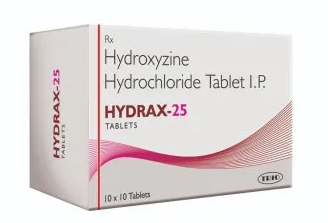
Hydroxyzine
Incl. online consultation, medicine and discreet delivery
View Options
The medical information on this site is provided for educational purposes. It does not replace a face-to-face consultation with your GP or specialist. Always follow the advice of your prescribing doctor and read the patient information leaflet supplied with your medication.
Choose Your Medicine
Select dosage and quantity
Online Consultation
Reviewed by a qualified physician
Fast, Discreet Delivery
Delivered to your door
Medical Information
About This Medicine
Hydroxyzine is a first-generation piperazine-derivative antihistamine with sedative, anxiolytic, antiemetic, and antipruritic properties.
It is prescribed for the short-term management of anxiety and tension, the relief of pruritus (itching) associated with allergic conditions such as chronic urticaria and eczema, and as a pre-operative sedative.
It acts primarily by blocking central and peripheral histamine H1 receptors.
The anxiolytic effect of hydroxyzine is thought to be mediated through suppression of activity in subcortical regions of the central nervous system, rather than through the GABAergic pathway used by benzodiazepines.
This means hydroxyzine does not carry the same risk of physical dependence or withdrawal as benzodiazepines, making it a useful short-term alternative for patients in whom dependence is a concern.
Hydroxyzine is rapidly absorbed following oral administration, with onset of effect within 15 to 30 minutes.
Its principal active metabolite is cetirizine, a well-known second-generation antihistamine.
The sedative effect peaks within two hours and lasts four to six hours, making it suitable for bedtime dosing when treating pruritus that disrupts sleep.
Usage & Dosage
Take hydroxyzine as directed by your prescriber. For anxiety, the dose is usually divided throughout the day.
For pruritus, a single dose at bedtime may be preferred to take advantage of the sedative effect. Swallow tablets whole with water.
Do not drive or operate machinery until you know how hydroxyzine affects you, as it can cause marked drowsiness. Avoid alcohol, as it enhances the sedative effect.
Treatment duration for anxiety should be as short as possible.
Anxiety (adults): 25 to 50 mg three to four times daily as needed. Pruritus: 25 mg at bedtime, increased to 25 mg three to four times daily if required.
Pre-operative sedation: 25 to 100 mg given one hour before the procedure. Children: 0.5 to 1 mg/kg daily in divided doses for pruritus.
Elderly and patients with hepatic impairment: reduce the dose by half. In renal impairment, dose reduction is also recommended.
Side Effects
Common: drowsiness (the most prominent effect), dry mouth, dizziness, headache, fatigue. Uncommon: blurred vision, constipation, urinary retention, gastrointestinal discomfort.
Rare: QT prolongation (dose-dependent, more likely at high doses or with other QT-prolonging drugs), seizures (at very high doses), paradoxical agitation (especially in children or elderly), and hypersensitivity reactions.
Anticholinergic side effects are generally mild and dose-related.
Warnings & Precautions
Hydroxyzine prolongs the QT interval in a dose-dependent manner and should be used at the lowest effective dose, especially in patients with risk factors for arrhythmias including electrolyte imbalances, existing cardiovascular disease, family history of sudden cardiac death, or concurrent use of other QT-prolonging medications.
Avoid in elderly patients where possible, as they are more susceptible to anticholinergic side effects and falls. Significant drowsiness may impair driving ability; advise patients accordingly.
Use cautiously in epilepsy, glaucoma, prostatic hypertrophy, and myasthenia gravis.
Contraindications
Contraindicated in known hypersensitivity to hydroxyzine, cetirizine, or piperazine derivatives, porphyria, patients with known QT interval prolongation, pregnancy (first trimester in particular), and breastfeeding.
Avoid in patients taking other medications known to prolong the QT interval unless the benefit clearly outweighs the risk.