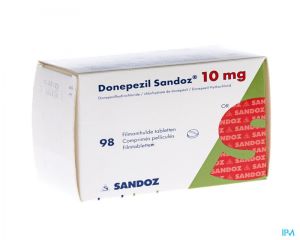
Donepezil
Incl. online consultation, medicine and discreet delivery
View Options
The medical information on this site is provided for educational purposes. It does not replace a face-to-face consultation with your GP or specialist. Always follow the advice of your prescribing doctor and read the patient information leaflet supplied with your medication.
Choose Your Medicine
Select dosage and quantity
Online Consultation
Reviewed by a qualified physician
Fast, Discreet Delivery
Delivered to your door
Medical Information
About This Medicine
Donepezil is a reversible acetylcholinesterase inhibitor used in the symptomatic treatment of mild to moderate Alzheimer's disease.
It is one of the most widely prescribed medications for this condition and may also be used in severe Alzheimer's disease in some clinical settings.
Alzheimer's disease is characterised by progressive loss of cholinergic neurons in the brain, leading to reduced levels of the neurotransmitter acetylcholine.
Donepezil works by inhibiting the enzyme acetylcholinesterase, which normally breaks down acetylcholine in the synaptic cleft.
By slowing this breakdown, donepezil increases the availability of acetylcholine for neurotransmission, temporarily improving or stabilising cognitive function, memory, and daily functioning.
Donepezil does not alter the underlying disease process or halt the progression of neurodegeneration. Its benefits are symptomatic and may diminish as the disease advances.
Clinical trials have demonstrated statistically significant improvements in cognitive function and global assessment scores compared with placebo, with benefits typically becoming apparent within 3 to 6 months of starting treatment.
Usage & Dosage
Take one tablet by mouth once daily in the evening before going to bed. Swallow with a glass of water, with or without food.
The carer or family member should ensure the medication is taken consistently each day.
Treatment is usually initiated and supervised by a specialist experienced in the management of Alzheimer's disease.
Do not stop donepezil without medical guidance, as this may lead to a decline in cognitive function.
The recommended starting dose is 5 mg once daily for at least 4 to 6 weeks.
After this period, and based on clinical response and tolerability, the dose may be increased to 10 mg once daily, which is the maximum recommended dose.
No dose adjustment is required for renal impairment. In patients with mild to moderate hepatic impairment, dose escalation should be carried out cautiously according to individual tolerability.
Side Effects
Very common (more than 1 in 10): diarrhoea, nausea, headache.
Common (1 in 10 to 1 in 100): insomnia, fatigue, vomiting, abdominal pain, muscle cramps, anorexia, dizziness, syncope, urinary incontinence, rash, common cold.
Uncommon (1 in 100 to 1 in 1,000): bradycardia, gastrointestinal haemorrhage, seizures, agitation, aggressive behaviour.
Rare (1 in 1,000 to 1 in 10,000): extrapyramidal symptoms, sino-atrial block, atrioventricular block, hepatitis, neuroleptic malignant syndrome, rhabdomyolysis.
Side effects are more common at the 10 mg dose and often improve with continued treatment.
Warnings & Precautions
Donepezil may exacerbate or induce extrapyramidal symptoms.
It should be used with caution in patients with sick sinus syndrome or other supraventricular conduction abnormalities, as vagotonic effects on heart rate may occur.
Patients with a history of peptic ulcer disease or those taking NSAIDs concurrently are at increased risk of gastrointestinal bleeding.
Cholinomimetic drugs may cause or worsen urinary obstruction and may have the potential to cause generalised seizures. Caution is also needed in patients with asthma or obstructive pulmonary disease.
Anaesthesia involving succinylcholine-type muscle relaxants may be prolonged.
Contraindications
Donepezil is contraindicated in patients with known hypersensitivity to donepezil hydrochloride, piperidine derivatives, or any of the excipients.
There are no absolute contraindications beyond hypersensitivity, but careful risk-benefit assessment is needed in patients with significant cardiac conduction abnormalities, active peptic ulcer disease, or a history of seizures.