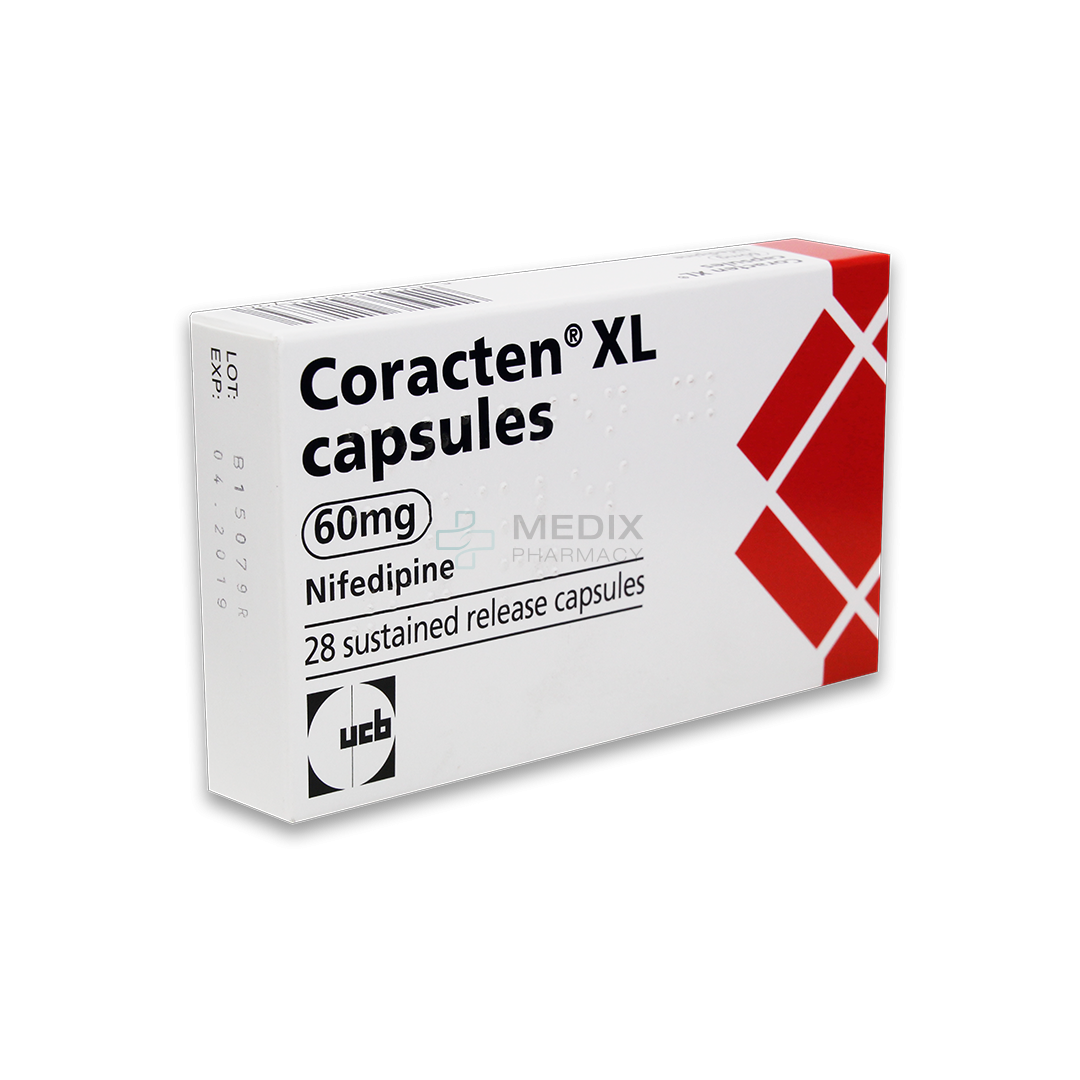
Nifedipine
Incl. online consultation, medicine and discreet delivery
View Options
The medical information on this site is provided for educational purposes. It does not replace a face-to-face consultation with your GP or specialist. Always follow the advice of your prescribing doctor and read the patient information leaflet supplied with your medication.
Choose Your Medicine
Select dosage and quantity
Online Consultation
Reviewed by a qualified physician
Fast, Discreet Delivery
Delivered to your door
Medical Information
About This Medicine
Nifedipine is a dihydropyridine calcium channel blocker used to treat hypertension (high blood pressure) and angina pectoris (chest pain caused by reduced blood flow to the heart).
It is one of the most widely prescribed calcium channel blockers and has been in clinical use for over four decades.
Nifedipine works by blocking L-type calcium channels in vascular smooth muscle, leading to arterial vasodilation and a reduction in peripheral vascular resistance.
This lowers blood pressure and reduces the workload on the heart. In angina, it increases coronary blood flow by dilating coronary arteries and reduces myocardial oxygen demand.
Modified-release (MR) formulations of nifedipine are the standard in current practice, providing smooth, sustained blood pressure control over 24 hours.
Immediate-release nifedipine capsules are no longer recommended for hypertension or chronic angina due to the risk of rapid, unpredictable blood pressure drops and reflex tachycardia.
Usage & Dosage
Swallow modified-release tablets whole - do not crush, chew, or break them, as this destroys the controlled-release mechanism. Take at the same time each day, usually in the morning.
Can be taken with or without food, though grapefruit juice should be avoided as it significantly increases nifedipine blood levels.
Do not stop treatment abruptly as this may cause rebound angina or hypertension.
Hypertension: modified-release 20-30 mg once or twice daily, depending on the formulation. Maximum: 90 mg daily. Angina: modified-release 10-40 mg twice daily, depending on the formulation.
Raynaud's phenomenon: 5-20 mg three times daily (immediate-release) or modified-release formulations. Dose titration should be gradual.
Side Effects
Common (1 in 10 to 1 in 100): flushing, headache, peripheral oedema (ankle swelling), dizziness, and palpitations.
Uncommon (1 in 100 to 1 in 1,000): constipation, nausea, lethargy, and postural hypotension.
Rare (less than 1 in 1,000): gingival hyperplasia (gum overgrowth) with long-term use, gynaecomastia, and allergic skin reactions.
Ankle oedema is a direct vascular effect rather than fluid retention, and does not respond to diuretics.
Warnings & Precautions
Do not use immediate-release nifedipine for hypertension - rapid blood pressure drops can precipitate cardiac events.
Avoid grapefruit juice as it inhibits CYP3A4 metabolism and increases nifedipine levels unpredictably. Monitor for worsening of heart failure symptoms.
Use with caution in patients with aortic stenosis. Maintain good dental hygiene to reduce the risk of gingival hyperplasia.
Contraindications
Cardiogenic shock. Advanced aortic stenosis. Unstable angina or within one month of a myocardial infarction. Severe hypotension. Known allergy to nifedipine or other dihydropyridines.
Concurrent use with rifampicin (which dramatically reduces nifedipine levels). Pregnancy (nifedipine is used for tocolysis under specialist supervision only).