Betamethasone
Incl. online consultation, medicine and discreet delivery
View Options
The medical information on this site is provided for educational purposes. It does not replace a face-to-face consultation with your GP or specialist. Always follow the advice of your prescribing doctor and read the patient information leaflet supplied with your medication.
Choose Your Medicine
Select dosage and quantity
Online Consultation
Reviewed by a qualified physician
Fast, Discreet Delivery
Delivered to your door
Medical Information
About This Medicine
Betamethasone is a strong topical corticosteroid, a steroid cream you put on the skin. It treats many inflamed skin conditions.
These include eczema, psoriasis, dermatitis, and other rashes that respond to steroids. It calms redness, itching, swelling, and discomfort.
It does this by quieting the skin's own immune and inflammatory response.
Betamethasone comes in two main strengths. Betamethasone valerate (0.1%) is moderately potent. Betamethasone dipropionate (0.05%) is potent.
Your prescriber picks the right one based on how bad the condition is and where it is on your body. Creams suit moist or weeping areas. Ointments suit dry, thickened, or scaly skin.
Topical corticosteroids are the main treatment for inflamed skin diseases. They attach to glucocorticoid receptors inside skin cells.
This lowers the inflammatory chemicals called cytokines, makes blood vessels less leaky, and stops inflammatory cells from moving into the affected area.
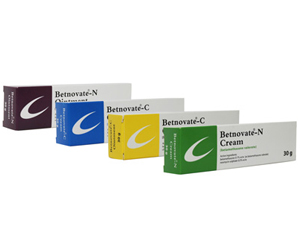
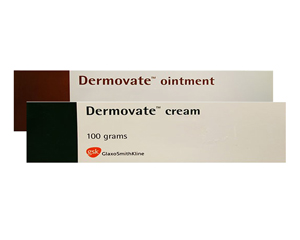
Betamethasone comes in several forms. These include creams, ointments, lotions, and scalp applications.
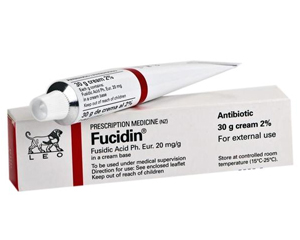
It can be mixed with germ-killing medicines such as fusidic acid, clioquinol, or neomycin when the skin is infected. It can also be mixed with salicylic acid for thick, scaly skin.
Usage & Dosage
Put a thin layer of betamethasone cream or ointment on the affected area once or twice daily. Follow your prescriber's directions. Rub it in gently until the skin absorbs it.
Wash your hands afterwards, unless you are treating your hands.
Use the fingertip unit (FTU) to judge how much to apply. One FTU is the amount squeezed from the nozzle to the first crease of an adult's index finger.
It covers an area about the size of two adult palms.
Do not cover treated skin with airtight dressings unless told to. As the skin gets better, apply it less often. Step down to a milder steroid or a moisturiser when you can.
Adults: apply a thin layer once or twice daily. On the face or in skin folds, do not treat for more than two weeks without a review.
On the body, do not treat for more than four weeks without a review. For the scalp, apply a small amount to the affected areas twice daily.
Children: use only under medical supervision. Use the lowest strength that works, for the shortest time. Avoid long use on the face, skin folds, and nappy area.
Do not use more than prescribed, or apply it more often. Using too much raises the risk of side effects on the skin and in the body.
Side Effects
Long-term use can cause local side effects. The skin may get thinner (atrophy). You may get stretch marks (striae), visible blood vessels (telangiectasia), and easy bruising.
A reaction to the cream itself (contact dermatitis) can happen, but it is uncommon.
Long use on the face can cause a rash around the mouth (perioral dermatitis), steroid rosacea, or acne-like spots. The skin may lose colour (depigmentation). This is more likely in darker skin tones.
Very little of the medicine usually passes into the body when you use a small amount for a short time.
But absorption goes up if you use a lot, cover the skin, or treat thin skin such as the face, skin folds, or genitals. Body-wide effects are rare but have been recorded.
These include a slowed adrenal gland (adrenal suppression), Cushing-like features, and slowed growth in children.
More hair growth (hypertrichosis) where you apply it has been reported now and then.
Warnings & Precautions
Do not use betamethasone on the face for more than five to seven days, unless a skin specialist tells you to. Facial skin is thin.
It is especially likely to thin out from steroids and to develop rosacea.
Do not put betamethasone on infected skin unless you also use a suitable germ-killing medicine at the same time. Steroids can hide a skin infection or make it worse.
If an infection starts during treatment, stop the steroid and get medical advice.
Long-term use needs regular checks. Where you can, stop treatment slowly to avoid a rebound flare-up. Tell your prescriber if you are pregnant, breastfeeding, or planning a pregnancy.
Contraindications
Do not put betamethasone on bacterial, viral, or fungal skin infections that are not yet being treated. These include impetigo, herpes simplex, chickenpox (varicella), and ringworm (tinea).
Do not use it for acne vulgaris, rosacea, perioral dermatitis, or itching without inflammation.
Do not use betamethasone if you are allergic to betamethasone or to any of the other ingredients in the product.