Hydrocortisone
Incl. online consultation, medicine and discreet delivery
View Options
The medical information on this site is provided for educational purposes. It does not replace a face-to-face consultation with your GP or specialist. Always follow the advice of your prescribing doctor and read the patient information leaflet supplied with your medication.
Choose Your Medicine
Select dosage and quantity
Online Consultation
Reviewed by a qualified physician
Fast, Discreet Delivery
Delivered to your door
Medical Information
About This Medicine
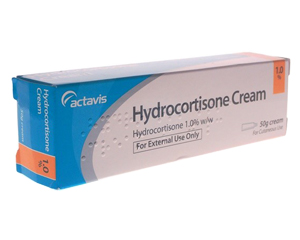
Hydrocortisone is a mild (Group I) topical corticosteroid used to relieve the inflammation, redness, and itching associated with a wide range of skin conditions including eczema, contact dermatitis, insect bites, and mild allergic reactions.
It is chemically identical to cortisol, the glucocorticoid hormone produced naturally by the adrenal glands, and mimics its anti-inflammatory action when applied to the skin.
Topical hydrocortisone works by suppressing the local inflammatory cascade.
It inhibits phospholipase A2 through the induction of lipocortins, reducing the generation of arachidonic acid metabolites (prostaglandins and leukotrienes) that drive inflammation.
It also reduces capillary permeability, decreasing oedema and erythema, and suppresses the migration of inflammatory cells to the affected site.
Hydrocortisone cream and ointment are available at strengths of 0.5% and 1% over the counter, and at higher strengths (up to 2.5%) on prescription.
Its mild potency makes it suitable for use on sensitive areas including the face and skin folds for short periods, and it is well established as a first-line topical corticosteroid for children and adults with mild inflammatory dermatoses.
Usage & Dosage
Apply a thin layer to the affected area once or twice daily, gently rubbing in until absorbed. Wash hands after application unless treating the hands.
Use the smallest amount necessary to cover the affected area and for the shortest duration needed to control symptoms.
Apply after moisturising, leaving a gap of at least ten to fifteen minutes between emollient and steroid. Do not use on infected skin unless an appropriate antimicrobial is also being used.
Avoid prolonged use, particularly on the face.
Apply hydrocortisone 0.5% or 1% cream or ointment thinly to the affected area once or twice daily. Treatment with over-the-counter preparations should not exceed seven days without medical advice.
Prescription-strength formulations (up to 2.5%) may be used for longer periods under medical supervision. For the face, limit use to five to seven days unless directed otherwise.
The fingertip unit (FTU) system is a useful guide for appropriate quantity per application.
Side Effects
Uncommon with short-term use.
Prolonged or repeated application may cause: skin thinning (atrophy), striae (stretch marks), telangiectasia (visible fine blood vessels), contact dermatitis, delayed wound healing, and depigmentation.
On the face, extended use can trigger perioral dermatitis, acneiform eruptions, or rosacea-like changes.
Rare: systemic absorption with adrenal suppression is extremely unlikely with mild-potency hydrocortisone but can occur theoretically with extensive application under occlusive dressings in small children.
Warnings & Precautions
Do not apply to untreated infected skin, including bacterial, fungal, or viral infections (cold sores, chickenpox, shingles).
If symptoms worsen or do not improve within seven days of over-the-counter use, seek medical advice. Avoid the periorbital area.
In children, use for the minimum duration and area, and monitor growth if prolonged courses are required.
Rebound flares may occur if potent corticosteroids are stopped abruptly after prolonged use, though this is less of a concern with mild hydrocortisone.
Contraindications
Contraindicated in untreated skin infections (bacterial, fungal, or viral), acne vulgaris, rosacea, perioral dermatitis, and known hypersensitivity to hydrocortisone or any excipient.
Do not use on open wounds or ulcerated skin. Not recommended for use in the nappy area for prolonged periods in infants without medical supervision.