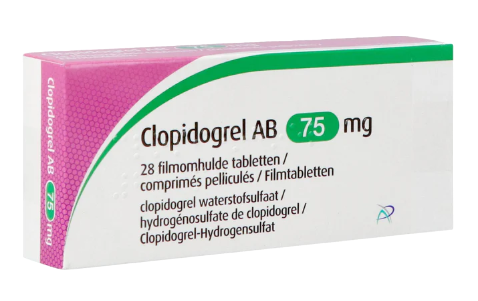
Clopidogrel
Incl. online consultation, medicine and discreet delivery
View Options
The medical information on this site is provided for educational purposes. It does not replace a face-to-face consultation with your GP or specialist. Always follow the advice of your prescribing doctor and read the patient information leaflet supplied with your medication.
Choose Your Medicine
Select dosage and quantity
Online Consultation
Reviewed by a qualified physician
Fast, Discreet Delivery
Delivered to your door
Medical Information
About This Medicine
Clopidogrel is an antiplatelet medication prescribed to reduce the risk of atherothrombotic events in patients with established cardiovascular disease.
It is used following myocardial infarction, ischaemic stroke, or in patients with established peripheral arterial disease.
In combination with aspirin (dual antiplatelet therapy), it is a standard treatment after coronary stenting and in acute coronary syndromes.
Clopidogrel is a prodrug that requires hepatic conversion, principally by the cytochrome P450 enzyme CYP2C19, to its active thiol metabolite.
This metabolite irreversibly binds to the P2Y12 receptor on the platelet surface, blocking ADP-mediated platelet activation and aggregation for the remaining lifespan of the platelet (approximately seven to ten days).
The result is a sustained reduction in the tendency for blood clots to form at sites of atherosclerotic plaque rupture.
Genetic variation in CYP2C19 means that some patients are poor metabolisers and derive less antiplatelet benefit from clopidogrel.
If clinical response is suboptimal, your doctor may consider alternative agents such as prasugrel or ticagrelor.
Usage & Dosage
Take one clopidogrel tablet daily by mouth, with or without food. Swallow it whole with water. Take it at the same time each day.
Do not stop taking clopidogrel without discussing it with your cardiologist or prescriber, as premature discontinuation, especially after coronary stenting, significantly increases the risk of stent thrombosis and myocardial infarction.
Inform any doctor, dentist, or surgeon that you are taking clopidogrel before undergoing any procedure, as the medication increases bleeding time.
Carry a card or wear medical identification indicating that you take an antiplatelet drug.
The standard maintenance dose is 75 mg once daily.
In acute coronary syndromes, a loading dose of 300 mg (or 600 mg for percutaneous coronary intervention) is given initially, followed by 75 mg daily in combination with aspirin.
Duration of dual antiplatelet therapy is typically 6 to 12 months after coronary stenting but varies depending on clinical circumstances.
No dose adjustment is needed for mild to moderate renal impairment. Clopidogrel should be used with caution in severe hepatic impairment.
Side Effects
Common side effects (1 in 10 to 1 in 100 patients) include bleeding, bruising, haematoma, nosebleeds, gastrointestinal haemorrhage, and diarrhoea.
Abdominal pain, dyspepsia, and headache are also frequently reported.
Uncommon effects include intracranial haemorrhage, peptic ulcer, gastritis, rash, pruritus, and dizziness. Haematuria (blood in the urine) and prolonged bleeding from cuts or wounds may be noticed.
Rare but serious adverse effects include thrombotic thrombocytopenic purpura (TTP), a life-threatening condition characterised by low platelets, microangiopathic haemolytic anaemia, fever, renal impairment, and neurological symptoms.
Severe hepatic reactions, agranulocytosis, and aplastic anaemia have also been reported rarely.
Seek urgent medical advice if you develop unexplained bruising, prolonged bleeding, petechiae, blood in stools or urine, or symptoms of TTP.
Warnings & Precautions
Clopidogrel increases the risk of bleeding. Avoid unnecessary invasive procedures and use caution with activities that carry a risk of injury.
If elective surgery is planned, discuss with your surgeon whether clopidogrel should be temporarily stopped (usually five to seven days before the procedure).
Do not take clopidogrel with omeprazole or esomeprazole, as these PPIs may reduce its antiplatelet effect; lansoprazole or pantoprazole is preferred if a PPI is needed.
Patients with CYP2C19 poor-metaboliser status may not derive adequate benefit.
Contraindications
Clopidogrel is contraindicated in patients with known hypersensitivity to clopidogrel or any excipient, active pathological bleeding (such as peptic ulcer or intracranial haemorrhage), and severe hepatic impairment.
Caution is required in patients with a history of bleeding disorders or those concurrently taking anticoagulants.