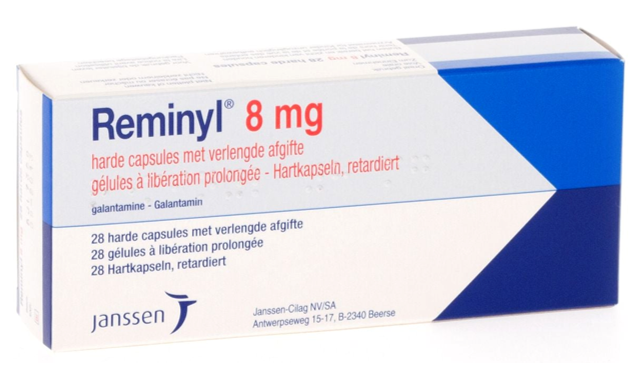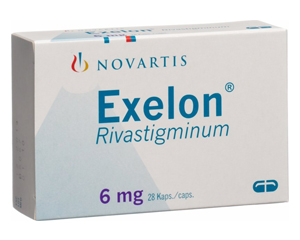
Exelon
Incl. online consultation, medicine and discreet delivery
View Options
The medical information on this site is provided for educational purposes. It does not replace a face-to-face consultation with your GP or specialist. Always follow the advice of your prescribing doctor and read the patient information leaflet supplied with your medication.
Choose Your Medicine
Select dosage and quantity
Online Consultation
Reviewed by a qualified physician
Fast, Discreet Delivery
Delivered to your door
Medical Information
About This Medicine
Exelon contains rivastigmine. This is a cholinesterase inhibitor, a medicine that raises levels of a brain chemical. Doctors prescribe it to ease the symptoms of Alzheimer's disease.
It is used when the disease is mild to moderately severe. It also helps with mild to moderately severe dementia linked to Parkinson's disease.
Exelon comes as capsules, an oral solution, and skin patches.
In Alzheimer's disease and Parkinson's disease dementia, the brain slowly loses certain nerve cells called cholinergic neurones. As a result, levels of acetylcholine fall.
Acetylcholine is a neurotransmitter, a chemical that nerve cells use to send signals. This shortage helps cause the memory loss, poor thinking, and changes in behaviour seen in these conditions.
Rivastigmine blocks two enzymes, acetylcholinesterase and butyrylcholinesterase. These enzymes break down acetylcholine.
By blocking them, rivastigmine leaves more acetylcholine available at the synapse, the gap between nerve cells.
The skin patch releases the drug slowly and steadily over 24 hours. This smooth release causes fewer stomach and bowel side effects than the oral forms.
It also makes care easier, because you apply a patch only once a day. Clinical trials show that rivastigmine gives modest but real benefits.
It can improve thinking, overall function, and daily activities.
Usage & Dosage
Take the oral capsules with food in the morning and evening. Swallow them whole with water. For the skin patch, apply one patch each day.
Choose a clean, dry, hairless area on the upper or lower back, the upper arm, or the chest. Press firmly for 30 seconds. Apply the new patch at about the same time each day.
Rotate the site so the skin does not get irritated. Always remove the old patch before you apply a new one.
The dose is raised slowly over several weeks, up to the target dose, as the patient can tolerate it. A carer should oversee each dose.
They should tell the prescribing doctor about any marked stomach or bowel symptoms, agitation, or changes in behaviour. Do not stop rivastigmine suddenly without medical advice.
Oral: start at 1.5 mg twice daily. Raise the dose in steps of 1.5 mg twice daily, leaving at least two weeks between steps. The maximum is 6 mg twice daily. Patches: start with the 4.6 mg/24 h patch.
After at least four weeks, move up to the 9.5 mg/24 h patch if it is tolerated. A 13.3 mg/24 h patch may be used in patients who clearly benefit from the 9.5 mg/24 h patch.
The dose may need to be lowered if the liver works poorly. Take care if the kidneys work poorly, although no set change is required.
Side Effects
Common side effects affect more than 1 in 10 patients. They include nausea, vomiting, diarrhoea, loss of appetite, and dizziness. These are most likely while the dose is being raised.
They happen less often with the patch than with the oral forms.
Uncommon effects include headache, stomach pain, weight loss, agitation, confusion, loss of bladder control, and tremor.
Skin reactions where the patch sits, such as redness, itching, and swelling, are common with the patch.
Some rare effects are serious. Severe vomiting can tear the oesophagus, the tube that carries food to the stomach. This is more likely if the dose is restarted at the old level after a break.
Other rare effects are a slow heart rate, heart block, seizures, ulcers in the gut, and pancreatitis (inflammation of the pancreas).
If treatment stops for more than three days, restart it at the lowest dose and raise it slowly again.
Warnings & Precautions
If treatment stops for more than three days in a row, restart rivastigmine at the lowest dose. Then raise it slowly again. This avoids severe stomach and bowel reactions.
Check body weight regularly, because cholinesterase inhibitors can cause marked weight loss.
Take care in patients with sick sinus syndrome, problems with the heart's electrical signals, an active stomach ulcer, asthma, or COPD. Wear only one patch at a time.
Putting on more than one patch by mistake has caused overdose.
Contraindications
Do not use Exelon if the patient is allergic to rivastigmine, to other carbamate medicines, or to any other ingredient.
Do not use the patch in anyone who has had skin reactions at the patch site that point to an allergic skin rash (allergic contact dermatitis).
Take care if the liver is severely impaired, as the level of drug in the body may rise sharply.