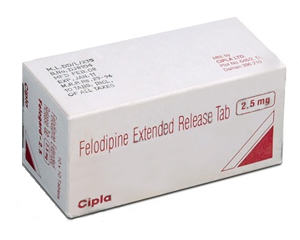
Felodipine
Incl. online consultation, medicine and discreet delivery
View Options
The medical information on this site is provided for educational purposes. It does not replace a face-to-face consultation with your GP or specialist. Always follow the advice of your prescribing doctor and read the patient information leaflet supplied with your medication.
Choose Your Medicine
Select dosage and quantity
Online Consultation
Reviewed by a qualified physician
Fast, Discreet Delivery
Delivered to your door
Medical Information
About This Medicine
Felodipine is a calcium channel blocker of the dihydropyridine class, prescribed for the treatment of hypertension and, in some cases, stable angina pectoris.
It works by relaxing the smooth muscle in arterial walls, which widens blood vessels and reduces the resistance against which the heart must pump.
By lowering peripheral vascular resistance, felodipine reduces blood pressure and decreases the workload on the heart.
It has a high selectivity for vascular smooth muscle compared with cardiac muscle, meaning it dilates blood vessels effectively without significantly affecting heart rate or contractility at therapeutic doses.
Felodipine is available as modified-release tablets, which provide a gradual and sustained release of the active ingredient over 24 hours.
This allows once-daily dosing and helps maintain stable blood pressure control throughout the day and night.
Long-term management of hypertension with felodipine reduces the risk of stroke, heart attack, and kidney disease.
It may be used alone or combined with other antihypertensive agents such as ACE inhibitors, beta-blockers, or thiazide diuretics for additive blood pressure reduction.
Usage & Dosage
Take felodipine once daily in the morning. Swallow the modified-release tablet whole with a glass of water.
Do not crush, chew, or break the tablet, as this destroys the controlled-release mechanism and may cause a sudden drop in blood pressure.
Avoid taking felodipine with grapefruit juice, as this can significantly increase drug levels in the blood and intensify side effects.
Continue taking the medication even if you feel well, since hypertension is usually symptomless and stopping treatment allows blood pressure to rise again.
If you miss a dose, take it as soon as you remember unless it is almost time for the next dose. Do not double up to compensate for a missed dose.
The usual starting dose for hypertension is 5 mg once daily. This may be increased to 10 mg daily if blood pressure remains inadequately controlled after two to four weeks.
Elderly patients and those with hepatic impairment should start at 2.5 mg daily.
For stable angina, the dose range is the same. The maximum recommended dose is 10 mg once daily. Your prescriber will titrate the dose based on blood pressure readings and tolerability.
Side Effects
Peripheral oedema, particularly swelling of the ankles, is the most frequently reported side effect and affects up to 15 per cent of patients at higher doses.
It results from arteriolar dilatation rather than fluid retention, and it does not respond well to diuretics.
Flushing and headache are common at the start of treatment, occurring in approximately 5 to 10 per cent of patients, and tend to diminish over the first few weeks.
Dizziness and fatigue have also been reported.
Less common side effects include palpitations, nausea, abdominal discomfort, and gingival hyperplasia (gum overgrowth) with long-term use.
Rarely, patients may develop skin rashes or mild increases in liver enzymes.
Severe hypotension is uncommon but may occur if the dose is escalated too quickly, particularly in elderly or volume-depleted patients.
Warnings & Precautions
Felodipine should be used with caution in patients with severe aortic stenosis, decompensated heart failure, or significantly impaired liver function.
Dose reduction is advised in hepatic impairment because the drug is extensively metabolised by the liver.
Do not consume grapefruit or grapefruit juice during treatment. Grapefruit inhibits the CYP3A4 enzyme responsible for felodipine metabolism, leading to markedly elevated plasma concentrations.
Inform your prescriber if you are taking other medications that lower blood pressure or inhibit CYP3A4, such as erythromycin, ketoconazole, or HIV protease inhibitors, as dose adjustment may be needed.
Contraindications
Felodipine is contraindicated in patients with known hypersensitivity to felodipine, other dihydropyridines, or any excipient in the formulation.
It must not be used in unstable angina, during or within one month of a myocardial infarction, or in haemodynamically significant cardiac outflow obstruction.
It is also contraindicated in pregnancy and should not be used during breastfeeding, as the drug passes into breast milk.