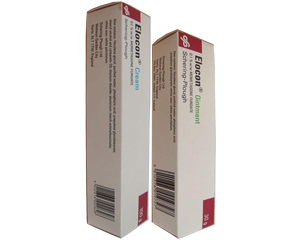

Gentamicin
Incl. online consultation, medicine and discreet delivery
View Options
The medical information on this site is provided for educational purposes. It does not replace a face-to-face consultation with your GP or specialist. Always follow the advice of your prescribing doctor and read the patient information leaflet supplied with your medication.
Choose Your Medicine
Select dosage and quantity
Online Consultation
Reviewed by a qualified physician
Fast, Discreet Delivery
Delivered to your door
Medical Information
About This Medicine
Gentamicin is an aminoglycoside antibiotic effective against a broad range of Gram-negative bacteria and certain Gram-positive organisms.
In its topical formulation, gentamicin is applied directly to infected skin to treat localised bacterial infections such as impetigo, infected eczema, folliculitis, and infected wounds or burns.
The mechanism of action involves irreversible binding to the 30S ribosomal subunit of susceptible bacteria, disrupting protein synthesis and leading to cell death.
Because it is bactericidal rather than merely bacteriostatic, gentamicin is highly effective at clearing active skin infections caused by organisms such as Staphylococcus aureus and Pseudomonas aeruginosa.
Topical application delivers a high local concentration of antibiotic at the infection site while minimising systemic absorption and the associated risks of nephrotoxicity and ototoxicity that can occur with parenteral administration.
Gentamicin cream or ointment is typically reserved for cases where a bacterial skin infection has been confirmed or is strongly suspected clinically.
It should be used for the shortest effective duration to limit the development of antibiotic resistance.
Usage & Dosage
Clean and gently dry the affected area before application. Apply a thin layer of gentamicin cream or ointment to the infected skin three to four times daily.
Wash your hands thoroughly before and after application unless the hands themselves are being treated.
Use the preparation for the full course prescribed, usually seven to fourteen days.
Do not use it for longer than advised without medical review, as prolonged use increases the risk of resistant organisms and secondary fungal infection.
Avoid applying gentamicin near the eyes unless specifically directed by your prescriber. If the infection does not improve within a week, return for reassessment.
Apply gentamicin 0.1% cream or ointment to the affected area three to four times daily.
For ear infections, the usual dose is two to three drops of gentamicin ear drops instilled into the affected ear three to four times daily.
Courses of topical treatment should generally not exceed fourteen days.
Follow your prescriber's specific guidance regarding duration and frequency, as this may vary with the severity and location of the infection.
Side Effects
Local irritation at the application site, including redness, itching, and a mild burning sensation, is the most commonly reported adverse effect.
These reactions are usually transient and settle with continued use.
Allergic contact dermatitis can develop, presenting as worsening redness, vesicles, or spreading rash beyond the treated area. Cross-sensitivity with other aminoglycosides is possible.
Systemic side effects are very rare with topical use.
However, if gentamicin is applied to large areas of damaged skin, or under occlusive dressings, absorption may be sufficient to cause kidney damage or hearing impairment.
Prolonged use may also encourage overgrowth of non-susceptible organisms, including Candida species.
Warnings & Precautions
Do not apply gentamicin to large areas of broken or ulcerated skin without medical supervision, as increased absorption raises the risk of systemic toxicity.
Avoid use under occlusive dressings unless specifically instructed.
Inform your prescriber if you have a history of hearing problems or kidney disease, or if you are already taking other aminoglycoside antibiotics or nephrotoxic drugs.
These factors may increase susceptibility to toxicity even from topical application.
If signs of allergic contact dermatitis appear, stop using the preparation and seek medical advice. Inform your prescriber if you are pregnant or breastfeeding.
Contraindications
Gentamicin must not be used by individuals with known hypersensitivity to gentamicin, other aminoglycoside antibiotics, or any of the formulation's excipients.
It is not appropriate for treating viral skin infections (such as herpes simplex or varicella) or fungal skin infections.
Perforated eardrums are a contraindication for gentamicin ear drops, as the drug may enter the middle ear and cause ototoxicity.