Glucophage
Incl. online consultation, medicine and discreet delivery
View Options
The medical information on this site is provided for educational purposes. It does not replace a face-to-face consultation with your GP or specialist. Always follow the advice of your prescribing doctor and read the patient information leaflet supplied with your medication.
Choose Your Medicine
Select dosage and quantity
Online Consultation
Reviewed by a qualified physician
Fast, Discreet Delivery
Delivered to your door
Medical Information
About This Medicine
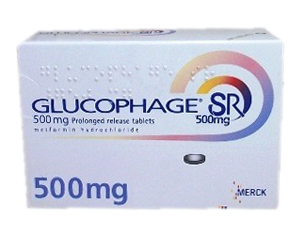
Glucophage contains metformin hydrochloride. This is the most widely prescribed first-line tablet for type 2 diabetes mellitus (a condition where blood sugar stays too high).
It belongs to the biguanide class of medicines. Doctors recommend it when diet, exercise, and lifestyle changes alone do not control your blood glucose well enough.
Metformin works in several ways. Its main action is to lower the amount of glucose your liver makes. It does this by reducing gluconeogenesis, the process by which the liver produces new sugar.
Metformin also makes your body more sensitive to insulin, especially in skeletal muscle. This helps your muscles take in and use more glucose.
It also slows down how fast your gut absorbs glucose from food. Metformin does not make the pancreas release more insulin.
For this reason it does not cause low blood sugar (hypoglycaemia) when taken on its own.
Glucophage comes as standard-release and prolonged-release tablets. Your doctor may prescribe it on its own or with other diabetes medicines.
These include sulfonylureas, DPP-4 inhibitors, SGLT2 inhibitors, GLP-1 receptor agonists, or insulin. Metformin has a neutral or slightly helpful effect on body weight.
This is an advantage over many other diabetes treatments.
Usage & Dosage
Take Glucophage with food or right after a meal. This helps reduce stomach and bowel side effects. Swallow the tablets whole with water. Do not crush or chew prolonged-release tablets.
They must be swallowed intact so the slow-release mechanism keeps working. Your doctor will start you on a low dose. The dose then goes up slowly over several weeks so your body can get used to it.
Check your blood glucose as your healthcare team tells you. Keep taking Glucophage even when you feel well.
Type 2 diabetes often causes no symptoms at first, yet high glucose levels still harm your body over time.
Standard-release: start at 500 mg once or twice daily with meals. Your doctor raises the dose by 500 mg every one to two weeks.
The usual maintenance dose is 500 mg to 1,000 mg two or three times daily, up to a maximum of 3,000 mg per day. Prolonged-release: start at 500 mg once daily with your evening meal.
The dose goes up by 500 mg every one to two weeks, up to a maximum of 2,000 mg once daily.
In moderate kidney problems (eGFR 30-45), the maximum dose is 1,000 mg daily, and your eGFR must be checked regularly. Metformin must not be used if your eGFR falls below 30.
Side Effects
Common side effects affect more than 1 in 10 patients. These include nausea, vomiting, diarrhoea, stomach pain, and loss of appetite. They are worst when you start treatment and when the dose goes up.
They usually get better within a few weeks. A metallic taste in the mouth is also common.
Uncommon effects include skin rash and itching (pruritus). Long-term use may lower how well you absorb vitamin B12. This can lead to a deficiency.
If not picked up, this may cause nerve damage in the hands and feet (peripheral neuropathy) and a type of anaemia (megaloblastic anaemia).
The most serious side effect is lactic acidosis. This is very rare, but many people who develop it do not survive.
The risk is higher with severe kidney problems, dehydration, heavy alcohol use, liver problems, and conditions that starve tissues of oxygen, such as acute heart failure or sepsis.
Warning signs include fast breathing, stomach pain, muscle cramps, a drop in body temperature (hypothermia), and feeling generally unwell. Get emergency medical help if these develop.
Warnings & Precautions
Stop metformin for a short time before any test or procedure that uses iodinated contrast dye.
Also stop it during sudden illness that causes dehydration or unstable blood flow, and for 48 hours after surgery under general anaesthesia.
Your kidney function (eGFR) should be checked at least once a year. It should be checked more often if your kidney function is falling or if you have extra risk factors.
Limit alcohol, because it raises the risk of lactic acidosis. Have your vitamin B12 levels checked from time to time, especially if you notice signs of nerve damage in your hands or feet.
Contraindications
Do not take Glucophage if you have severe kidney problems (eGFR below 30 mL/min), diabetic ketoacidosis, or diabetic pre-coma.
Do not take it if you have an acute condition that can affect the kidneys, such as dehydration, severe infection, or shock.
Avoid it if you have a sudden or long-term illness that can starve tissues of oxygen, such as heart failure, respiratory failure, or a recent heart attack (myocardial infarction).
It is also not for people with liver problems, sudden alcohol poisoning, or alcoholism. Glucophage is not suitable for type 1 diabetes.