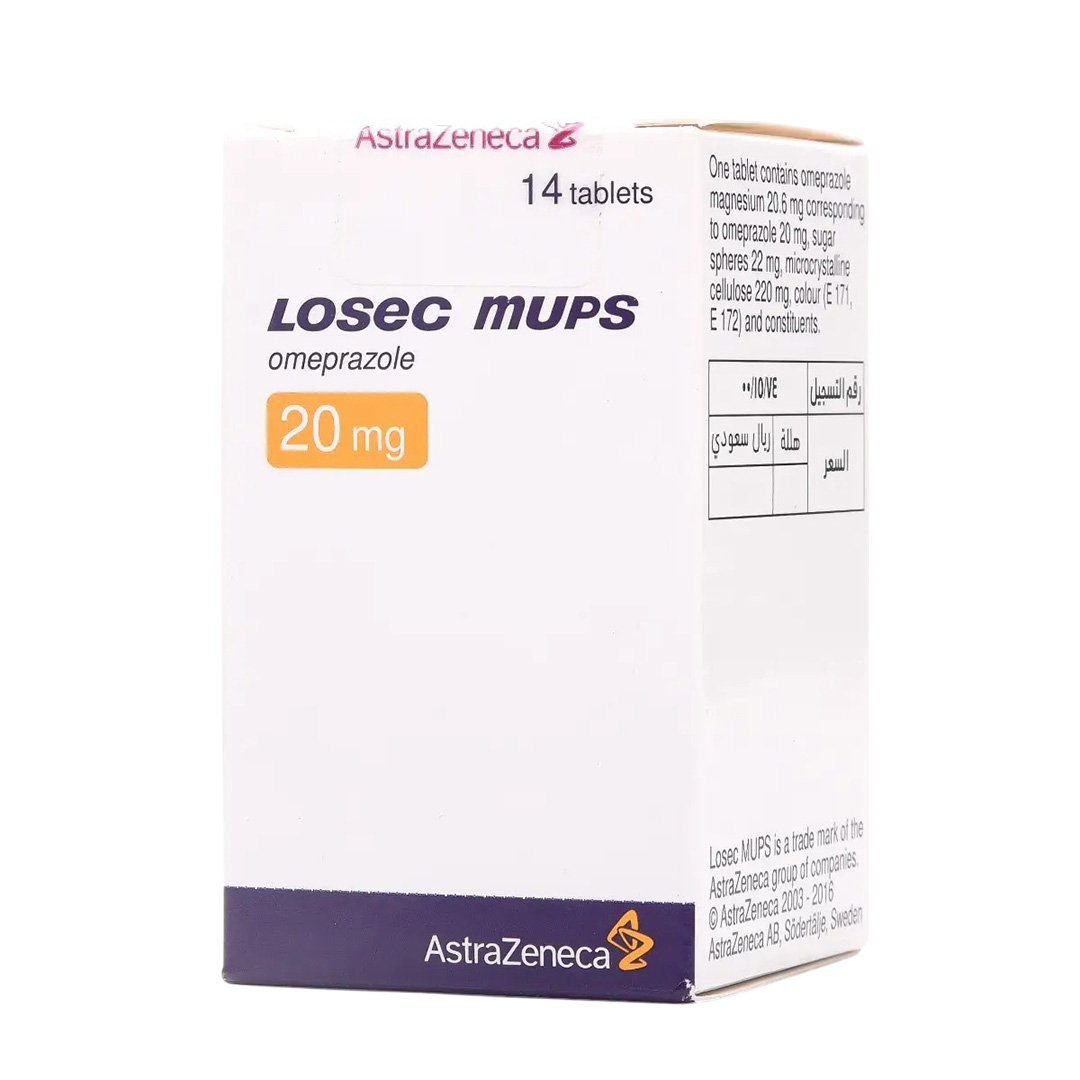
Losec MUPS
Incl. online consultation, medicine and discreet delivery
View Options
The medical information on this site is provided for educational purposes. It does not replace a face-to-face consultation with your GP or specialist. Always follow the advice of your prescribing doctor and read the patient information leaflet supplied with your medication.
Choose Your Medicine
Select dosage and quantity
Online Consultation
Reviewed by a qualified physician
Fast, Discreet Delivery
Delivered to your door
Medical Information
About This Medicine
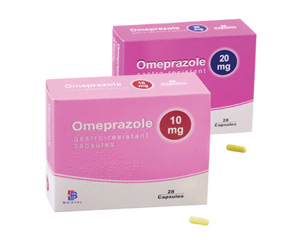
Losec MUPS contains omeprazole in a multiple-unit pellet system (MUPS) tablet formulation.
Omeprazole is a proton pump inhibitor (PPI) that reduces gastric acid secretion and is prescribed for the treatment and prevention of acid-related gastrointestinal conditions including gastro-oesophageal reflux disease (GORD), peptic ulcers, and as part of Helicobacter pylori eradication regimens.
Omeprazole irreversibly inhibits the hydrogen-potassium ATPase enzyme system (the proton pump) on the parietal cells of the stomach lining.
This is the final step in gastric acid production, so blocking it provides potent and sustained acid suppression.
A single daily dose reduces 24-hour intragastric acidity by approximately 80 per cent.
The MUPS formulation consists of enteric-coated pellets compressed into a tablet. These pellets resist gastric acid, dissolving only in the alkaline environment of the duodenum.
The MUPS tablet can be swallowed whole, dispersed in water, or administered through a nasogastric tube, making it a versatile option for patients who have difficulty swallowing conventional capsules.
Usage & Dosage
Take Losec MUPS once daily, preferably in the morning before breakfast. Swallow the tablet whole with half a glass of water. Do not chew or crush it.
If you have difficulty swallowing, the tablet may be dispersed in a small amount of non-carbonated water, stirred until it breaks up into pellets, and swallowed immediately.
Do not use milk or carbonated water for dispersal.
For Helicobacter pylori eradication, omeprazole is taken alongside two antibiotics as directed by your doctor, typically for seven days.
For reflux disease, treatment may last four to eight weeks, sometimes followed by long-term maintenance at a lower dose.
For GORD, the usual adult dose is 20 mg once daily for four to eight weeks. Severe or erosive oesophagitis may require 40 mg daily. Maintenance therapy is 10 to 20 mg daily.
For duodenal ulcer healing, 20 mg daily for four weeks is standard. For H. pylori eradication, 20 mg twice daily with appropriate antibiotics for seven days. Children are dosed by body weight.
Patients with hepatic impairment should not exceed 20 mg daily. No dose adjustment is needed for renal impairment.
Side Effects
Common side effects (1 in 10 to 1 in 100 patients) include headache, abdominal pain, diarrhoea, constipation, nausea, and flatulence. These are generally mild and self-limiting.
Uncommon effects include dizziness, skin rash, pruritus, and dry mouth. Elevated liver enzymes may occur but usually resolve on discontinuation.
Long-term use (beyond one year) has been associated with hypomagnesaemia, vitamin B12 deficiency, an increased risk of Clostridium difficile infection, and a small increased risk of hip, wrist, and spine fractures, particularly in elderly patients on high doses.
Fundic gland polyps may develop but are generally benign and reversible.
Very rarely, omeprazole may cause interstitial nephritis, severe skin reactions (Stevens-Johnson syndrome), or subacute cutaneous lupus erythematosus.
Warnings & Precautions
Before starting omeprazole for dyspepsia, alarm symptoms such as unintentional weight loss, vomiting blood, difficulty swallowing, or persistent vomiting should be investigated to exclude gastric malignancy.
Long-term use warrants periodic review; use the lowest effective dose for the shortest necessary duration.
Monitor magnesium levels in patients on prolonged treatment, particularly those also taking digoxin or diuretics.
Omeprazole may reduce the absorption of drugs that require gastric acidity, including certain antifungals and antiretrovirals. It can also increase methotrexate levels.
Contraindications
Losec MUPS is contraindicated in patients with known hypersensitivity to omeprazole, substituted benzimidazoles, or any excipient. It should not be co-administered with nelfinavir.
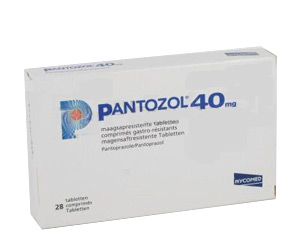
Caution is advised when prescribing alongside clopidogrel, as omeprazole may reduce the antiplatelet effect; an alternative PPI such as pantoprazole may be preferred in this setting.