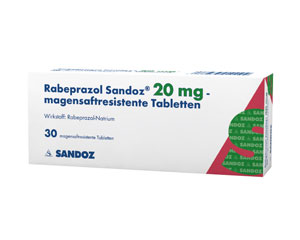
Rabeprazole
Incl. online consultation, medicine and discreet delivery
View Options
The medical information on this site is provided for educational purposes. It does not replace a face-to-face consultation with your GP or specialist. Always follow the advice of your prescribing doctor and read the patient information leaflet supplied with your medication.
Choose Your Medicine
Select dosage and quantity
Online Consultation
Reviewed by a qualified physician
Fast, Discreet Delivery
Delivered to your door
Medical Information
About This Medicine
Rabeprazole is a proton pump inhibitor (PPI) used to treat conditions caused by excess stomach acid, including gastro-oesophageal reflux disease (GORD), duodenal and gastric ulcers, and Zollinger-Ellison syndrome.
It is also used in combination with antibiotics for the eradication of Helicobacter pylori infection.
Rabeprazole irreversibly inhibits the hydrogen-potassium ATPase enzyme system (the proton pump) on the surface of gastric parietal cells.
This blocks the final step of acid production, reducing basal and stimulated gastric acid secretion regardless of the stimulus. A single dose can reduce acid output by over 90%.
Rabeprazole has a rapid onset of action, with significant acid suppression occurring within one hour of the first dose.
It is converted to its active form more quickly than omeprazole, and its activation is less dependent on CYP2C19 polymorphisms, which may result in more consistent acid suppression across different patient populations.
Usage & Dosage
Swallow tablets whole in the morning before food - do not crush, chew, or split the enteric-coated tablet, as this damages the protective coating and renders the drug inactive in the stomach. For H.
pylori eradication, take alongside the prescribed antibiotics for the full course. Most conditions require 4-8 weeks of treatment.
Use the lowest effective dose for the shortest duration when treating GORD symptoms.
GORD: 20 mg once daily for 4-8 weeks. Maintenance: 10-20 mg daily. Duodenal ulcer: 20 mg daily for 4 weeks. Gastric ulcer: 20 mg daily for 6-8 weeks. H.
pylori eradication: 20 mg twice daily for 7 days with appropriate antibiotics. Zollinger-Ellison syndrome: starting dose 60 mg daily, adjusted as needed.
Side Effects
Common (1 in 10 to 1 in 100): headache, diarrhoea, nausea, abdominal pain, and flatulence. Uncommon (1 in 100 to 1 in 1,000): dizziness, dry mouth, rash, and raised liver enzymes.
Rare (less than 1 in 1,000): interstitial nephritis, hypomagnesaemia (with prolonged use), and Clostridium difficile-associated diarrhoea.
Long-term use is associated with a modestly increased risk of fractures, vitamin B12 deficiency, and fundic gland polyps, though these risks are small at standard doses.
Warnings & Precautions
Long-term PPI use should be reviewed regularly to ensure continued need.
Prolonged treatment may increase the risk of hip, wrist, and spine fractures, particularly in elderly patients or those on high doses. Monitor magnesium levels if used for more than one year.
PPIs can mask symptoms of gastric malignancy - ensure alarm symptoms such as unintentional weight loss, dysphagia, or vomiting blood are appropriately investigated before starting treatment.
Contraindications
Known allergy to rabeprazole, substituted benzimidazoles, or any excipient. Should not be used during pregnancy or breastfeeding unless clearly necessary.
Caution with drugs whose absorption depends on gastric pH, such as ketoconazole, itraconazole, and erlotinib.