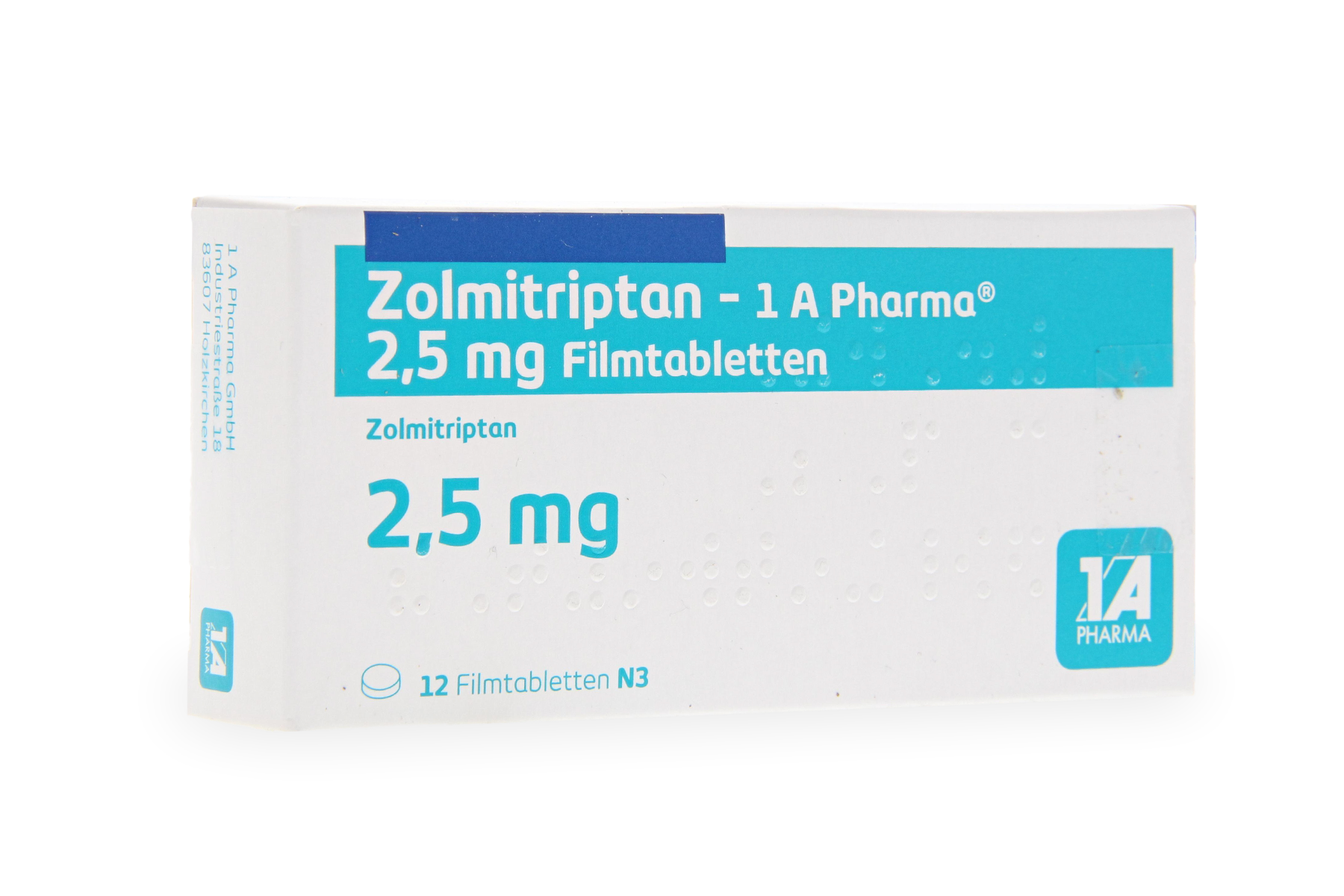
Zolmitriptan
Incl. online consultation, medicine and discreet delivery
View Options
The medical information on this site is provided for educational purposes. It does not replace a face-to-face consultation with your GP or specialist. Always follow the advice of your prescribing doctor and read the patient information leaflet supplied with your medication.
Choose Your Medicine
Select dosage and quantity
Online Consultation
Reviewed by a qualified physician
Fast, Discreet Delivery
Delivered to your door
Medical Information
About This Medicine
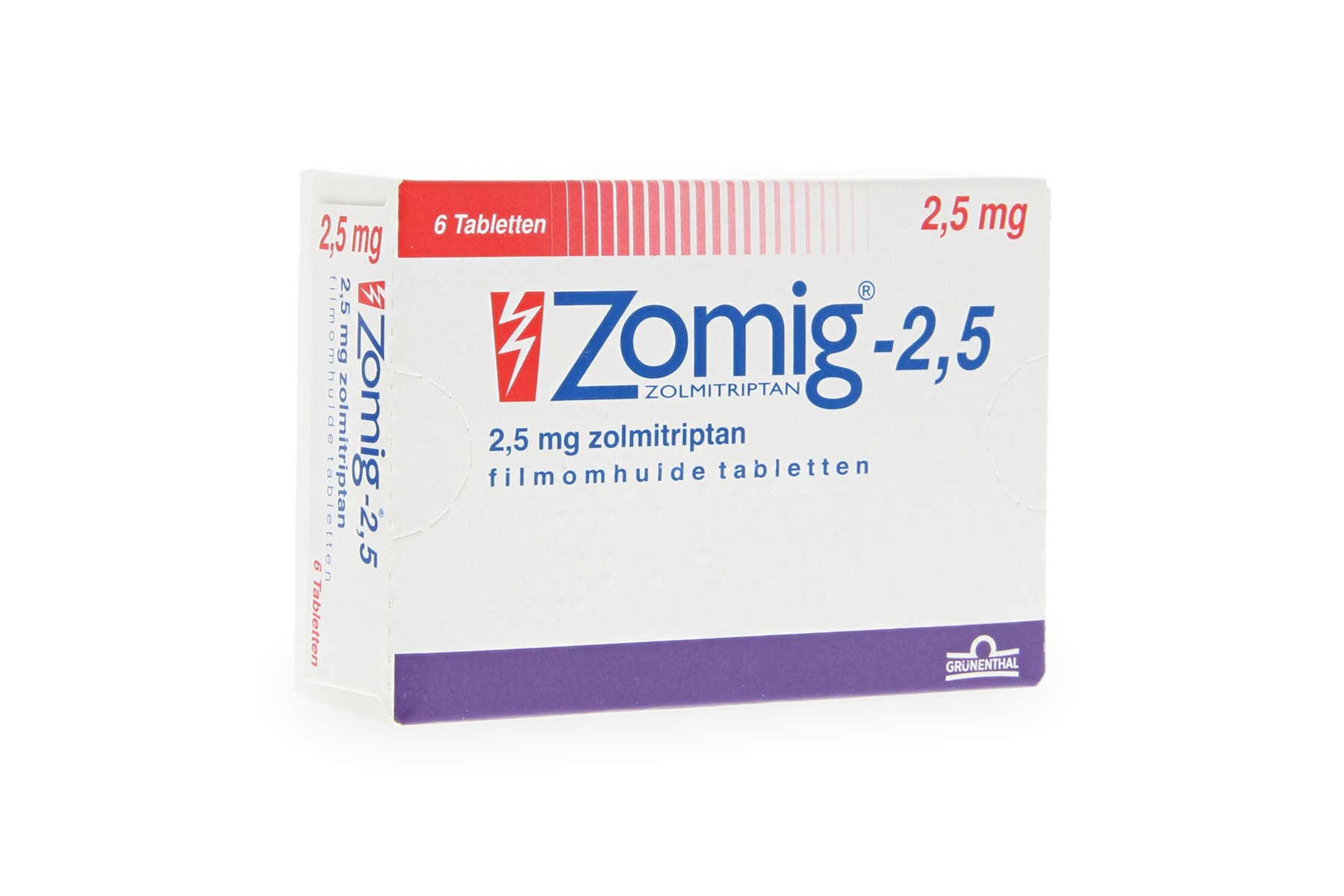
Zolmitriptan is a selective serotonin (5-HT1B/1D) receptor agonist, commonly referred to as a triptan, used for the acute treatment of migraine attacks with or without aura.
It constricts dilated intracranial blood vessels, inhibits the release of vasoactive neuropeptides from trigeminal nerve endings, and blocks pain signal transmission in the trigeminovascular system, addressing the core pathophysiology of migraine.
Zolmitriptan is available as conventional tablets, orodispersible tablets (which dissolve on the tongue without water), and a nasal spray.
The nasal spray has a faster onset of action (approximately 15 minutes) compared with oral formulations (around 45 minutes), which can be advantageous for patients with rapid-onset migraines or those who experience nausea and vomiting early in an attack.
The recommended dose of zolmitriptan provides effective relief of headache, nausea, photophobia, and phonophobia in the majority of patients when taken early in a migraine attack.
It should not be used prophylactically or for the treatment of hemiplegic or basilar migraine.
Usage & Dosage
Take at the onset of migraine headache. Tablets should be swallowed whole with water.
Orodispersible tablets are placed on the tongue and allowed to dissolve; they can be taken without water, which is practical when nausea prevents swallowing.
For nasal spray, administer one spray into one nostril while breathing in gently. If the migraine improves but recurs, a second dose may be taken after at least two hours.
If the first dose provides no relief, do not take a second dose for the same attack.
Adults: 2.5 mg at the onset of migraine headache. If the headache recurs, a second dose of 2.5 mg may be taken at least two hours after the first. Maximum: 10 mg in 24 hours.
Some patients may benefit from a 5 mg dose. Nasal spray: 5 mg (one spray) into one nostril.
In patients taking CYP1A2 inhibitors (such as fluvoxamine or cimetidine), the maximum dose is 5 mg in 24 hours.
Hepatic impairment: maximum 5 mg in 24 hours in moderate impairment; avoid in severe impairment.
Side Effects
Common (1 in 10 to 1 in 100): sensations of tingling, warmth, heaviness, pressure, or tightness (in the throat, chest, limbs, or generally), drowsiness, dizziness, nausea, dry mouth, muscle weakness, myalgia.
Uncommon: palpitations, transient increases in blood pressure, tachycardia. Rare: coronary artery vasospasm, myocardial ischaemia (extremely rare at recommended doses), arrhythmias.
The chest tightness and throat sensations are usually benign triptan-related sensations, not cardiac in origin, but should be evaluated if severe or persistent.
Warnings & Precautions
Do not use within 24 hours of another triptan or an ergotamine preparation.
Evaluate cardiovascular risk before prescribing; triptans are not recommended in patients with uncontrolled hypertension, ischaemic heart disease, cerebrovascular disease, or peripheral vascular disease.
Serotonin syndrome is a rare risk when used with SSRIs, SNRIs, or other serotonergic agents; monitor for symptoms including agitation, tremor, and hyperthermia.
Medication-overuse headache may develop with frequent use (more than ten days per month); limit use to a maximum of two days per week on average.
Contraindications
Contraindicated in ischaemic heart disease, coronary vasospasm (Prinzmetal's angina), uncontrolled hypertension, previous stroke or transient ischaemic attack, peripheral vascular disease, severe hepatic impairment, concurrent use of ergotamine or other triptans, and known hypersensitivity to zolmitriptan or any excipient.
Avoid in patients with Wolff-Parkinson-White syndrome or other cardiac accessory conduction pathway disorders.