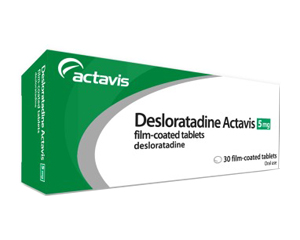
Desloratadine
Incl. online consultation, medicine and discreet delivery
View Options
The medical information on this site is provided for educational purposes. It does not replace a face-to-face consultation with your GP or specialist. Always follow the advice of your prescribing doctor and read the patient information leaflet supplied with your medication.
Choose Your Medicine
Select dosage and quantity
Online Consultation
Reviewed by a qualified physician
Fast, Discreet Delivery
Delivered to your door
Medical Information
About This Medicine
Desloratadine is a second-generation antihistamine used to relieve the symptoms of allergic rhinitis and chronic idiopathic urticaria.
It is the active metabolite of loratadine and offers effective, long-lasting relief from sneezing, nasal discharge, nasal itching, ocular itching, tearing, and hives.
Desloratadine works by selectively blocking peripheral histamine H1 receptors, preventing histamine from triggering the inflammatory cascade that produces allergic symptoms.
Because it has poor penetration across the blood-brain barrier, desloratadine is classified as a non-sedating antihistamine, meaning it is significantly less likely to cause drowsiness compared with older first-generation antihistamines such as chlorphenamine or promethazine.
The medication is taken once daily and provides 24-hour symptom control. It has a rapid onset of action, typically within one hour, and is well tolerated across all age groups.
Desloratadine is available as tablets, orodispersible tablets, and oral solution, making it suitable for both adults and children.
Usage & Dosage
Take one 5 mg tablet once daily, with or without food, at roughly the same time each day. Swallow the tablet whole with a glass of water.
If using orodispersible tablets, place the tablet on the tongue and allow it to disintegrate before swallowing.
For children, use the oral solution at the dose recommended by your prescriber based on the child's age and weight.
Treatment may be continued throughout the allergy season or as advised by your doctor.
Adults and adolescents aged 12 years and over: 5 mg once daily. Children aged 6 to 11 years: 2.5 mg once daily. Children aged 1 to 5 years: 1.25 mg once daily.
Children aged 6 to 11 months: 1 mg once daily. Dose adjustment is generally not required in elderly patients.
In patients with severe renal or hepatic impairment, a reduced dose or longer dosing interval may be considered.
Side Effects
Common (1 in 10 to 1 in 100): fatigue, dry mouth, headache (in adults); diarrhoea, pyrexia (in children under 2).
Uncommon (1 in 100 to 1 in 1,000): drowsiness, tachycardia, palpitations, abdominal pain, nausea, dizziness, insomnia.
Very rare (less than 1 in 10,000): elevated liver enzymes, hepatitis, hallucinations, hypersensitivity reactions including anaphylaxis, QT prolongation.
Desloratadine is generally very well tolerated. The incidence of sedation reported in clinical trials was comparable to placebo.
Warnings & Precautions
Patients with severe renal impairment should use desloratadine with caution.
Although sedation is rare, some individuals may experience drowsiness; avoid driving or operating machinery until you know how the medication affects you.
If you have a history of seizures, discuss this with your prescriber before starting treatment.
Desloratadine contains phenylalanine in certain orodispersible formulations, which is relevant for patients with phenylketonuria.
Contraindications
Do not take desloratadine if you have a known hypersensitivity to desloratadine, loratadine, or any of the excipients. Caution is advised in patients with severe hepatic impairment.
Desloratadine should not be used in children under 1 year of age without specific medical guidance.