Telfast
Incl. online consultation, medicine and discreet delivery
View Options
The medical information on this site is provided for educational purposes. It does not replace a face-to-face consultation with your GP or specialist. Always follow the advice of your prescribing doctor and read the patient information leaflet supplied with your medication.
Choose Your Medicine
Select dosage and quantity
Online Consultation
Reviewed by a qualified physician
Fast, Discreet Delivery
Delivered to your door
Medical Information
About This Medicine
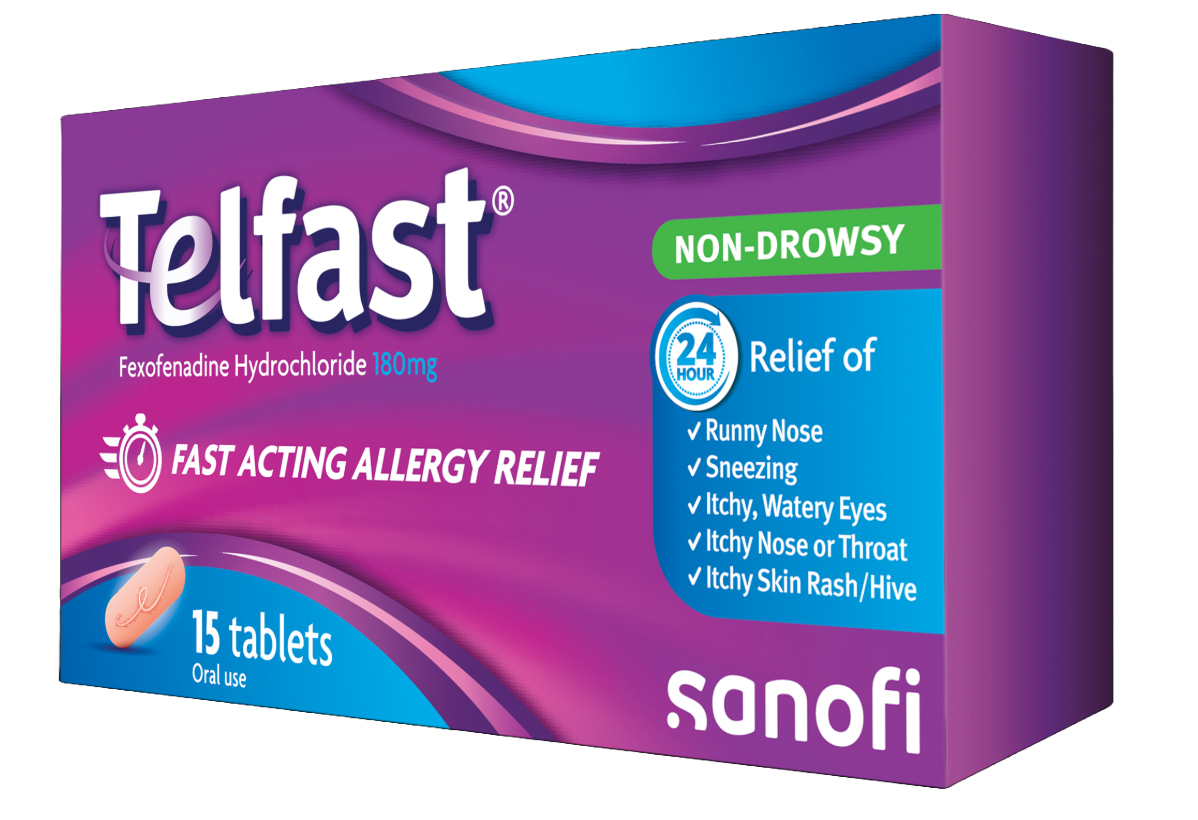
Telfast contains fexofenadine hydrochloride, a second-generation antihistamine used to relieve the symptoms of seasonal allergic rhinitis (hay fever) and chronic idiopathic urticaria (hives).
It is a non-sedating antihistamine, meaning it does not cross the blood-brain barrier in significant quantities and therefore causes very little drowsiness.
Fexofenadine is the active metabolite of terfenadine, an older antihistamine that was withdrawn due to cardiac safety concerns.
Fexofenadine does not share those risks - it has no clinically significant effect on the QT interval and does not inhibit cardiac potassium channels.
Clinical Advantages
Fexofenadine provides rapid onset of action, typically within one to two hours, with relief lasting a full 24 hours.
It does not impair psychomotor performance, making it suitable for patients who drive or operate machinery.
It is the least sedating of the commonly prescribed second-generation antihistamines, a distinction supported by driving simulation studies.
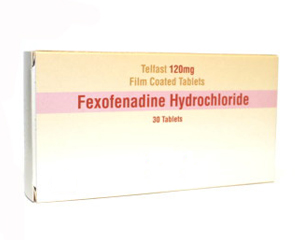
Telfast is available in 120 mg tablets for hay fever and 180 mg tablets for urticaria.
Usage & Dosage
How to Take Telfast
Swallow the tablet whole with water. It can be taken with or without food, although high-fat meals may modestly reduce absorption. Take it at the same time each day.
Avoid With Certain Juices
Fruit juices - particularly grapefruit, orange, and apple - can reduce the absorption of fexofenadine by inhibiting organic anion-transporting polypeptides (OATPs) in the gut.
Swallow the tablet with water rather than juice.
Duration
For hay fever, use throughout the pollen season. For urticaria, continue until symptoms resolve or as directed by your prescriber.
Allergic Rhinitis (Adults and Adolescents 12+)
- 120 mg once daily
Chronic Idiopathic Urticaria (Adults and Adolescents 12+)
- 180 mg once daily
Children (6-11 years)
- 30 mg twice daily (tablet or oral suspension)
Renal Impairment
- Start at 60 mg once daily in adults with significant renal impairment
Elderly
- No dose adjustment required
Do not exceed the recommended dose. Fexofenadine does not provide additional benefit at higher doses.
Side Effects
Common (up to 1 in 10 patients)
- Headache
- Drowsiness (uncommon at recommended doses, but reported)
- Nausea
Uncommon (up to 1 in 100 patients)
- Dizziness
- Fatigue
- Dry mouth
- Abdominal discomfort
Rare (up to 1 in 1,000 patients)
- Insomnia
- Nervousness
- Tachycardia or palpitations
Very Rare (fewer than 1 in 10,000 patients)
- Hypersensitivity reactions (angioedema, dyspnoea, flushing)
- Severe skin reactions
Fexofenadine is one of the best-tolerated antihistamines. Genuine sedation is very rare at standard doses and typically not different from placebo in clinical trials.
Warnings & Precautions
Renal Impairment
Fexofenadine is primarily excreted renally. In patients with reduced kidney function, the starting dose should be halved and response monitored.
Fruit Juice Interaction
Grapefruit, orange, and apple juices reduce fexofenadine absorption by 30-40%. This is not a safety concern but may reduce efficacy. Take the tablet with water.
Driving
Fexofenadine does not impair driving ability at recommended doses. However, individual responses vary - if you experience unusual drowsiness, avoid driving until you know how you respond.
Pregnancy and Breastfeeding
Animal studies show no teratogenic effects, but human data are limited. Use in pregnancy only if clearly needed. Fexofenadine is excreted in breast milk - discuss with your doctor.
Contraindications
Do not take Telfast if you have a known allergy to fexofenadine or any excipient in the formulation.
Use with caution in patients with severe renal impairment (dose reduction required).
There are no absolute contraindications beyond hypersensitivity. Fexofenadine has a very wide therapeutic margin.