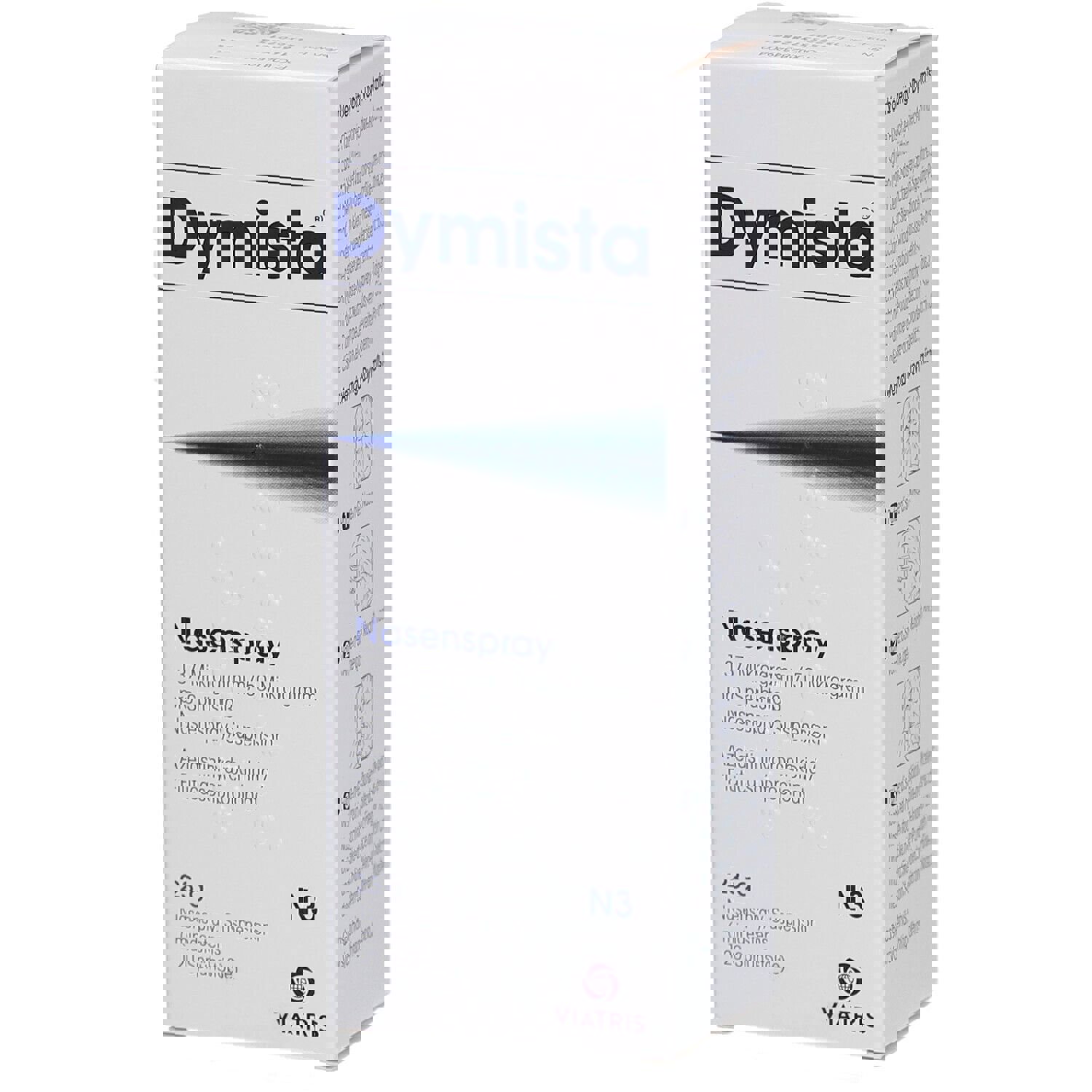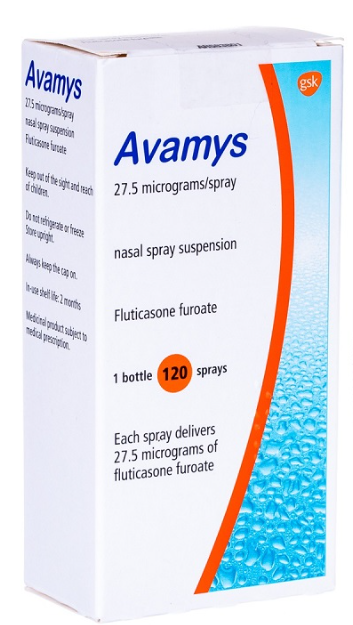
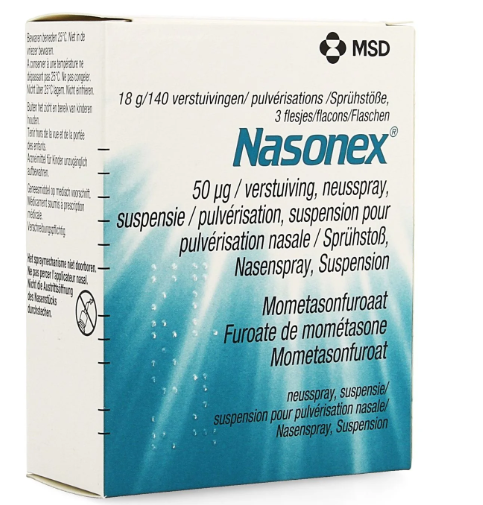
Nasonex Nasal Spray
Incl. online consultation, medicine and discreet delivery
View Options
The medical information on this site is provided for educational purposes. It does not replace a face-to-face consultation with your GP or specialist. Always follow the advice of your prescribing doctor and read the patient information leaflet supplied with your medication.
Choose Your Medicine
Select dosage and quantity
Online Consultation
Reviewed by a qualified physician
Fast, Discreet Delivery
Delivered to your door
Medical Information
About This Medicine
Nasonex contains mometasone furoate, an intranasal corticosteroid used to treat allergic rhinitis (seasonal and perennial) and nasal polyps.
It provides effective relief of sneezing, nasal itching, congestion, and rhinorrhoea with once-daily dosing.
Mometasone furoate is a potent glucocorticoid with high topical anti-inflammatory activity and low systemic bioavailability (less than 0.1% after nasal administration).
It suppresses the release of inflammatory mediators including histamine, leukotrienes, and prostaglandins from cells in the nasal mucosa, reducing the allergic cascade at its source.
Nasal Polyps
In patients with nasal polyposis, Nasonex reduces polyp size, alleviates nasal obstruction, and restores the sense of smell.
It can delay or reduce the need for surgical polypectomy in selected patients.
Comparison With Oral Antihistamines
Intranasal corticosteroids are considered more effective than oral antihistamines for nasal congestion, the symptom that patients find most bothersome.
Guidelines recommend them as first-line treatment for moderate-to-severe allergic rhinitis.
Usage & Dosage
Preparing the Spray
Shake the bottle gently before each use. If using for the first time or after more than 14 days of non-use, prime by pumping 10 times until a fine mist appears.
Application
Blow your nose gently. Tilt your head slightly forward. Insert the nozzle into one nostril, pointing away from the nasal septum. Press the pump while breathing in gently. Repeat for the other nostril.
Timing
Use once daily, preferably at the same time each day. For seasonal rhinitis, starting one to two weeks before the expected pollen season can optimise symptom control.
Allergic Rhinitis - Adults and Adolescents (12+)
- 2 sprays in each nostril once daily (total 200 micrograms)
- Once controlled, reduce to 1 spray per nostril once daily (100 micrograms)
Allergic Rhinitis - Children (3-11 years)
- 1 spray in each nostril once daily (total 100 micrograms)
Nasal Polyps - Adults (18+)
- 2 sprays in each nostril twice daily (total 400 micrograms)
- Once improved, reduce to 2 sprays per nostril once daily
Elderly and Renal/Hepatic Impairment
- No dose adjustment required
Side Effects
Common (up to 1 in 10 patients)
- Epistaxis (nosebleeds)
- Headache
- Pharyngitis (sore throat)
- Burning or irritation in the nose
Uncommon (up to 1 in 100 patients)
- Nasal ulceration
- Sneezing after spraying
- Unpleasant taste
Rare (up to 1 in 1,000 patients)
- Nasal septal perforation
- Hypersensitivity reactions (urticaria, bronchospasm)
- Elevated intraocular pressure or glaucoma
Very Rare (fewer than 1 in 10,000 patients)
- Anaphylaxis
- Growth retardation in children (minimal at recommended doses)
Nosebleeds are the most common complaint and are usually mild. Correct spray technique - aiming away from the septum - reduces this risk.
Warnings & Precautions
Nasal Technique
Always direct the spray away from the nasal septum to minimise mucosal trauma and reduce the risk of nosebleeds and septal perforation.
Long-Term Use
Intranasal steroids used long-term can rarely cause nasal septal perforation. If you develop persistent nasal crusting, whistling, or one-sided pain, seek medical review.
Growth in Children
Monitor growth in children on long-term intranasal steroids. At recommended doses, the effect is minimal, but individual susceptibility varies.
Immunosuppressed Patients
Patients who have not had chickenpox or measles should avoid close contact with infected individuals while on any corticosteroid therapy.
Switching from Oral Steroids
Patients transferring from systemic corticosteroids may experience adrenal insufficiency symptoms during the transition.
Contraindications
Do not use Nasonex if you have:
- A known hypersensitivity to mometasone furoate or any excipient
- An untreated localised nasal infection (including nasal herpes simplex)
- Recent nasal surgery or trauma (until healed)
Nasonex is not recommended for children under 3 years of age for allergic rhinitis or under 18 for nasal polyps.