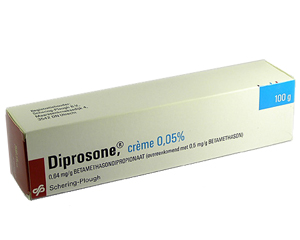
Diprosone
Incl. online consultation, medicine and discreet delivery
View Options
The medical information on this site is provided for educational purposes. It does not replace a face-to-face consultation with your GP or specialist. Always follow the advice of your prescribing doctor and read the patient information leaflet supplied with your medication.
Choose Your Medicine
Select dosage and quantity
Online Consultation
Reviewed by a qualified physician
Fast, Discreet Delivery
Delivered to your door
Medical Information
About This Medicine
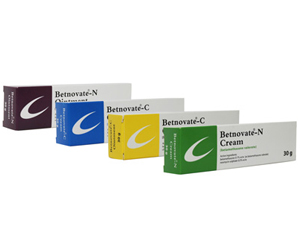
Diprosone (also marketed as Diproderm) contains betamethasone dipropionate, a potent topical corticosteroid used to treat a range of inflammatory and pruritic skin conditions.
It is effective for eczema, dermatitis, psoriasis, and other steroid-responsive dermatoses that have not responded adequately to milder corticosteroid preparations.
Betamethasone dipropionate acts by suppressing the inflammatory cascade within the skin.
It inhibits the release of phospholipase A2, thereby reducing the production of prostaglandins, leukotrienes, and other inflammatory mediators.
This leads to a rapid reduction in redness, swelling, itching, and discomfort.
Because it is classified as a potent (Group III) corticosteroid, it is generally reserved for moderate to severe inflammatory dermatoses or areas of thickened skin that require greater anti-inflammatory potency.
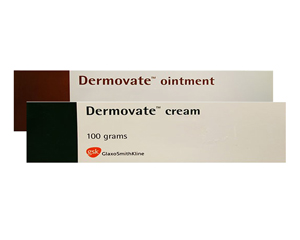
Diprosone is available as a cream, ointment, and lotion.
The choice of formulation depends on the site and nature of the skin condition: creams for moist or weeping lesions, ointments for dry or lichenified skin, and lotions for hairy areas such as the scalp.
Usage & Dosage
Apply a thin film to the affected area once or twice daily, gently rubbing in until absorbed. Use the minimum amount necessary to cover the affected skin.
Wash hands after application unless treating the hands.
Do not cover the treated area with airtight dressings or bandages unless specifically instructed by your prescriber, as occlusion increases absorption and the risk of side effects.
Treatment duration should be as short as possible; review at two to four weeks.
Adults: apply thinly to the affected area once to twice daily. A maximum treatment duration of two to four weeks is generally recommended for continuous use.
For maintenance of chronic conditions, intermittent application (for example, weekends only) may be used under specialist supervision.
In children, use should be limited to the shortest duration and smallest area necessary. Do not exceed the prescribed duration without medical review.
Side Effects
Common: burning or stinging on application, skin thinning with prolonged use.
Uncommon: striae (stretch marks), telangiectasia (visible thread veins), perioral dermatitis, acneiform eruptions, and depigmentation.
Prolonged use or application under occlusion increases the risk of local atrophy and systemic absorption.
Rare: adrenal suppression with extensive or prolonged use, particularly in children or when applied to large areas. Allergic contact dermatitis to the preparation has been reported occasionally.
Warnings & Precautions
Do not use on the face for more than five to seven days unless under specialist supervision, as facial skin is particularly susceptible to thinning and steroid-induced rosacea.
Avoid application to broken skin, infected lesions (unless combined with an appropriate antimicrobial), or the periorbital area. Long-term use may mask the signs of skin infection.
Taper gradually if the preparation has been used continuously for an extended period. In children, prolonged or widespread use may impair growth; monitor carefully.
Contraindications
Contraindicated in untreated bacterial, fungal, or viral skin infections (including herpes simplex, varicella, and tinea), acne vulgaris, rosacea, perioral dermatitis, and known hypersensitivity to betamethasone dipropionate or any excipient.
Do not use on wounds or ulcerated skin. Not suitable for use in infants under one year of age.