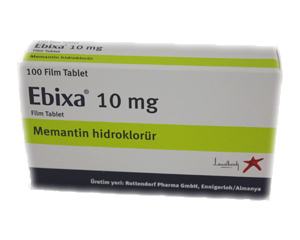
Ebixa
Incl. online consultation, medicine and discreet delivery
View Options
The medical information on this site is provided for educational purposes. It does not replace a face-to-face consultation with your GP or specialist. Always follow the advice of your prescribing doctor and read the patient information leaflet supplied with your medication.
Choose Your Medicine
Select dosage and quantity
Online Consultation
Reviewed by a qualified physician
Fast, Discreet Delivery
Delivered to your door
Medical Information
About This Medicine
Ebixa contains memantine hydrochloride, a medication prescribed for the treatment of moderate to severe Alzheimer's disease.
It is intended for patients whose symptoms have progressed beyond the mild stage, and may be used alone or in combination with a cholinesterase inhibitor such as donepezil.
Memantine is an uncompetitive NMDA (N-methyl-D-aspartate) receptor antagonist.
In Alzheimer's disease, excessive stimulation of NMDA receptors by the neurotransmitter glutamate is thought to contribute to neuronal damage and cognitive decline.
By blocking pathological overactivation of these receptors while still allowing normal physiological signalling, memantine helps to reduce nerve cell damage and may slow the rate of functional deterioration.
Ebixa does not cure Alzheimer's disease or halt its underlying progression.
However, clinical trials have demonstrated modest but meaningful benefits in cognition, daily functioning, and overall clinical impression.
Some patients and their carers notice an improvement in attention, the ability to carry out daily tasks, and behavioural symptoms such as agitation and aggression.
Usage & Dosage
Ebixa is taken by mouth once daily, at the same time each day, with or without food. The dose is increased gradually over four weeks to reduce the risk of side effects.
Your doctor will typically start at 5 mg once daily and increase by 5 mg each week until the maintenance dose of 20 mg daily is reached.
The medication may be given as tablets or as an oral solution. If using the oral solution, measure the dose carefully with the dosing device provided.
A carer should supervise administration to ensure the correct dose is taken. Do not stop Ebixa abruptly without medical advice, as this may lead to a noticeable worsening of symptoms.
Week one: 5 mg once daily. Week two: 10 mg once daily. Week three: 15 mg once daily. Week four onwards: 20 mg once daily (maintenance dose).
In patients with moderate renal impairment (creatinine clearance 30 to 49 mL/min), the target dose should be reduced to 10 mg daily if well tolerated after at least seven days of treatment.
In severe renal impairment (creatinine clearance 5 to 29 mL/min), the dose should not exceed 10 mg daily. No dose adjustment is needed for hepatic impairment.
Side Effects
Common side effects (1 in 10 to 1 in 100 patients) include headache, dizziness, drowsiness, constipation, and elevated blood pressure.
Uncommon effects include confusion, hallucinations, abnormal gait, fatigue, vomiting, and thrombosis. Patients with epilepsy may experience an increase in seizure frequency, though this is uncommon.
Rare adverse effects include pancreatitis, psychotic reactions, hepatitis, and Stevens-Johnson syndrome.
Because the patient population is elderly and often has multiple co-morbidities, careful monitoring is important.
Carers should report any new or worsening confusion, agitation, hallucinations, or difficulty walking to the prescribing doctor.
Warnings & Precautions
Use memantine with caution in patients with epilepsy, a history of convulsions, or predisposing factors for seizures.
Conditions that raise urinary pH (renal tubular acidosis, urinary tract infections with Proteus bacteria, strict vegetarian diet) may reduce memantine excretion and increase the risk of accumulation and side effects.
Concurrent use of other NMDA antagonists (such as amantadine, ketamine, or dextromethorphan) should be approached with caution. Blood pressure should be monitored, as hypertension has been reported.
Contraindications
Ebixa is contraindicated in patients with known hypersensitivity to memantine hydrochloride or any excipient.
There are no absolute contraindications beyond hypersensitivity, but careful dose adjustment is required in renal impairment.
Ebixa is not indicated for mild Alzheimer's disease or other forms of dementia unless specifically directed by a specialist.