Evorel
Incl. online consultation, medicine and discreet delivery
View Options
The medical information on this site is provided for educational purposes. It does not replace a face-to-face consultation with your GP or specialist. Always follow the advice of your prescribing doctor and read the patient information leaflet supplied with your medication.
Choose Your Medicine
Select dosage and quantity
Online Consultation
Reviewed by a qualified physician
Fast, Discreet Delivery
Delivered to your door
Medical Information
About This Medicine
Evorel is a transdermal oestrogen-only HRT patch delivering estradiol through the skin to relieve menopausal symptoms and prevent postmenopausal osteoporosis.
It is prescribed for women who have undergone a hysterectomy and therefore do not require the endometrial protection that a progestogen provides.
Estradiol is a naturally occurring form of oestrogen that declines significantly during and after the menopause.
This decline causes vasomotor symptoms such as hot flushes and night sweats, genitourinary changes including vaginal dryness, and contributes to accelerated bone loss.
Transdermal estradiol replacement restores circulating oestrogen levels to a range that alleviates these symptoms.
The transdermal route offers pharmacokinetic advantages over oral oestrogen.
By bypassing first-pass hepatic metabolism, it avoids stimulating hepatic production of clotting factors, sex hormone-binding globulin, and C-reactive protein.
This may translate into a lower risk of venous thromboembolism and may have a more favourable effect on lipid profiles.
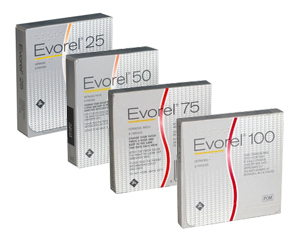
Evorel patches are available in four strengths (25, 50, 75, and 100 micrograms per 24 hours), allowing flexible dose titration to the individual patient's needs.
Usage & Dosage
Apply one patch to a clean, dry, and non-irritated area of skin below the waist, such as the lower abdomen or upper buttock. Avoid the breasts and the waistline.
Press the patch firmly for approximately 10 seconds to ensure good adhesion.
Change the patch twice weekly, every three to four days, alternating the application site. Do not apply to the same spot two patches in a row.
If a patch loosens or falls off, apply a replacement and change on the scheduled day.
Continue treatment for as long as your prescriber recommends and attend regular reviews at least once a year.
Begin with the lowest effective dose, typically Evorel 25 or 50, applied twice weekly.
Dose may be increased after four to eight weeks if symptoms are not adequately controlled, up to a maximum of Evorel 100.
Women who have not had a hysterectomy require additional progestogen for at least 12 to 14 days per cycle to protect the endometrium.
In this case, a combined product or separate progestogen should be prescribed alongside Evorel.
Side Effects
Application site reactions including redness and itching are reported in approximately 10 to 15 per cent of users and are usually mild.
Breast tenderness, headache, and nausea are the most common systemic side effects.
Fluid retention causing bloating, weight fluctuation, and leg cramps may occur. Mood changes, including low mood or irritability, have been reported.
Serious risks include venous thromboembolism (lower risk than with oral oestrogen), stroke, and a possible small increase in the risk of ovarian cancer with long-term use (greater than five years).
Oestrogen-only HRT does not appear to increase the risk of breast cancer in women with a hysterectomy when used for fewer than seven years.
Rarely, liver function abnormalities, gallbladder disease, or exacerbation of pre-existing conditions such as migraine or endometriosis may occur.
Warnings & Precautions
Women using Evorel who have an intact uterus must take a progestogen in addition to protect against endometrial hyperplasia and cancer.
Using oestrogen alone without progestogen in this group is associated with a significantly increased risk of endometrial cancer.
HRT should be used at the lowest effective dose for the shortest necessary duration. Attend regular breast screening and report any new breast symptoms.
Seek urgent medical attention for sudden chest pain, breathlessness, or leg swelling.
Inform your prescriber of your full medical history, including any personal or family history of breast cancer, blood clots, or liver disease.
Contraindications
Evorel is contraindicated in women with known or suspected breast cancer, other oestrogen-dependent neoplasms, undiagnosed vaginal bleeding, untreated endometrial hyperplasia, active or past venous or arterial thromboembolism, acute liver disease, and known hypersensitivity to estradiol or any component of the patch.
It must not be used during pregnancy or breastfeeding, or in women with a history of porphyria.