Fluvastatin
Incl. online consultation, medicine and discreet delivery
View Options
The medical information on this site is provided for educational purposes. It does not replace a face-to-face consultation with your GP or specialist. Always follow the advice of your prescribing doctor and read the patient information leaflet supplied with your medication.
Choose Your Medicine
Select dosage and quantity
Online Consultation
Reviewed by a qualified physician
Fast, Discreet Delivery
Delivered to your door
Medical Information
About This Medicine
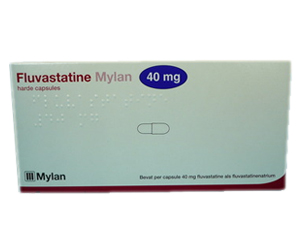
Fluvastatin is a synthetic HMG-CoA reductase inhibitor (statin) prescribed for the treatment of primary hypercholesterolaemia and mixed dyslipidaemia when dietary measures alone have been insufficient.
It is also licensed for secondary prevention of coronary events following percutaneous coronary intervention.
Fluvastatin competitively inhibits the enzyme responsible for the rate-limiting step in hepatic cholesterol synthesis, leading to an upregulation of LDL receptors on liver cells and increased clearance of LDL cholesterol from the blood.
Fluvastatin is a relatively low-potency statin, typically reducing LDL cholesterol by 20 to 35% at standard doses.
It is metabolised primarily through CYP2C9 rather than CYP3A4, which gives it a more favourable drug interaction profile compared with simvastatin or atorvastatin.
This makes it a useful alternative for patients taking medications that inhibit CYP3A4.
The extended-release formulation allows once-daily dosing and is associated with a lower incidence of gastrointestinal side effects.
Fluvastatin also has modest HDL-raising and triglyceride-lowering effects.
Usage & Dosage
Take fluvastatin once daily, in the evening or at bedtime for the immediate-release capsule, as cholesterol synthesis peaks overnight.
The extended-release tablet may be taken at any time of day with or without food, swallowed whole without crushing. Maintain a lipid-lowering diet throughout treatment.
Report unexplained muscle pain, tenderness, or weakness promptly, especially if accompanied by malaise or fever.
Immediate-release capsule: starting dose 20 to 40 mg once daily in the evening. Extended-release tablet: 80 mg once daily.
Maximum dose: 80 mg daily (or 40 mg twice daily with immediate-release capsules). Dose adjustments may be needed in moderate hepatic impairment.
No dose adjustment is required in mild to moderate renal impairment. Review lipid levels four to six weeks after starting or adjusting the dose.
Side Effects
Common (1 in 10 to 1 in 100): headache, dyspepsia, abdominal pain, nausea, insomnia. Uncommon: myalgia, elevated liver transaminases (usually transient and asymptomatic), fatigue, dizziness, rash.
Rare: myopathy, rhabdomyolysis (extremely rare with fluvastatin compared with more potent statins), hepatitis. Very rare: peripheral neuropathy, memory impairment.
Muscle-related adverse effects are less common with fluvastatin than with high-potency statins, owing to its lower systemic exposure.
Warnings & Precautions
Perform baseline liver function tests before starting and monitor periodically thereafter. Discontinue if transaminases rise to more than three times the upper limit of normal.
Advise patients to report unexplained muscle symptoms immediately, as rhabdomyolysis, though rare, can be life-threatening.
Use with caution in patients with a history of liver disease, heavy alcohol consumption, or hypothyroidism.
The risk of myopathy increases with higher doses and concomitant use of fibrates, nicotinic acid, or ciclosporin.
Contraindications
Contraindicated in active liver disease or unexplained persistent elevations of serum transaminases, pregnancy and breastfeeding (statins are teratogenic), and known hypersensitivity to fluvastatin or any excipient.
Women of childbearing potential must use effective contraception during treatment.