Atorvastatin
Incl. online consultation, medicine and discreet delivery
View Options
The medical information on this site is provided for educational purposes. It does not replace a face-to-face consultation with your GP or specialist. Always follow the advice of your prescribing doctor and read the patient information leaflet supplied with your medication.
Choose Your Medicine
Select dosage and quantity
Online Consultation
Reviewed by a qualified physician
Fast, Discreet Delivery
Delivered to your door
Medical Information
About This Medicine
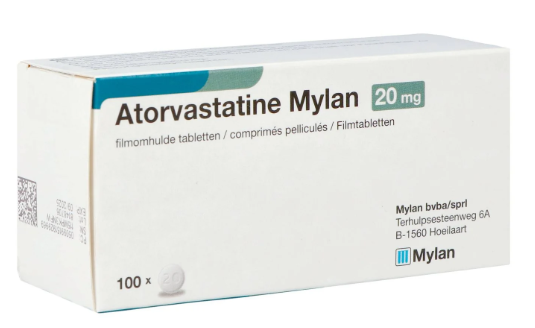
Atorvastatin is a statin. It is a strong HMG-CoA reductase inhibitor, which means it blocks an enzyme your liver uses to make cholesterol.
With less cholesterol being made, your liver makes more LDL receptors. These pull LDL cholesterol out of your blood. As a result, atorvastatin lowers LDL cholesterol by 30-55%, depending on the dose.
It also lowers triglycerides and slightly raises HDL cholesterol (the 'good' kind).
Doctors prescribe atorvastatin for primary hypercholesterolaemia (high cholesterol) and mixed dyslipidaemia (raised blood fats).
They also use it to lower the risk of heart attacks and strokes in high-risk patients, even when their cholesterol is not high.
Major trials, including ASCOT-LLA, CARDS, TNT, and SPARCL, showed it is one of the most effective statins. It works both to prevent a first cardiovascular event and to prevent a second one.
NICE guideline CG181 recommends atorvastatin 20 mg for primary prevention when a person's 10-year QRISK2 cardiovascular risk is 10% or higher.
It recommends atorvastatin 80 mg for everyone who already has cardiovascular disease. Atorvastatin has the longest half-life of any statin.
The parent drug lasts about 14 hours, and its active breakdown products extend the effect to 20-30 hours. This means you can take it at any time of day and it still works.
Usage & Dosage
Take one tablet once a day, at any time, with or without food. Taking it at the same time each day matters more than the exact hour. Swallow the tablet whole with water.
Keep taking atorvastatin even after your cholesterol becomes normal. The benefit only lasts while you keep treatment going. Healthy habits should go with statin treatment.
Eat a diet low in saturated fat, exercise regularly, stop smoking, and keep your blood pressure under control.
Your prescriber will check your blood fats (a fasting lipid profile) and your liver (liver function tests) before you start and from time to time during treatment.
Tell them about any unexplained muscle pain, tenderness, or weakness. This is important if you also have a fever or feel generally unwell.
Primary prevention: 20 mg once a day (the NICE recommendation). Your doctor may raise the dose to 40 mg or 80 mg if your LDL does not drop enough (more than 40% from your starting level).
Secondary prevention (you already have CVD): 80 mg once a day. If you cannot tolerate 80 mg, take the highest dose you can manage.
Familial hypercholesterolaemia: The starting dose is usually 10-20 mg, then raised step by step up to 80 mg a day.
If your liver does not work well, use atorvastatin with care.
Do not use it if you have active liver disease, or if your liver enzymes (transaminases) stay above 3 times the upper limit of normal for no clear reason.
You do not need a lower dose if your kidneys do not work well. Atorvastatin has important interactions with CYP3A4 inhibitors.
These are drugs and foods that slow down how your body clears atorvastatin, such as erythromycin, clarithromycin, itraconazole, HIV protease inhibitors, and grapefruit juice.
You may need a lower starting dose, or you may need to avoid them.
Side Effects
Side effects are grouped by how often they happen, as listed in the SmPC (the official product information).
Common (between 1 in 100 and 1 in 10 people): Headache, muscle pain (myalgia), joint pain (arthralgia), common cold symptoms (nasopharyngitis), throat pain, nausea, diarrhoea, indigestion (dyspepsia), wind, constipation, raised liver enzymes, and a raised muscle enzyme called creatine kinase.
Uncommon (between 1 in 1,000 and 1 in 100 people): Nerve problems in the hands or feet (peripheral neuropathy), trouble sleeping, dizziness, memory loss (amnesia), blurred vision, ringing in the ears (tinnitus), hair loss, rash, itching, hives (urticaria), high blood sugar (new diabetes), and weight gain.
Rare (between 1 in 10,000 and 1 in 1,000 people): Rhabdomyolysis (severe muscle breakdown that releases protein into the urine and can damage the kidneys), liver inflammation (hepatitis), a type of jaundice (cholestatic jaundice), pancreatitis, low platelet count (thrombocytopenia), severe swelling (angioedema), Stevens-Johnson syndrome (a serious skin reaction), lung inflammation (interstitial lung disease), tendon problems (including rupture), and breast growth in men (gynaecomastia).
Rhabdomyolysis is the most serious side effect. It is more likely with higher doses, with CYP3A4 inhibitors, with an underactive thyroid (hypothyroidism), and when the kidneys do not work well.
Tell your doctor straight away about any unexplained severe muscle pain.
Warnings & Precautions
Have your liver checked (liver function tests) before you start treatment. Your doctor may check it again during treatment if there is a reason to.
Stop the drug if your liver enzymes (transaminases) stay above 3 times the upper limit of normal. Statins may slightly raise the chance of getting type 2 diabetes.
Even so, the benefit for your heart and blood vessels is far greater than this risk.
The risk is higher if you already have risk factors, such as metabolic syndrome, a raised fasting blood sugar, or obesity. If you report muscle symptoms, your doctor will check your creatine kinase.
They will stop the drug if it is very high (more than 10 times the upper limit of normal) or if they suspect rhabdomyolysis.
Do not take strong CYP3A4 inhibitors at the same time, such as itraconazole, ritonavir, or clarithromycin, unless the dose is adjusted. Limit how much grapefruit juice you drink.
Do not take atorvastatin during pregnancy or while breastfeeding. Women who can become pregnant need to use effective contraception.
Contraindications
Do not take atorvastatin if you are allergic to atorvastatin or to any other ingredient in the tablet.
Do not take it if you have active liver disease, or if your liver enzymes (transaminases) stay raised for no clear reason at more than 3 times the upper limit of normal (ULN).
Do not take it during pregnancy or while breastfeeding. Women who can become pregnant must use proper contraception.
Do not take it with certain hepatitis C medicines (glecaprevir/pibrentasvir), because they make atorvastatin levels rise sharply.
Frequently Asked Questions
Can I take atorvastatin at any time of day?
Will atorvastatin give me diabetes?
Why do I need 80 mg after a heart attack?
Can atorvastatin cause memory problems?
Is it safe to eat grapefruit with atorvastatin?
Related articles: Atorvastatin
Atorvastatin side effects: a doctor's complete guide
Atorvastatin is well tolerated by most patients, but common side effects include muscle aches, headache, gastrointestinal disturbance and nasopharyngitis. Serious but rare side effects include rhabdomyolysis and liver enzyme elevation. Muscle symptoms are the most frequent reason patients consider stopping treatment, but true statin myopathy affects fewer than 1 in 1,000 patients.
nhs-infoAtorvastatin: NHS prescribing, monitoring and NICE guidance
Atorvastatin is the most common statin in the UK. NICE recommends it as a first-line treatment. It helps prevent heart and blood vessel disease. Patients with a 10-year QRISK3 score of 10% or more are offered treatment. Monitoring includes lipid profile, liver function, HbA1c, and kidney function.