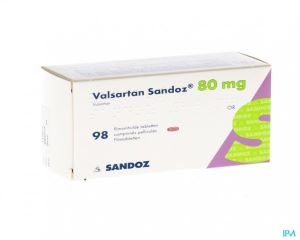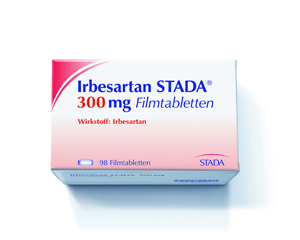
Irbesartan
Incl. online consultation, medicine and discreet delivery
View Options
The medical information on this site is provided for educational purposes. It does not replace a face-to-face consultation with your GP or specialist. Always follow the advice of your prescribing doctor and read the patient information leaflet supplied with your medication.
Choose Your Medicine
Select dosage and quantity
Online Consultation
Reviewed by a qualified physician
Fast, Discreet Delivery
Delivered to your door
Medical Information
About This Medicine
Irbesartan is an angiotensin II receptor blocker (ARB) used for the treatment of essential hypertension and the protection of renal function in patients with type 2 diabetes and hypertension who have microalbuminuria or proteinuria.
It works by selectively blocking the angiotensin II type 1 (AT1) receptor, preventing the vasoconstrictive, sodium-retaining, and aldosterone-stimulating effects of angiotensin II.
Irbesartan lowers blood pressure effectively and has a well-established evidence base for renoprotection in diabetic nephropathy.
The IRMA 2 and IDNT trials demonstrated that irbesartan significantly reduces the progression of diabetic kidney disease, independently of its blood-pressure-lowering effect.
This makes it a particularly valuable choice for hypertensive patients with type 2 diabetes.
The drug has a long duration of action, providing consistent 24-hour blood pressure control with once-daily dosing.
It does not require hepatic activation (unlike losartan) and has no active metabolites, resulting in predictable pharmacokinetics.
Irbesartan does not inhibit ACE and therefore does not cause the bradykinin-mediated cough associated with ACE inhibitors.
Usage & Dosage
Take one tablet once daily at the same time each day, with or without food. Swallow whole with water. Do not stop taking irbesartan without medical advice, as blood pressure may rise.
If you miss a dose, take it as soon as you remember. If it is nearly time for the next dose, skip the missed one. Do not double up.
Regular blood pressure monitoring is important, especially during dose changes.
Hypertension: initial dose 150 mg once daily. Increase to 300 mg once daily if blood pressure is not adequately controlled.
In patients on haemodialysis or those aged over 75, consider starting at 75 mg. Diabetic nephropathy: the target dose for renoprotection is 300 mg once daily.
No dose adjustment is needed in mild to moderate hepatic or renal impairment. In severe renal impairment, monitor closely.
Side Effects
Common (1 in 10 to 1 in 100): dizziness, orthostatichypotension (particularly at initiation or with dose increases), musculoskeletal pain.
Uncommon: nausea, diarrhoea, fatigue, elevated serum creatinine, hyperkalaemia, cough (much less common than with ACE inhibitors).
Rare: angioedema (very rare with ARBs), hepatitis, taste disturbance, rash, thrombocytopenia.
Irbesartan is generally very well tolerated, and in clinical trials, the side-effect profile was similar to placebo in most respects.
Warnings & Precautions
Monitor renal function and serum potassium after initiation and after dose increases, particularly in patients with renal impairment, diabetes, or those taking potassium-sparing diuretics.
Volume-depleted patients (for example, those on high-dose diuretics) are at risk of symptomatic hypotension on initiation; correct volume depletion before starting.
Do not combine with ACE inhibitors (dual RAAS blockade increases the risk of hypotension, hyperkalaemia, and renal impairment). NSAIDs may reduce efficacy and increase renal risk.
Contraindications
Contraindicated in pregnancy (second and third trimesters; avoid throughout pregnancy as a precaution), known hypersensitivity to irbesartan or any excipient, and concomitant use with aliskiren in patients with diabetes or moderate to severe renal impairment.
Avoid in patients with bilateral renal artery stenosis or stenosis of a solitary kidney.