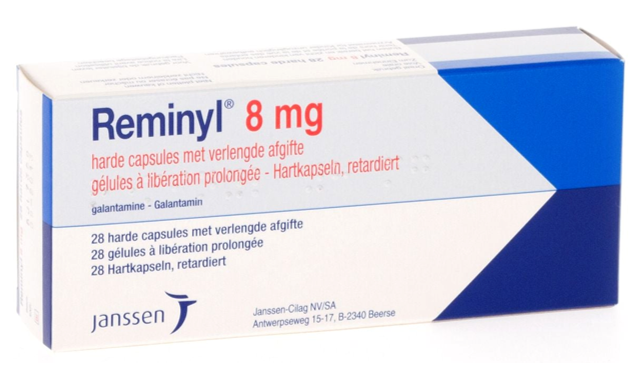
Reminyl
Incl. online consultation, medicine and discreet delivery
View Options
The medical information on this site is provided for educational purposes. It does not replace a face-to-face consultation with your GP or specialist. Always follow the advice of your prescribing doctor and read the patient information leaflet supplied with your medication.
Choose Your Medicine
Select dosage and quantity
Online Consultation
Reviewed by a qualified physician
Fast, Discreet Delivery
Delivered to your door
Medical Information
About This Medicine
Reminyl contains galantamine, a cholinesterase inhibitor indicated for the symptomatic treatment of mild to moderately severe Alzheimer's disease.
It is available as immediate-release tablets and a prolonged-release capsule formulation taken once daily.
Galantamine has a dual mechanism of action that distinguishes it from other cholinesterase inhibitors.
It competitively and reversibly inhibits acetylcholinesterase, increasing acetylcholine levels at the synapse.
In addition, it acts as an allosteric modulator at nicotinic acetylcholine receptors, enhancing the response of these receptors to acetylcholine.
This dual action is believed to provide a broader cholinergic enhancement in the brain.
Clinical trials have demonstrated improvements in cognition, global function, and behavioural symptoms during treatment with galantamine.
As with other cholinesterase inhibitors, the benefits are symptomatic; galantamine does not modify the underlying neurodegenerative process.
The response varies between patients, and regular clinical review is important to assess ongoing benefit and tolerability.
Usage & Dosage
Take Reminyl with food, in the morning and evening if using immediate-release tablets, or once daily in the morning with food if using prolonged-release capsules.
Swallow prolonged-release capsules whole; do not crush, chew, or open them. The dose is increased gradually over several weeks to reduce gastrointestinal side effects.
A carer should oversee administration and monitor for changes in appetite, weight, behaviour, or mood.
Do not stop treatment abruptly without consulting the prescribing doctor, as symptoms may worsen following discontinuation. Adequate fluid intake should be maintained throughout treatment.
Immediate-release tablets: start at 4 mg twice daily for four weeks, then increase to 8 mg twice daily for at least four weeks. The target maintenance dose is 8 to 12 mg twice daily.
Prolonged-release capsules: start at 8 mg once daily for four weeks, increase to 16 mg once daily for at least four weeks, then to 24 mg once daily if appropriate.
In moderate hepatic impairment, the maximum dose is 16 mg daily. In severe hepatic or severe renal impairment (creatinine clearance below 9 mL/min), galantamine is not recommended.
Side Effects
Common side effects (more than 1 in 10 patients) include nausea, vomiting, diarrhoea, loss of appetite, dizziness, and headache.
These are most frequent during dose escalation and often improve with continued treatment.
Uncommon effects include weight loss, abdominal pain, fatigue, drowsiness, insomnia, muscle cramps, bradycardia, and syncope.
Falls are more frequent in elderly patients taking cholinesterase inhibitors, partly due to dizziness and hypotension.
Rare but serious adverse effects include severe bradycardia, atrioventricular block, seizures, gastrointestinal haemorrhage (particularly in patients at risk, such as those on NSAIDs), and hepatitis.
Stevens-Johnson syndrome has been reported very rarely. Any persistent vomiting, dark stools, or fainting episodes should prompt medical review.
Warnings & Precautions
Use galantamine with caution in patients with sick sinus syndrome or other supraventricular conduction disturbances, as cholinergic stimulation may worsen cardiac conduction.
Patients with a history of peptic ulcer disease, asthma, COPD, or urinary obstruction should be monitored carefully.
Body weight should be checked regularly, as clinically significant weight loss may occur.
Galantamine should be discontinued if there is no demonstrable benefit at reassessment or if side effects are intolerable. Avoid abrupt withdrawal.
Contraindications
Reminyl is contraindicated in patients with known hypersensitivity to galantamine or any excipient, severe hepatic impairment (Child-Pugh score 10 to 15), severe renal impairment (creatinine clearance below 9 mL/min), and combined severe hepatic and renal impairment.