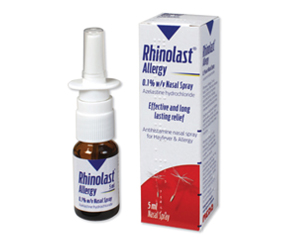
Rhinolast
Incl. online consultation, medicine and discreet delivery
View Options
The medical information on this site is provided for educational purposes. It does not replace a face-to-face consultation with your GP or specialist. Always follow the advice of your prescribing doctor and read the patient information leaflet supplied with your medication.
Choose Your Medicine
Select dosage and quantity
Online Consultation
Reviewed by a qualified physician
Fast, Discreet Delivery
Delivered to your door
Medical Information
About This Medicine
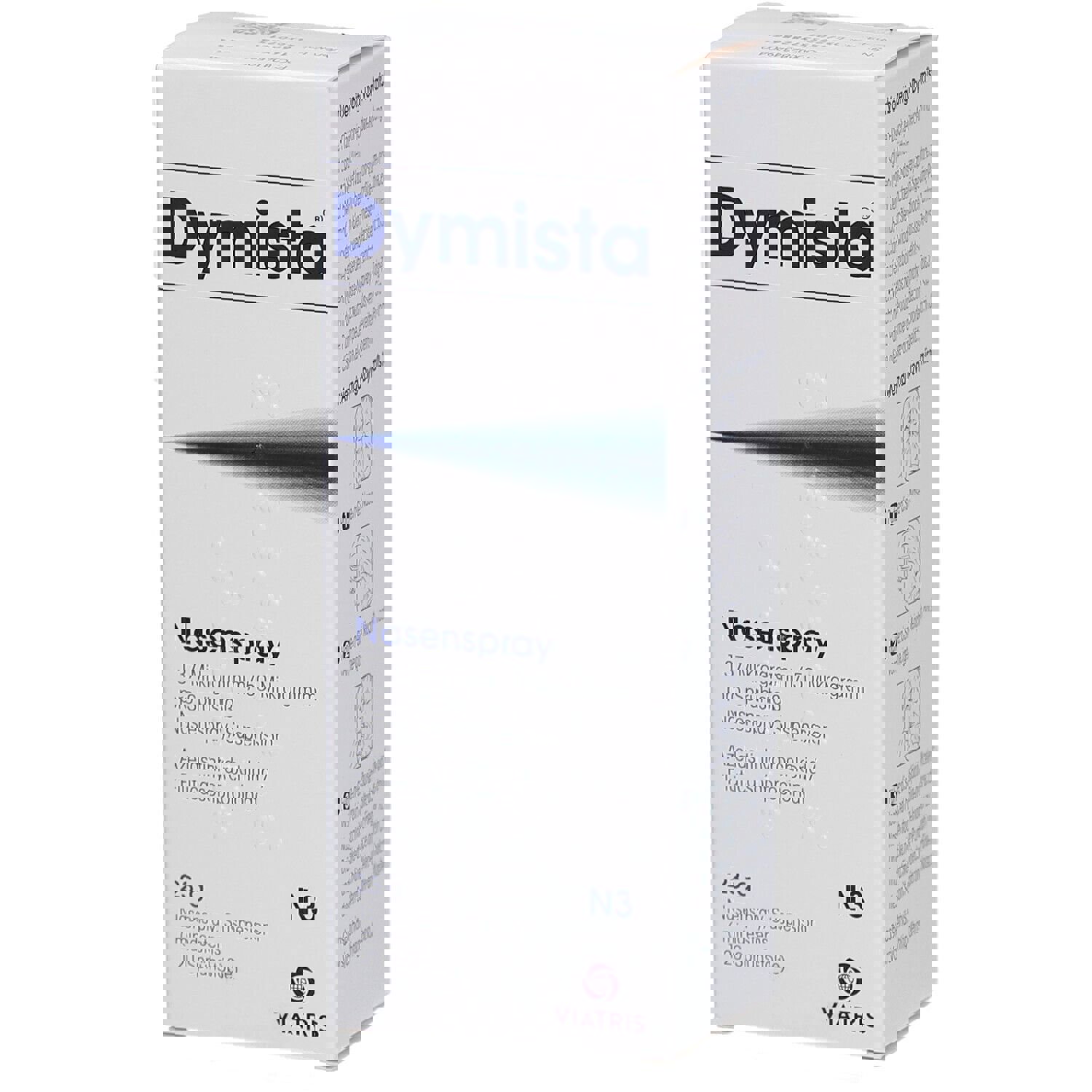
Rhinolast is a nasal spray containing azelastine hydrochloride, an antihistamine applied directly to the nasal mucosa for the treatment of seasonal and perennial allergic rhinitis.
It provides fast-acting, targeted relief from nasal symptoms such as sneezing, itching, congestion, and rhinorrhoea.
Azelastine works by blocking histamine H1 receptors in the nasal lining, preventing the cascade of allergic inflammation that follows exposure to allergens such as pollen, house dust mites, or animal dander.
In addition to its antihistamine effect, azelastine has anti-inflammatory and mast cell-stabilising properties, which may contribute to its efficacy beyond that of oral antihistamines alone.
Because Rhinolast is delivered directly to the site of symptoms, it achieves high local concentrations with minimal systemic absorption.
This results in a rapid onset of action, with many patients noticing improvement within 15 minutes of application.
Rhinolast may be used as monotherapy for mild to moderate allergic rhinitis or combined with an intranasal corticosteroid spray for more severe symptoms.
It is suitable for adults and children over the age of six years.
Usage & Dosage
Prime the spray pump before first use by pressing down several times until a fine mist appears. Blow your nose gently before each application.
Insert the nozzle into one nostril, keep your head upright, and depress the pump once while breathing in gently. Repeat in the other nostril.
The usual dose is one spray into each nostril twice daily, morning and evening. Clean the nozzle tip regularly with a damp cloth to prevent blockage.
If you miss a dose, apply it as soon as you remember and then continue with the normal schedule.
Avoid tilting your head back or sniffing hard after application, as this may cause the solution to drain into the throat and produce a bitter taste.
Adults and children over 6 years: one spray (140 micrograms of azelastine) into each nostril twice daily.
This may be increased to two sprays per nostril twice daily in patients with more severe symptoms, as directed by the prescriber.
Each actuation delivers 0.14 mg of azelastine hydrochloride. A single bottle provides approximately 56 metered doses.
Treatment duration should be guided by the duration of allergen exposure and symptom severity.
Side Effects
A bitter or metallic taste is the most commonly reported side effect, occurring in approximately 10 to 15 per cent of users.
This is generally brief and can be minimised by avoiding sniffing forcefully after application.
Nasal irritation, dryness, or a mild burning sensation may occur in the first few days of use. Sneezing immediately after application is reported occasionally.
Drowsiness is uncommon with nasal azelastine, but some patients, particularly those using higher doses, may experience mild sedation.
Headache and epistaxis (nosebleeds) have been reported at a low frequency.
Serious adverse reactions are very rare. Hypersensitivity reactions including rash and bronchospasm have been documented in isolated cases.
Warnings & Precautions
Although systemic absorption is low, patients who experience drowsiness should exercise caution when driving or operating machinery, particularly if also consuming alcohol or sedative medications.
Rhinolast should be used with care in patients with nasal mucosal damage or recent nasal surgery, as absorption may be increased.
If nasal symptoms persist despite regular use, or if symptoms worsen, seek medical review.
Inform your prescriber if you are pregnant, planning a pregnancy, or breastfeeding. The safety of intranasal azelastine in pregnancy has not been fully established.
Contraindications
Rhinolast is contraindicated in individuals with known hypersensitivity to azelastine hydrochloride or any of the product's excipients.
It is not recommended for children under six years of age due to insufficient safety data.
Caution is advised in patients with significant renal or hepatic impairment, as reduced clearance may increase systemic exposure.