Actonel
Incl. online consultation, medicine and discreet delivery
View Options
The medical information on this site is provided for educational purposes. It does not replace a face-to-face consultation with your GP or specialist. Always follow the advice of your prescribing doctor and read the patient information leaflet supplied with your medication.
Choose Your Medicine
Select dosage and quantity
Online Consultation
Reviewed by a qualified physician
Fast, Discreet Delivery
Delivered to your door
Medical Information
About This Medicine
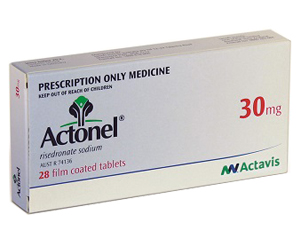
Actonel contains risedronate sodium, a bisphosphonate used to treat and prevent osteoporosis in postmenopausal women, corticosteroid-induced osteoporosis, and Paget's disease of bone.
It works by inhibiting osteoclast-mediated bone resorption, thereby reducing bone loss and increasing bone mineral density.
Risedronate binds to hydroxyapatite in bone and is taken up by osteoclasts during bone resorption, where it inhibits the enzyme farnesyl pyrophosphate synthase.
This leads to osteoclast apoptosis and a reduction in the rate of bone turnover, shifting the balance in favour of bone formation.
Actonel has been shown in clinical trials to significantly reduce the risk of vertebral and non-vertebral fractures.
It is available as daily, weekly, and monthly dosing regimens, with the once-weekly 35 mg tablet being the most commonly prescribed formulation for osteoporosis.
Usage & Dosage
Take on an empty stomach first thing in the morning with a full glass of plain water (not mineral water). Remain upright - do not lie down for at least 30 minutes after taking.
Do not eat, drink anything other than plain water, or take other medications for at least 30 minutes. Swallow tablets whole.
These instructions are essential to ensure adequate absorption and to reduce the risk of oesophageal irritation.
Osteoporosis treatment and prevention: 35 mg once weekly, or 5 mg once daily. Paget's disease: 30 mg daily for 2 months. Corticosteroid-induced osteoporosis: 5 mg daily.
Ensure adequate calcium and vitamin D intake alongside treatment. Choose a consistent day of the week for weekly dosing.
Side Effects
Common (1 in 10 to 1 in 100): headache, abdominal pain, constipation, dyspepsia, nausea, and musculoskeletal pain. Uncommon (1 in 100 to 1 in 1,000): oesophagitis, gastritis, and dizziness.
Rare (less than 1 in 1,000): osteonecrosis of the jaw (mainly in patients receiving intravenous bisphosphonates or high-dose treatment for cancer), atypical femoral fractures with prolonged use, and severe oesophageal ulceration.
Iritis and uveitis have been reported rarely.
Warnings & Precautions
Strict adherence to dosing instructions is essential to prevent oesophageal damage. Report any difficulty or pain on swallowing, chest pain, or new heartburn.
Dental health should be maintained - inform your dentist that you take a bisphosphonate before any dental procedures, particularly extractions.
Report any unusual thigh or groin pain, as this may indicate an atypical femoral fracture.
Contraindications
Known allergy to risedronate or any excipient. Hypocalcaemia - must be corrected before starting treatment. Inability to stand or sit upright for at least 30 minutes.
Oesophageal abnormalities that delay emptying, such as strictures or achalasia. Severe renal impairment (creatinine clearance below 30 mL/min).