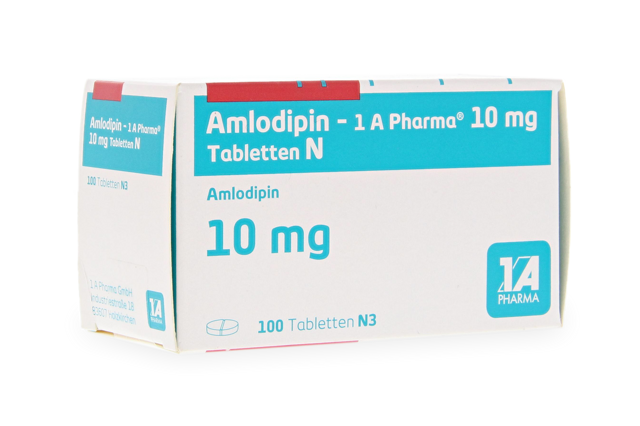
Amlodipine Online UK
Incl. online consultation, medicine and discreet delivery
View Options
The medical information on this site has been reviewed by Dr. Ross Elledge (GMC registered) and is provided for educational purposes. It does not replace a face-to-face consultation with your GP or specialist. Always follow the advice of your prescribing doctor and read the patient information leaflet supplied with your medication.
Choose Your Medicine
Select dosage and quantity
Online Consultation
Reviewed by a qualified physician
Fast, Discreet Delivery
Delivered to your door
Medical Information
About This Medicine
Amlodipine is a long-acting dihydropyridine calcium channel blocker prescribed for the treatment of hypertension and chronic stable angina.
It is one of the most widely prescribed antihypertensive agents globally and is frequently used as both monotherapy and in combination with other blood-pressure-lowering medications.
Amlodipine works by blocking voltage-dependent L-type calcium channels in vascular smooth muscle, reducing calcium influx into the cells.
This inhibits smooth muscle contraction, producing peripheral arterial vasodilatation, which reduces peripheral vascular resistance and lowers blood pressure.
In angina, vasodilatation of the coronary arteries and arterioles improves oxygen delivery to the myocardium and reduces cardiac afterload.
Amlodipine has a gradual onset and long duration of action, with a plasma half-life of 35 to 50 hours, which permits once-daily dosing and produces smooth, sustained blood pressure control over 24 hours.
This minimises blood pressure variability, which is an independent risk factor for cardiovascular events.
Amlodipine does not adversely affect lipid profiles, glucose metabolism, or renal function, making it suitable for patients with comorbidities.
Usage & Dosage
Take one amlodipine tablet once daily, at the same time each day, with or without food. Swallow the tablet whole with a glass of water.
If you miss a dose, take it as soon as you remember unless it is almost time for the next dose; do not double up.
Do not stop taking amlodipine without consulting your prescriber, as blood pressure may rise. It may take one to two weeks before the full blood-pressure-lowering effect is apparent.
For hypertension: the usual starting dose is 5 mg once daily, which may be increased to a maximum of 10 mg once daily after two to four weeks if blood pressure remains above target.
For angina: 5 to 10 mg once daily. In elderly patients or those with hepatic impairment, start with 2.5 mg once daily. No dose adjustment is required in renal impairment.
Amlodipine is not dialysable.
Side Effects
Very common (more than 1 in 10): peripheral oedema (ankle swelling), particularly at higher doses.
Common (1 in 10 to 1 in 100): headache, dizziness, flushing, palpitations, abdominal pain, nausea, fatigue, somnolence.
Uncommon (1 in 100 to 1 in 1,000): mood changes, insomnia, tremor, visual disturbance, tinnitus, dyspnoea, dry mouth, altered bowel habit, gynaecomastia, myalgia, arthralgia, urinary frequency, weight gain.
Rare (1 in 1,000 to 1 in 10,000): gingival hyperplasia, hepatitis, jaundice, vasculitis, erythema multiforme. Ankle oedema is the most common reason for discontinuation and is dose-dependent.
Warnings & Precautions
Amlodipine should be used with caution in patients with heart failure, as calcium channel blockers may worsen cardiac function in some individuals.
Monitor patients with severe aortic stenosis closely. Amlodipine is metabolised by CYP3A4; concurrent use of potent CYP3A4 inhibitors (e.g. ketoconazole, ritonavir) may increase amlodipine levels.
Grapefruit juice may have a similar effect in some patients. Inform your prescriber of all medications you take.
Contraindications
Amlodipine is contraindicated in patients with severe hypotension, cardiogenic shock, haemodynamically significant aortic stenosis, unstable angina (other than Prinzmetal's angina), and hypersensitivity to amlodipine, other dihydropyridines, or any excipient.
Frequently Asked Questions
Why do my ankles swell on amlodipine?
Can I eat grapefruit while taking amlodipine?
How long does amlodipine take to lower blood pressure?
Can I take amlodipine during pregnancy?
Does amlodipine cause weight gain?
Related articles: Amlodipine
Amlodipine side effects: what to expect and when to worry
Amlodipine commonly causes peripheral oedema (ankle swelling), flushing, headache and dizziness, particularly during the first few weeks or after a dose increase. These are related to its vasodilatory mechanism and are usually dose-dependent. Serious side effects are rare. Ankle swelling can be managed by dose reduction, evening dosing or combination therapy.
dosageAmlodipine dosage: finding the right dose for you
The usual starting dose of amlodipine is 5 mg once daily for hypertension and angina. It can be increased to a maximum of 10 mg once daily if blood pressure is not adequately controlled after 2 to 4 weeks. In elderly patients and those with liver impairment, the starting dose is 2.5 mg. Amlodipine can be taken at any time of day, with or without food.
nhs-infoAmlodipine: NHS prescribing information and NICE guidance
Amlodipine is one of the most commonly prescribed blood pressure medications on the NHS, recommended by NICE as first-line treatment for hypertension in patients aged 55 and over or of Black African/Caribbean origin. It is available in 5 mg and 10 mg tablets on prescription, with a starting dose typically of 5 mg once daily.
Dr. Ross Elledge
Consultant Surgeon · Oral & Maxillofacial Surgery
Verified Healthcare Professional