Atenolol
Incl. online consultation, medicine and discreet delivery
View Options
The medical information on this site is provided for educational purposes. It does not replace a face-to-face consultation with your GP or specialist. Always follow the advice of your prescribing doctor and read the patient information leaflet supplied with your medication.
Choose Your Medicine
Select dosage and quantity
Online Consultation
Reviewed by a qualified physician
Fast, Discreet Delivery
Delivered to your door
Medical Information
About This Medicine
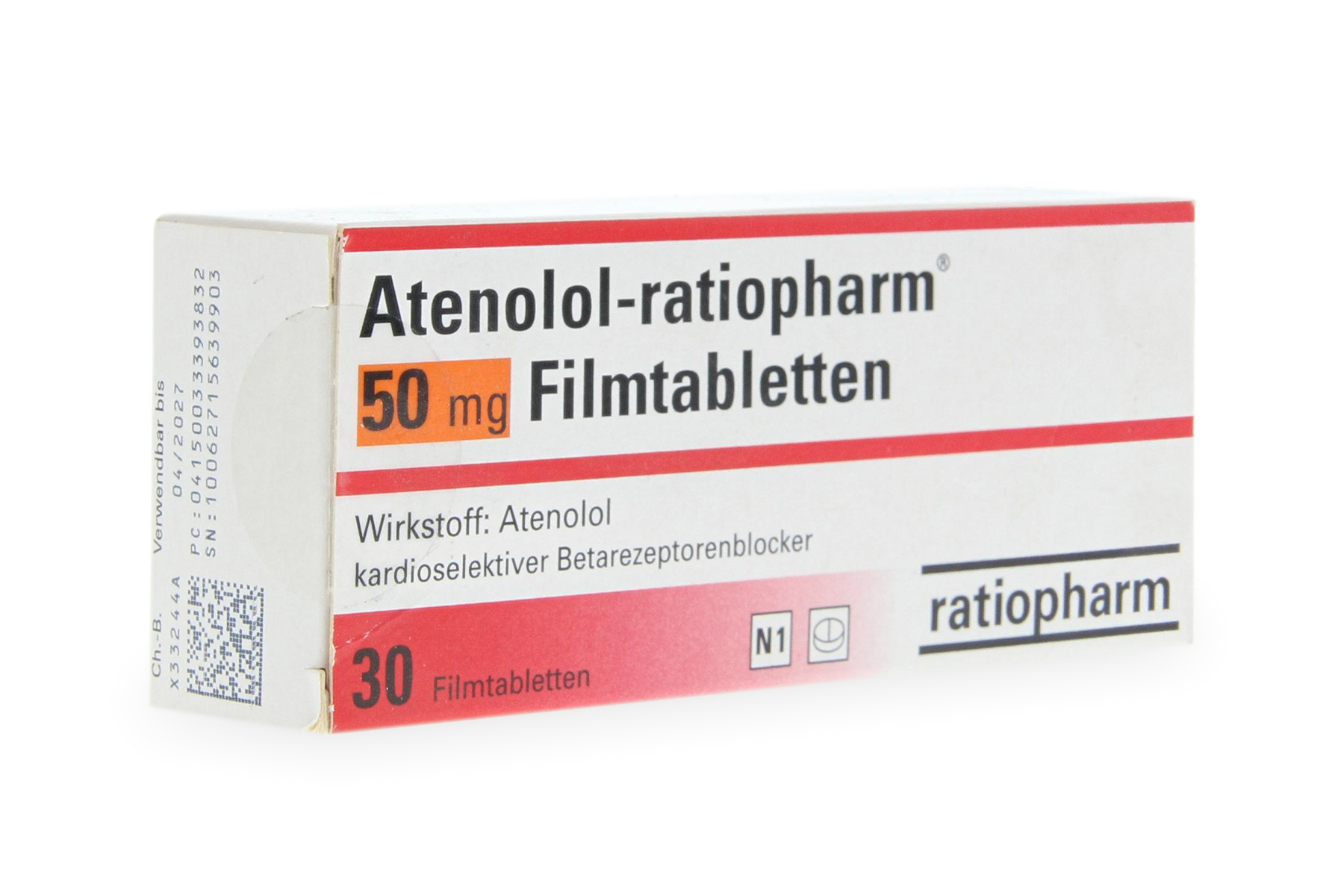
Atenolol is a cardioselective beta-1 adrenoceptor blocking agent used to treat several cardiovascular conditions, including hypertension, angina pectoris, and certain cardiac arrhythmias.
It is also used in the early management of acute myocardial infarction to reduce the risk of further cardiac events.
The drug works by selectively blocking beta-1 receptors predominantly found in cardiac tissue.
This reduces the heart rate, decreases the force of cardiac contraction, and lowers cardiac output, all of which contribute to a reduction in blood pressure and myocardial oxygen demand.
At therapeutic doses, atenolol has minimal effect on beta-2 receptors in the lungs and peripheral vasculature, though selectivity diminishes at higher doses.
Atenolol is hydrophilic and does not readily cross the blood-brain barrier, which may result in fewer central nervous system side effects such as sleep disturbances and nightmares compared with lipophilic beta-blockers.
Its relatively long duration of action allows for once-daily dosing in most patients.
Usage & Dosage
Take atenolol by mouth once daily, or as directed by your doctor. Swallow the tablet with a glass of water. It may be taken with or without food. Try to take it at the same time each day.
Do not stop taking atenolol suddenly, as abrupt withdrawal may cause rebound effects including worsening angina, increased blood pressure, or cardiac arrhythmias.
Your doctor will advise on gradual dose reduction if discontinuation is needed.
For hypertension: the usual dose is 25 mg to 50 mg once daily, which may be increased to 100 mg daily if needed. For angina: 50 mg to 100 mg once daily. For arrhythmias: 50 mg to 100 mg once daily.
Following myocardial infarction: typically 50 mg twice daily for the first 1 to 2 days, then 100 mg once daily. Dose adjustments are necessary in patients with significant renal impairment.
Side Effects
Common (1 in 10 to 1 in 100): fatigue, cold extremities, bradycardia, dizziness, nausea, diarrhoea.
Uncommon (1 in 100 to 1 in 1,000): sleep disturbance, depression, worsening of heart failure symptoms, postural hypotension.
Rare (1 in 1,000 to 1 in 10,000): bronchospasm (particularly in patients with a tendency to airway obstruction), alopecia, dry eyes, visual disturbance.
Very rare (less than 1 in 10,000): hallucinations, psoriasis-like rash, thrombocytopenia. Most side effects are mild and often resolve with continued treatment or dose adjustment.
Warnings & Precautions
Atenolol should not be stopped abruptly, particularly in patients with ischaemic heart disease, as this may precipitate angina or myocardial infarction.
Use with caution in patients with peripheral vascular disease, first-degree heart block, diabetes mellitus (as it may mask symptoms of hypoglycaemia), and phaeochromocytoma (where an alpha-blocker must be given first).
Beta-blockers may mask the tachycardia associated with thyrotoxicosis. Care is needed when administering with other rate-limiting drugs such as verapamil or diltiazem.
Contraindications
Atenolol is contraindicated in patients with uncontrolled heart failure, cardiogenic shock, second- or third-degree heart block, sick sinus syndrome, severe bradycardia (heart rate below 50 bpm), uncontrolled phaeochromocytoma, metabolic acidosis, and known hypersensitivity to atenolol or any of the excipients.
It should generally be avoided in patients with severe peripheral arterial disease.