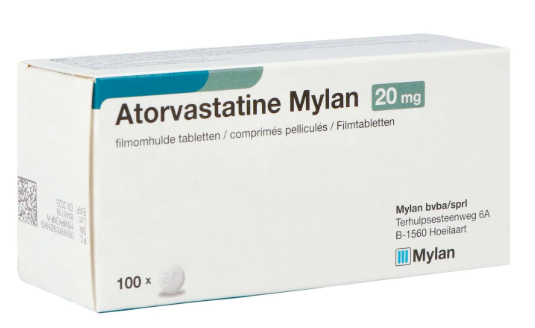
Atorvastatin
Incl. online consultation, medicine and discreet delivery
View Options
The medical information on this site has been reviewed by Dr. Ross Elledge (GMC registered) and is provided for educational purposes. It does not replace a face-to-face consultation with your GP or specialist. Always follow the advice of your prescribing doctor and read the patient information leaflet supplied with your medication.
Choose Your Medicine
Select dosage and quantity
Online Consultation
Reviewed by a qualified physician
Fast, Discreet Delivery
Delivered to your door
Medical Information
About This Medicine
Atorvastatin is a potent HMG-CoA reductase inhibitor (statin) that reduces hepatic cholesterol synthesis, upregulates LDL receptor expression, and thereby lowers circulating LDL cholesterol by 30-55% depending on the dose.
It also reduces triglycerides and modestly increases HDL cholesterol.
Atorvastatin is licensed for the treatment of primary hypercholesterolaemia, mixed dyslipidaemia, and for the reduction of cardiovascular events in patients at high risk irrespective of baseline cholesterol levels.
The landmark trials ASCOT-LLA, CARDS, TNT, and SPARCL established atorvastatin as one of the most effective statins for both primary and secondary cardiovascular prevention.
NICE CG181 recommends atorvastatin 20 mg for primary prevention in patients with a 10-year QRISK2 cardiovascular risk ≥10%, and atorvastatin 80 mg for secondary prevention in all patients with established cardiovascular disease.
Atorvastatin has the longest half-life among statins (approximately 14 hours for the parent compound, with active metabolites extending the inhibitory effect to 20-30 hours), meaning it can be taken at any time of day without loss of efficacy.
Usage & Dosage
Take one tablet once daily at any time of day, with or without food. Consistency in timing is more important than the specific hour. Swallow the tablet whole with water.
Continue taking atorvastatin even when cholesterol levels have normalised, as the benefit depends on ongoing treatment.
A healthy diet low in saturated fat, regular exercise, smoking cessation, and blood pressure management should accompany statin therapy.
Your prescriber will order fasting lipid profiles and liver function tests before starting and periodically during treatment.
Report any unexplained muscle pain, tenderness, or weakness, particularly if accompanied by fever or malaise.
Primary prevention: 20 mg once daily (NICE recommendation). Dose may be increased to 40 mg or 80 mg if target LDL reduction (>40% from baseline) is not achieved.
Secondary prevention (established CVD): 80 mg once daily. If 80 mg is not tolerated, the highest tolerated dose should be used.
Familial hypercholesterolaemia: Starting dose typically 10-20 mg, titrated up to 80 mg daily.
In hepatic impairment, atorvastatin should be used with caution; contraindicated in active liver disease or unexplained persistent transaminase elevations >3x upper limit of normal.
No dose adjustment for renal impairment.
Atorvastatin interacts significantly with CYP3A4 inhibitors (erythromycin, clarithromycin, itraconazole, HIV protease inhibitors, grapefruit juice); lower starting doses or avoidance may be required.
Side Effects
Side effects per SmPC frequency categories.
Common (≥1/100 to <1/10): Headache, myalgia, arthralgia, nasopharyngitis, pharyngolaryngeal pain, nausea, diarrhoea, dyspepsia, flatulence, constipation, elevated liver transaminases, elevated creatine kinase.
Uncommon (≥1/1,000 to <1/100): Peripheral neuropathy, insomnia, dizziness, amnesia, blurred vision, tinnitus, alopecia, rash, pruritus, urticaria, hyperglycaemia (new-onset diabetes), weight gain.
Rare (≥1/10,000 to <1/1,000): Rhabdomyolysis (severe muscle breakdown with myoglobinuria, potentially causing acute kidney injury), hepatitis, cholestatic jaundice, pancreatitis, thrombocytopenia, angioedema, Stevens-Johnson syndrome, interstitial lung disease, tendon disorders (including rupture), gynaecomastia.
Rhabdomyolysis is the most serious adverse effect, more likely with higher doses, concurrent CYP3A4 inhibitors, hypothyroidism, and renal impairment.
Patients should be warned to report unexplained severe muscle pain immediately.
Warnings & Precautions
Liver function tests should be performed before starting treatment and monitored during therapy if clinically indicated. Discontinue if transaminases persistently exceed 3x the upper limit of normal.
Statins may slightly increase the risk of new-onset type 2 diabetes; however, cardiovascular benefit significantly outweighs this risk.
The risk is higher in patients with pre-existing risk factors (metabolic syndrome, raised fasting glucose, obesity).
Monitor creatine kinase in patients reporting muscle symptoms; discontinue if CK is markedly elevated (>10x upper limit of normal) or rhabdomyolysis is suspected.
Avoid concurrent use with potent CYP3A4 inhibitors (e.g. itraconazole, ritonavir, clarithromycin) without dose adjustment. Grapefruit juice intake should be limited.
Atorvastatin is contraindicated in pregnancy and breastfeeding — effective contraception is required for women of childbearing potential.
Contraindications
Atorvastatin is contraindicated in patients with hypersensitivity to atorvastatin or any excipient, active liver disease or unexplained persistent elevations in serum transaminases (>3x ULN), pregnancy, breastfeeding, and in women of childbearing potential not using adequate contraception.
Concurrent use with certain hepatitis C antivirals (glecaprevir/pibrentasvir) is contraindicated due to markedly increased atorvastatin exposure.
Frequently Asked Questions
Can I take atorvastatin at any time of day?
Will atorvastatin give me diabetes?
Why do I need 80 mg after a heart attack?
Can atorvastatin cause memory problems?
Is it safe to eat grapefruit with atorvastatin?
Related articles: Atorvastatin
Atorvastatin side effects: a doctor's complete guide
Atorvastatin is well tolerated by most patients, but common side effects include muscle aches, headache, gastrointestinal disturbance and nasopharyngitis. Serious but rare side effects include rhabdomyolysis and liver enzyme elevation. Muscle symptoms are the most frequent reason patients consider stopping treatment, but true statin myopathy affects fewer than 1 in 1,000 patients.
nhs-infoAtorvastatin: NHS prescribing, monitoring and NICE guidance
Atorvastatin is the most commonly prescribed statin in the UK, recommended by NICE as first-line for primary and secondary cardiovascular prevention. Treatment is offered to patients with a 10-year QRISK3 score of 10% or higher. Monitoring includes lipid profile, liver function, HbA1c and renal function.
Dr. Ross Elledge
Consultant Surgeon · Oral & Maxillofacial Surgery
Verified Healthcare Professional