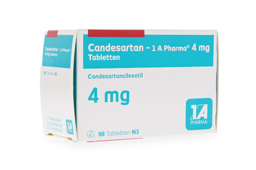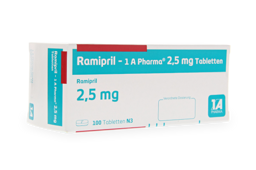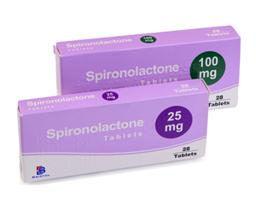
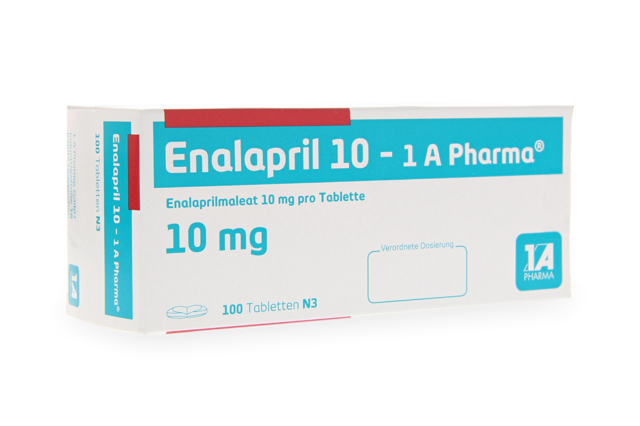
Enalapril
Incl. online consultation, medicine and discreet delivery
View Options
The medical information on this site has been reviewed by Dr. Ross Elledge (GMC registered) and is provided for educational purposes. It does not replace a face-to-face consultation with your GP or specialist. Always follow the advice of your prescribing doctor and read the patient information leaflet supplied with your medication.
Choose Your Medicine
Select dosage and quantity
Online Consultation
Reviewed by a qualified physician
Fast, Discreet Delivery
Delivered to your door
Medical Information
About This Medicine
Enalapril is an angiotensin-converting enzyme (ACE) inhibitor that blocks the conversion of angiotensin I to the potent vasoconstrictor angiotensin II, and inhibits the degradation of bradykinin.
This dual mechanism results in vasodilation, reduced aldosterone secretion, decreased sodium and water retention, and regression of pathological cardiac remodelling.
Enalapril is a prodrug that is hydrolysed in the liver to its active metabolite enalaprilat.
It is licensed for the treatment of essential hypertension, heart failure (all grades), and the prevention of symptomatic heart failure in patients with asymptomatic left ventricular dysfunction.
The landmark SOLVD and CONSENSUS trials established that enalapril reduces mortality and hospitalisations in heart failure.
NICE recommends ACE inhibitors (including enalapril) as first-line therapy for heart failure with reduced ejection fraction and as a first-line antihypertensive option for patients under 55 years of non-African or non-Caribbean descent.
Enalapril typically achieves its full antihypertensive effect within 1-2 weeks. It has an extensive evidence base spanning over 40 years of clinical use.
Usage & Dosage
Take enalapril once or twice daily (depending on the indication) at the same time each day, with or without food. Swallow tablets whole with water.
For hypertension, once-daily dosing is usually sufficient. For heart failure, twice-daily dosing is standard. Continue taking enalapril even when feeling well.
Do not stop abruptly without medical advice. Maintain adequate hydration, especially during hot weather, illness, or exercise.
Report any persistent dry cough, facial or tongue swelling, or breathing difficulty immediately — these may indicate angioedema, a rare but serious adverse effect.
First-dose hypotension may occur, particularly in volume-depleted patients; the first dose is often given at bedtime.
Hypertension: Start at 5 mg once daily. Usual maintenance: 10-20 mg once daily. Maximum: 40 mg daily. If on diuretics, start at 2.5 mg due to hypotension risk.
Heart failure: Start at 2.5 mg once daily. Titrate gradually over 2-4 weeks to a target dose of 10-20 mg twice daily as tolerated. Monitor renal function and potassium at each dose increase.
Asymptomatic LV dysfunction: 2.5 mg twice daily, titrated to 10 mg twice daily.
In renal impairment (eGFR 30-60 mL/min): start at 2.5 mg daily with careful titration. eGFR <30: specialist supervision recommended. Elderly patients should start at lower doses with close monitoring.
Side Effects
Side effects per SmPC frequency categories.
Very common (≥1/10): Dizziness, cough (dry, persistent, non-productive — occurs in 5-20% of patients and is the most common reason for discontinuation).
Common (≥1/100 to <1/10): Headache, depression, hypotension (including first-dose and postural), syncope, nausea, diarrhoea, fatigue, asthenia, blurred vision, rash, hyperkalaemia, renal function impairment.
Uncommon (≥1/1,000 to <1/100): Angioedema (0.1-0.
7%, higher in patients of African descent), taste disturbance, insomnia, somnolence, paraesthesia, vertigo, tachycardia, palpitations, abdominal pain, myalgia, muscle cramps.
Rare (≥1/10,000 to <1/1,000): Hepatitis, jaundice, pancreatitis, Stevens-Johnson syndrome, pemphigus, neutropenia, agranulocytosis, thrombocytopenia, anaemia.
The dry cough is mediated by bradykinin accumulation and is class-specific to ACE inhibitors; switching to an ARB usually resolves it.
Warnings & Precautions
First-dose hypotension is a risk, particularly in volume-depleted patients (those on diuretics, salt-restricted diets, dialysis, or with diarrhoea/vomiting).
Consider starting the first dose at bedtime and withholding diuretics 2-3 days before initiation if possible.
Angioedema can occur at any time during treatment and may be life-threatening if it involves the tongue, glottis, or larynx — discontinue immediately and seek emergency care.
The risk is higher in patients of African descent. Monitor renal function and potassium within 1-2 weeks of starting and after each dose change. Dual RAAS blockade should be avoided (ONTARGET data).
ACE inhibitors are teratogenic: absolutely contraindicated in pregnancy (second and third trimesters cause foetal renal failure and skull defects). Discontinue immediately if pregnancy is confirmed.
Contraindications
Enalapril is contraindicated in patients with hypersensitivity to enalapril, other ACE inhibitors, or any excipient, history of angioedema (hereditary or ACE inhibitor-associated), second and third trimester of pregnancy, bilateral renal artery stenosis, and concomitant use of aliskiren in patients with diabetes or eGFR <60 mL/min/1.
73m². Use of sacubitril/valsartan within 36 hours of the last enalapril dose is contraindicated (risk of angioedema).
Frequently Asked Questions
Why does enalapril cause a dry cough?
Can enalapril protect my kidneys?
What is first-dose hypotension?
Is enalapril safe in pregnancy?
Can I take enalapril with potassium supplements?
Related articles: Enalapril
Enalapril side effects: a detailed patient guide
Enalapril is an ACE inhibitor used for high blood pressure and heart failure. The most characteristic side effect is a persistent dry cough, affecting up to 15% of patients. Other common effects include dizziness, headache and fatigue. Rare but serious side effects include angioedema and hyperkalaemia. Most side effects are manageable and dose-related.
nhs-infoEnalapril NHS: your complete patient guide
Enalapril is an ACE inhibitor available on the NHS for high blood pressure, heart failure and diabetic kidney disease. Usual doses range from 5 to 40 mg daily. It requires regular blood tests to monitor kidney function and potassium. The most common side effect is a dry cough, which affects about 1 in 10 patients.
Dr. Ross Elledge
Consultant Surgeon · Oral & Maxillofacial Surgery
Verified Healthcare Professional