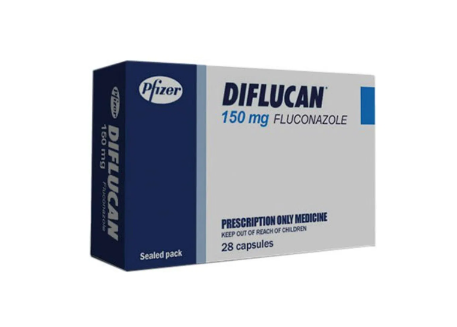
Fluconazol
Incl. online consultation, medicine and discreet delivery
View Options
The medical information on this site is provided for educational purposes. It does not replace a face-to-face consultation with your GP or specialist. Always follow the advice of your prescribing doctor and read the patient information leaflet supplied with your medication.
Choose Your Medicine
Select dosage and quantity
Online Consultation
Reviewed by a qualified physician
Fast, Discreet Delivery
Delivered to your door
Medical Information
About This Medicine
Fluconazole is a triazole antifungal. It works by blocking a fungal enzyme called lanosterol 14-alpha-demethylase.
This enzyme is part of the cytochrome P450 system, which the fungus needs to make ergosterol. Ergosterol keeps the fungal cell membrane stable.
Without enough of it, the membrane breaks down and the fungal cell dies. Fluconazole treats a broad range of fungi.
These include Candida species, Cryptococcus neoformans, dermatophytes (the fungi that cause skin infections), and certain dimorphic fungi.
It is licensed to treat candidiasis (thrush) on the lining of the mouth, throat (oropharyngeal and oesophageal), and vagina.
It also treats candidiasis throughout the body (systemic), cryptococcal meningitis, and helps prevent fungal infections in people with a weakened immune system.
For uncomplicated vaginal thrush, the standard treatment is a single 150 mg dose by mouth. In clinical studies, this cured more than 90% of cases.
Fluconazole is absorbed well when taken by mouth, with bioavailability over 90%. Because of how the body handles it, you only need to take it once a day.
The BNF lists fluconazole as a first-line option for mucosal candidiasis.
Usage & Dosage
Swallow the capsules whole with water. You can take fluconazole with or without food. For uncomplicated vaginal thrush, a single 150 mg dose is enough.
For other infections, finish the full course exactly as prescribed. Do not stop early, even if you feel better. Stopping too soon can let the fungus build resistance to the medicine.
For thrush in the mouth or throat, treatment usually lasts 7 to 14 days. Some people get thrush again and again. If you have 4 or more episodes a year, you may need a longer maintenance course.
This is usually 150 mg once a week for 6 months. Drink plenty of fluids during treatment.
Vaginal candidiasis: 150 mg as a single dose by mouth.
Oropharyngeal candidiasis (mouth and throat): 50-100 mg once a day for 7-14 days.
Oesophageal candidiasis (gullet): 50-200 mg once a day for 14-30 days.
Systemic candidiasis (whole body): 400 mg on day 1, then 200-400 mg once a day. How long you take it depends on how you respond.
Cryptococcal meningitis: 400 mg on day 1, then 200-400 mg a day for at least 6-8 weeks.
If your kidneys do not work well (creatinine clearance under 50 mL/min), take a normal first dose, then halve the usual dose after that.
In children, the dose is based on weight at 3-12 mg/kg a day, depending on the infection.
Side Effects
These side effect rates come from pooled clinical trial and post-marketing data.
Common (1 in 100 to 1 in 10 people): Headache, feeling sick (nausea), tummy pain, diarrhoea, being sick (vomiting), rash, and raised liver enzymes (ALT, AST) on blood tests.
Uncommon (1 in 1,000 to 1 in 100 people): Wind (flatulence), indigestion (dyspepsia), changes in taste, dizziness, trouble sleeping, drowsiness, itching (pruritus), nettle rash (urticaria), and raised bilirubin (a sign linked to the liver).
Rare (1 in 10,000 to 1 in 1,000 people): Liver damage (hepatotoxicity, with rare deaths), serious skin reactions called Stevens-Johnson syndrome and toxic epidermal necrolysis, severe allergic reaction (anaphylaxis), a heart rhythm change called QT prolongation, a dangerous heart rhythm called torsade de pointes, a drop in white blood cells (agranulocytosis), a drop in platelets (thrombocytopenia), low potassium (hypokalaemia), and hair loss (alopecia).
Most side effects are mild and pass quickly with a short course. The risk of liver damage goes up with higher doses and longer treatment. It is higher still in people who are seriously ill.
Warnings & Precautions
Fluconazole is a strong inhibitor of the liver enzyme CYP2C9 and a moderate inhibitor of CYP3A4. This means it can affect how the body handles other medicines, so interactions are common.
Taking it with warfarin raises your INR (a blood-clotting measure), so this needs close monitoring.
Use it with care alongside statins (risk of muscle breakdown, or rhabdomyolysis), ciclosporin, tacrolimus, and diabetes tablets that lower blood sugar.
Fluconazole has been linked to QT prolongation, a change in heart rhythm.
Do not take it with other medicines known to prolong the QT interval, such as erythromycin, domperidone, and class IA or III heart rhythm medicines.
The MHRA advises liver function checks during long treatment. Stop fluconazole if signs of liver disease appear.
High doses taken for a long time in the first trimester of pregnancy have been linked to birth defects. A single dose for vaginal thrush does not raise this risk.
Contraindications
Do not take fluconazole if you are allergic to it, to other azole antifungals, or to any of its other ingredients.
Do not take it with terfenadine (at fluconazole doses of 400 mg a day or more), astemizole, cisapride, pimozide, or quinidine.
Combining these can cause QT prolongation, a heart rhythm change that can lead to a dangerous irregular heartbeat. Avoid high doses for long periods in pregnancy, especially the first trimester.
A single 150 mg dose for vaginal thrush is considered acceptable if a topical (cream or pessary) treatment is not possible.