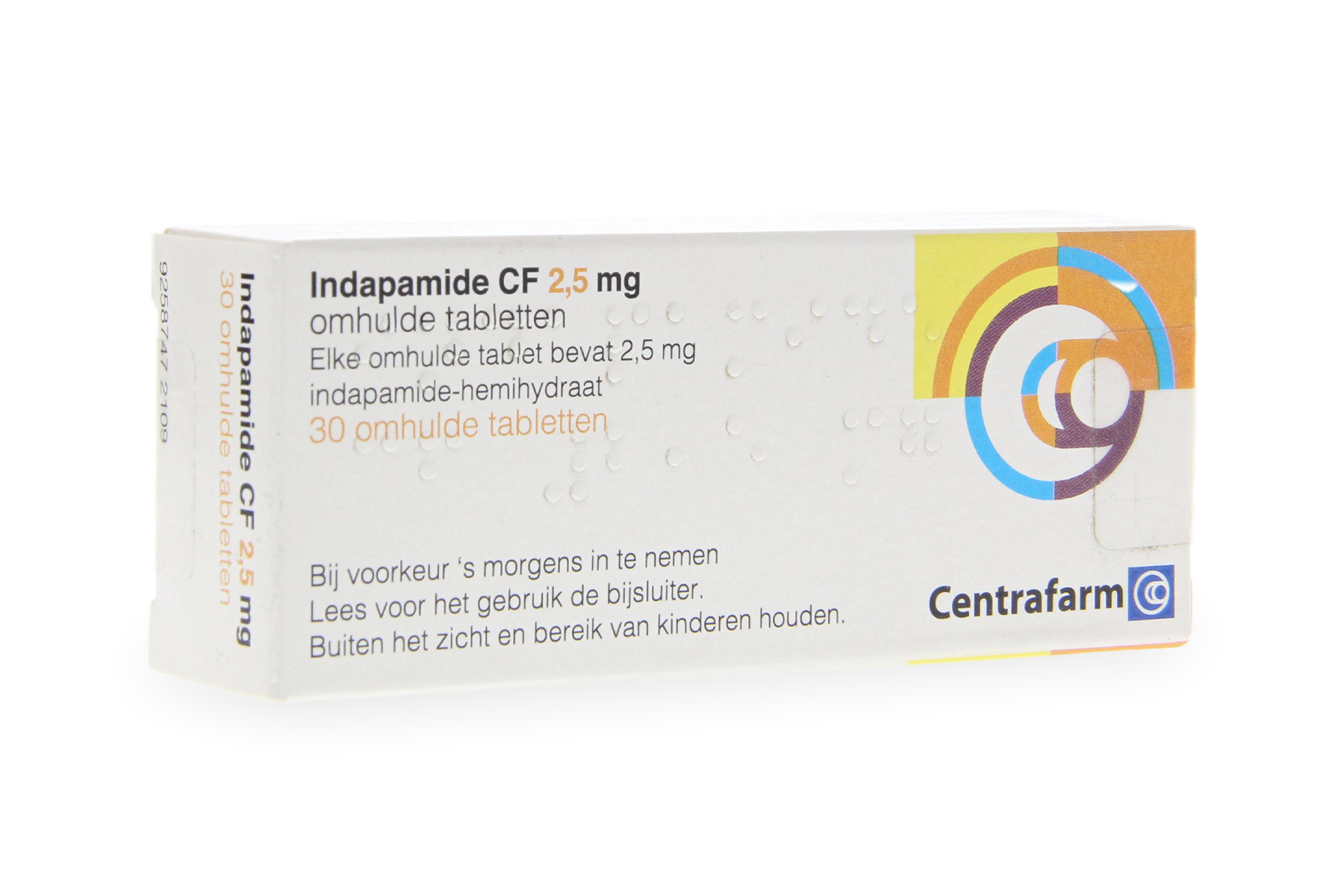
Indapamide
Incl. online consultation, medicine and discreet delivery
View Options
The medical information on this site is provided for educational purposes. It does not replace a face-to-face consultation with your GP or specialist. Always follow the advice of your prescribing doctor and read the patient information leaflet supplied with your medication.
Choose Your Medicine
Select dosage and quantity
Online Consultation
Reviewed by a qualified physician
Fast, Discreet Delivery
Delivered to your door
Medical Information
About This Medicine
Indapamide is a thiazide-like diuretic used in the treatment of essential hypertension.
Although structurally related to the thiazide diuretics, indapamide has a distinct pharmacological profile that includes both a mild diuretic effect and direct vascular smooth muscle relaxation, contributing to its blood pressure-lowering action.
At the recommended antihypertensive dose, indapamide's blood pressure reduction is primarily attributed to its vasodilatory properties rather than its diuretic action.
The drug decreases peripheral vascular resistance by reducing calcium influx into vascular smooth muscle cells, leading to vessel relaxation.
At higher doses, the diuretic effect becomes more prominent, acting on the early segment of the distal convoluted tubule in the kidney to inhibit sodium reabsorption.
Indapamide offers the advantage of effective blood pressure reduction with a lower incidence of the metabolic disturbances commonly seen with traditional thiazide diuretics, such as significant hypokalaemia, hyperglycaemia, and dyslipidaemia.
It has been shown in large clinical trials, including PROGRESS and HYVET, to reduce cardiovascular morbidity and mortality.
Usage & Dosage
Take one tablet by mouth once daily in the morning, with a glass of water. Indapamide may be taken with or without food.
Swallow the tablet whole without crushing or chewing, particularly if it is a sustained-release formulation.
Continue taking the medication even if you feel well, as hypertension is usually without symptoms. Do not stop taking indapamide without consulting your doctor.
The standard dose is 2.5 mg once daily for the immediate-release formulation, or 1.5 mg once daily for the sustained-release formulation.
There is no benefit in increasing the dose, as higher doses do not improve the antihypertensive effect but do increase the risk of electrolyte disturbances.
Indapamide is not recommended in patients with severe renal impairment (creatinine clearance below 30 ml/min), as the diuretic effect is reduced.
Side Effects
Common (1 in 10 to 1 in 100): hypokalaemia, rash, headache. Uncommon (1 in 100 to 1 in 1,000): nausea, constipation, dry mouth, dizziness, fatigue, paraesthesia, photosensitivity.
Rare (1 in 1,000 to 1 in 10,000): thrombocytopenia, leucopenia, postural hypotension, pancreatitis, hepatic dysfunction, hypercalcaemia, hyperuricaemia.
Very rare (less than 1 in 10,000): severe skin reactions including Stevens-Johnson syndrome, QT prolongation, hyponatraemia. Electrolyte levels should be monitored, particularly potassium and sodium.
Warnings & Precautions
Electrolyte monitoring is essential, particularly of potassium, sodium, and calcium levels.
Hypokalaemia is the most significant metabolic risk and may predispose patients to cardiac arrhythmias, particularly when combined with QT-prolonging drugs.
Patients with hepatic impairment may develop hepatic encephalopathy and treatment should be stopped if this occurs.
Indapamide may increase blood uric acid levels and precipitate gout in susceptible individuals. Caution is advised in patients with diabetes, as glucose tolerance may be impaired.
Photosensitivity reactions have been reported; patients should use sun protection.
Contraindications
Indapamide is contraindicated in patients with severe renal impairment, severe hepatic impairment or hepatic encephalopathy, hypokalaemia, and known hypersensitivity to indapamide, other sulphonamide derivatives, or any of the excipients.
It should not be used in patients with Addison's disease.